
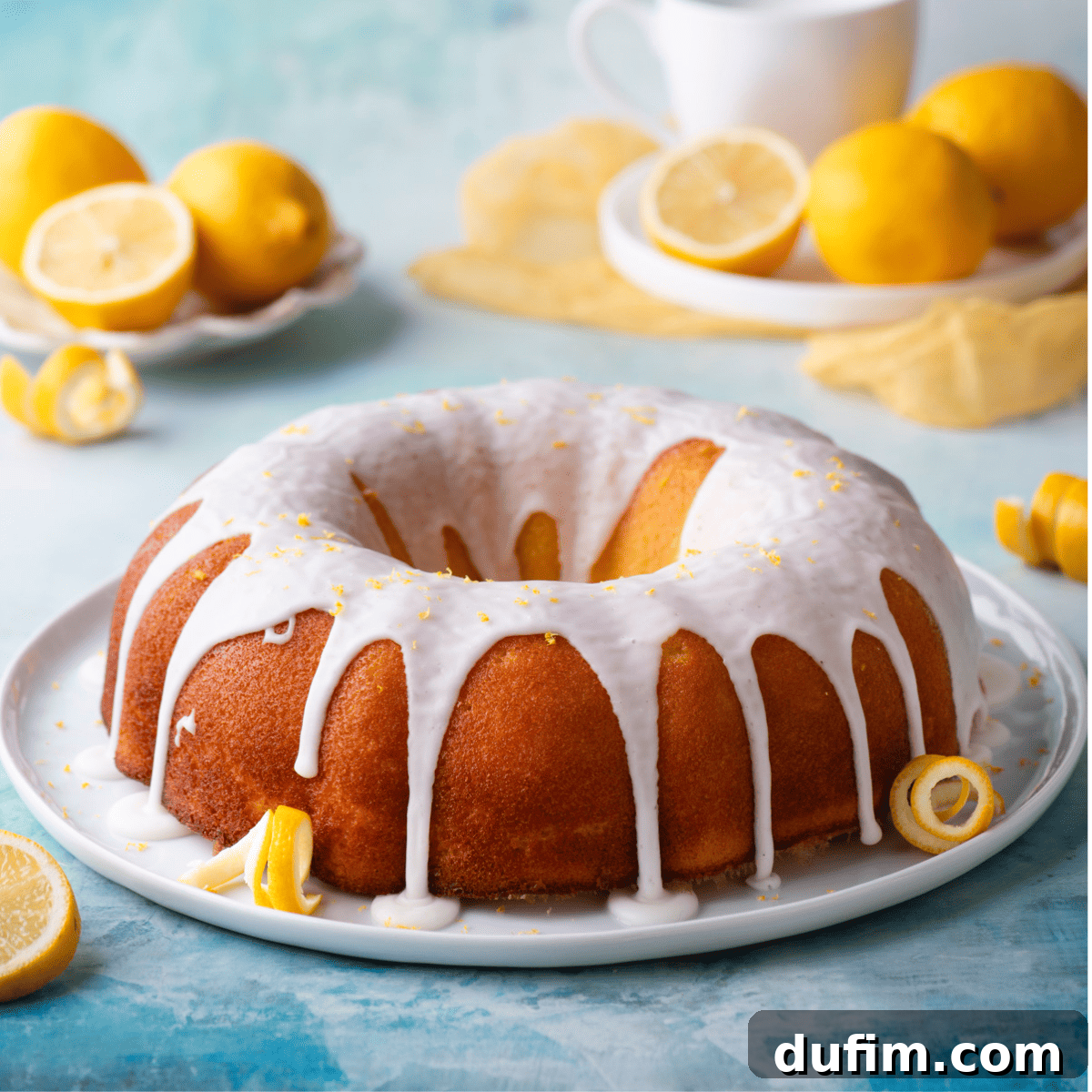
Baking a bundt cake might seem intimidating at first, often associated with tricky techniques and elusive perfect releases. However, with the right guidance and a few foolproof methods, you can effortlessly master this classic dessert in your own kitchen. This ultimate lemon bundt cake recipe is designed to transform simple ingredients into a rich, tender, and incredibly moist cake, brimming with vibrant, fresh citrus flavor. I’m here to walk you through every critical step, from meticulously prepping your bundt pan to achieving that ideal bake and, finally, flawlessly releasing your masterpiece like a seasoned professional. Prepare to impress your loved ones with a stunning, bakery-worthy cake that you proudly crafted yourself!

“This is literally the first cake I’ve ever baked. I followed the directions exactly as written, and my cake turned out amazing! My kids said it was the best cake they’ve ever eaten.”
– Ashley
Discover What Makes This the Best Lemon Bundt Cake Recipe
When it comes to beloved classic desserts, particularly something as iconic as a lemon bundt cake, every detail counts. My journey to perfecting this recipe has spanned years of dedicated testing, adjustments, and refinements, all aimed at delivering consistently bakery-quality results right in your home kitchen. From the crucial process of properly preparing the bundt pan to striking the exquisite balance of bright lemon flavor and delightful sweetness, each step in this recipe has been meticulously fine-tuned for ultimate success. I’ve experimented with various pan sizes, optimized bake times for consistent doneness, explored different cooling methods for structural integrity, and finally perfected a simple yet luscious glaze that harmonizes beautifully with the cake without ever overshadowing its delicate flavor profile.
One of the most common hurdles home bakers encounter with bundt cakes is the dreaded moment of release – getting the cake to slide cleanly from the intricately shaped pan without sticking or breaking. This challenge is precisely why I’ve dedicated a significant portion of my instructions to providing you with an absolutely foolproof guide on how to prepare your bundt pan. We’ll cover every curve, crevice, and corner with a generous application of butter, followed by a light, even dusting of flour, guaranteeing a smooth and effortless release every single time. Say goodbye to guesswork and frustrating stuck cakes; with these techniques, you’ll consistently achieve professional-looking results that are as satisfying to behold as they are to eat.
This lemon bundt cake recipe is a true testament to how basic, readily available ingredients can be transformed into something genuinely impressive and unforgettable. If you’re new to baking bundt cakes, there’s absolutely no need to stress. My clear, concise, and detailed step-by-step instructions are designed to build your confidence in the kitchen, empowering you to bake with ease and bring this stunning showstopper dessert to your table. It’s the kind of dessert that elicits gasps of admiration, looking as though it emerged from an artisan bakery, yet bears the unmistakable touch of your own skillful hands. And that, undoubtedly, is a culinary achievement worth celebrating time and time again.
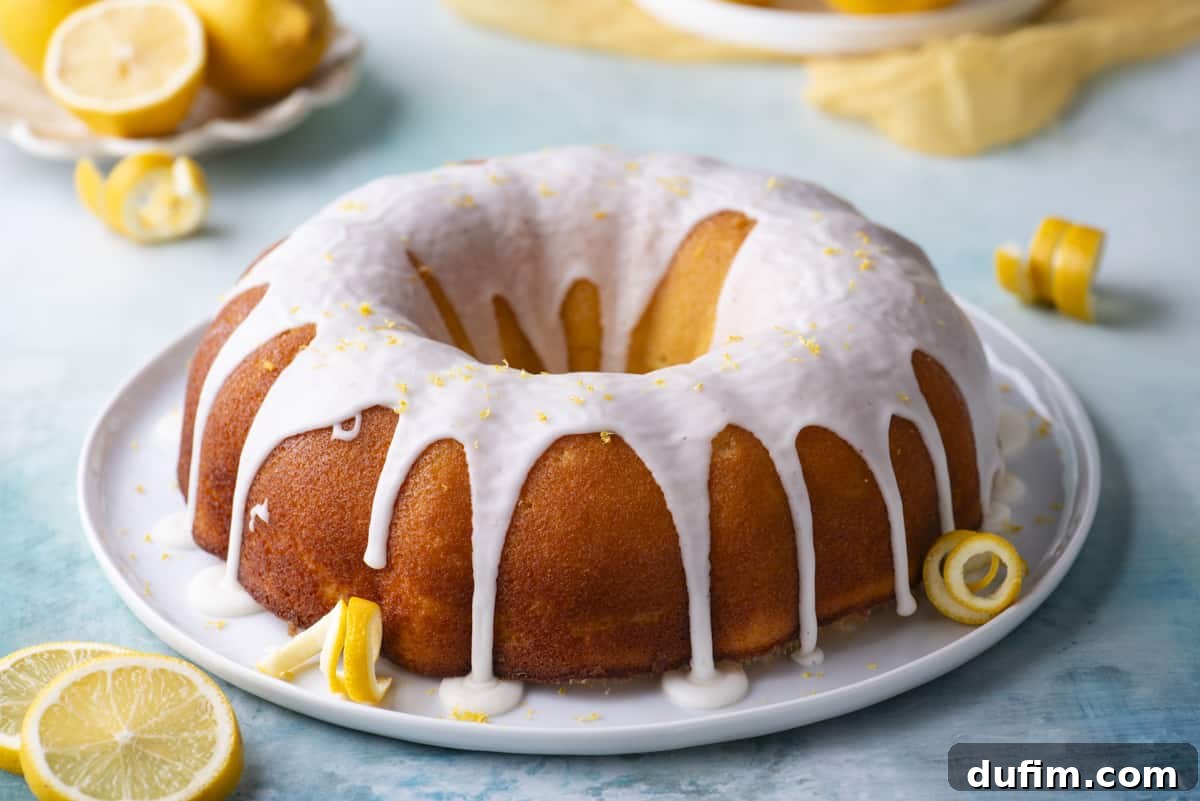
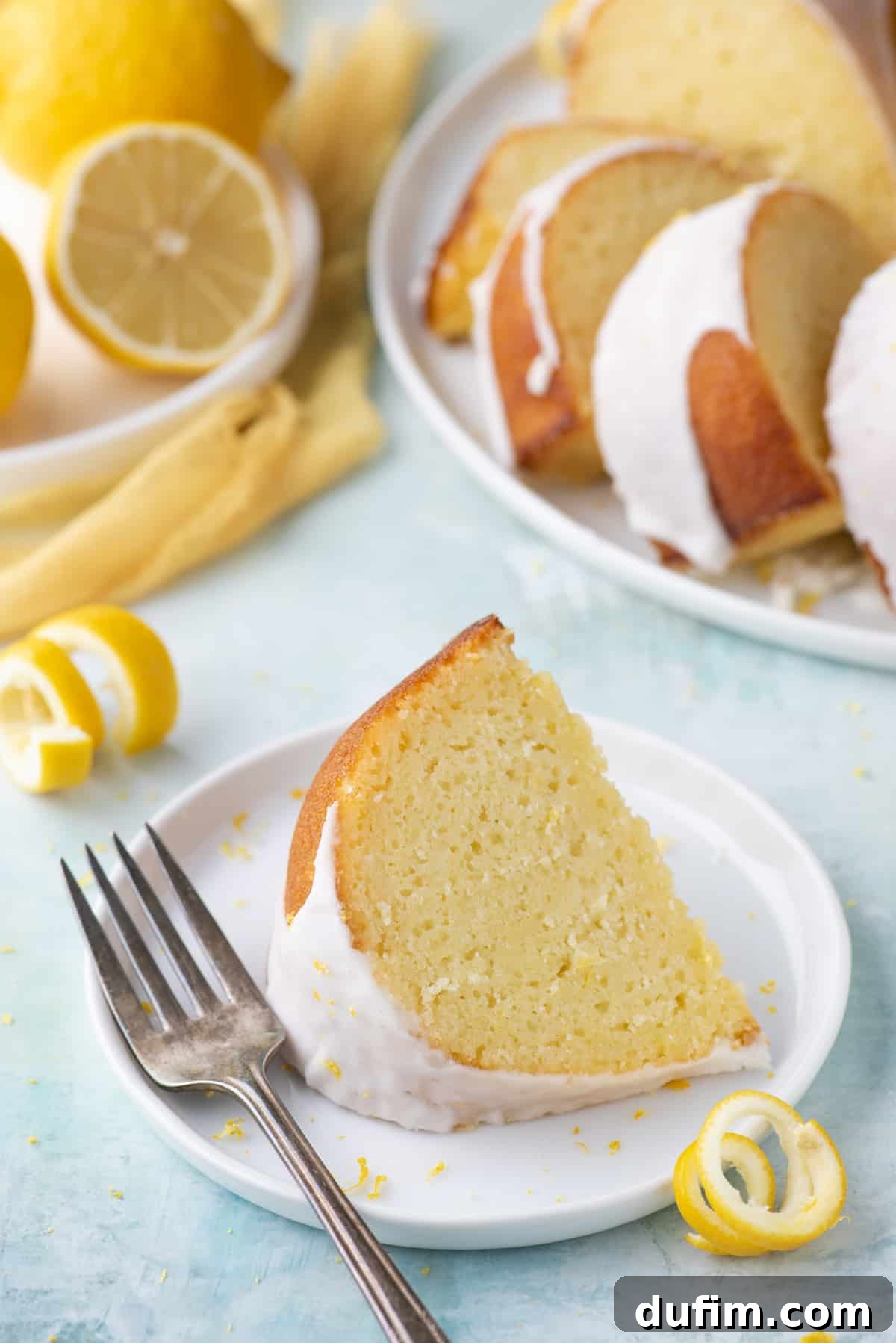
It’s one thing to create a visually gorgeous cake that catches everyone’s eye, but it’s an entirely different achievement to bake a cake that tastes so extraordinarily good it earns enthusiastic “Oohhs” and “Aahhs” with every single bite. This, my friends, is exactly that cake! It’s a stunning masterpiece that delivers the perfect harmony of fresh, zesty lemon flavor and just the right amount of sweetness, all wrapped up in an ultra-moist and wonderfully tender crumb. Each mouthful is an exquisite balance, making it an irresistible treat for any occasion.
Essential Lemon Bundt Cake Ingredients
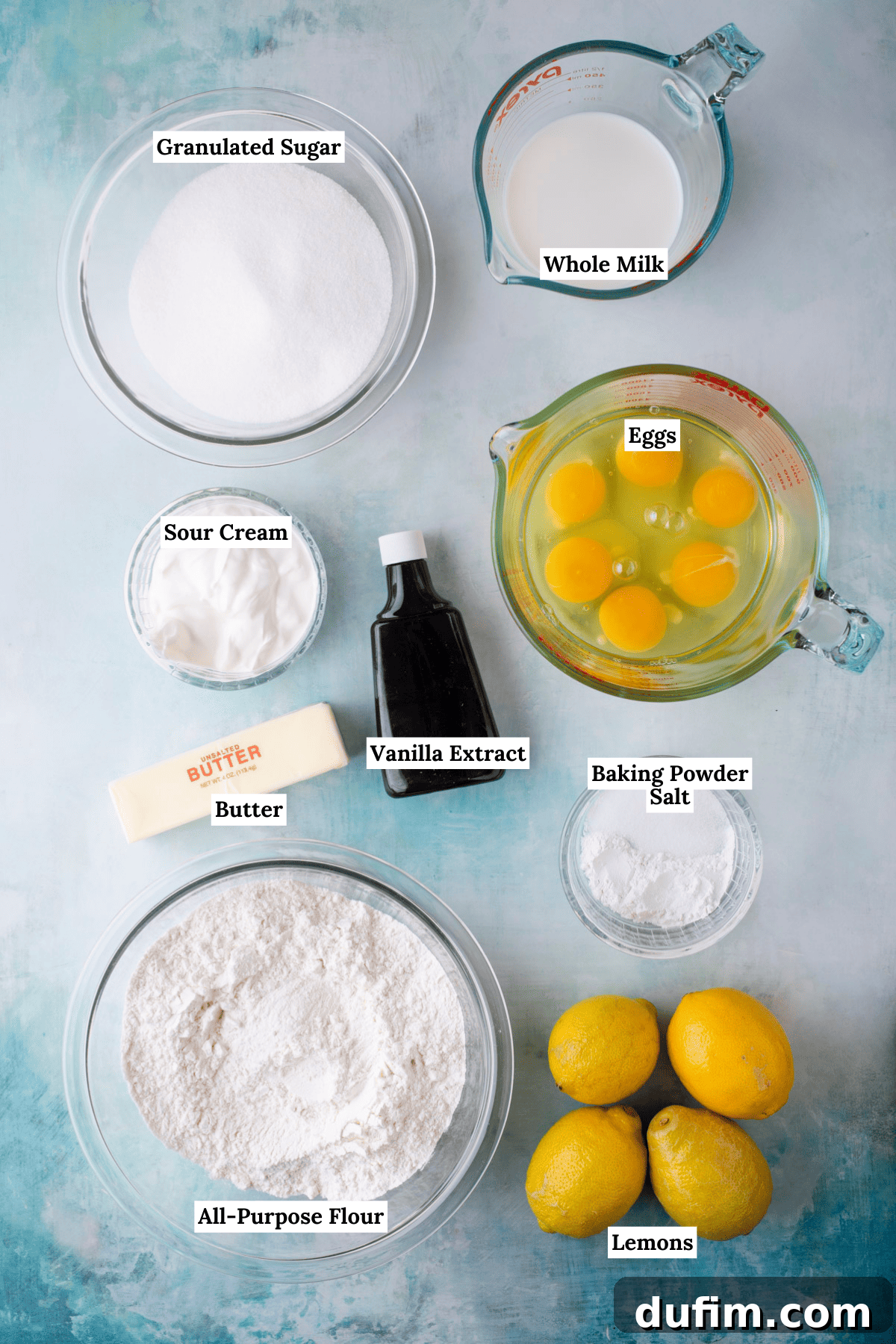
Crafting this exquisitely delicious lemon bundt cake requires a selection of simple, readily available ingredients. This makes it an ideal recipe for a sophisticated spring dinner party, a delightful brunch, or simply to satisfy a sudden craving from the lemon lovers in your family. Using high-quality, fresh ingredients will undoubtedly elevate the flavor profile of your cake, ensuring a truly memorable dessert. Below is a detailed list of what you’ll need; precise measurements and comprehensive instructions can be found in the full recipe card further down this page.
- All-purpose flour: The foundation of our cake, providing structure.
- Baking powder: Our key leavening agent, ensuring a light and airy texture.
- Salt: A crucial flavor enhancer, balancing the sweetness and brightening the lemon.
- Unsalted butter: Make sure it’s at room temperature for optimal creaming, contributing to a rich, tender crumb.
- Granulated sugar: Provides sweetness and helps create that wonderful soft texture.
- Lemon zest: The secret weapon for intense, natural lemon flavor. Don’t skip fresh zest!
- Eggs: Room temperature eggs incorporate better into the batter, adding moisture and structure.
- Sour cream: A star ingredient for ultimate moisture and a luxurious, tender crumb.
- Fresh lemon juice: Adds a bright, tangy counterpoint to the sweetness.
- Vanilla extract: Enhances all the flavors, adding a hint of warmth and depth.
- Whole milk: Also at room temperature, it contributes to the cake’s tenderness and rich texture.
For the Simple Yet Divine Lemon Glaze
No lemon bundt cake is complete without a shimmering, tangy glaze that cascades beautifully over its ridges. This easy lemon glaze adds another layer of citrusy goodness and a touch of elegance.
- Powdered sugar: The base for our smooth, pourable glaze. Sifting is key for a lump-free finish.
- Fresh lemon juice: Provides the essential tartness and vibrant lemon flavor for the glaze.
- Milk or heavy cream: Adjusts the consistency of the glaze, making it pourable and creamy.
- Salt: A tiny pinch balances the sweetness and enhances the overall flavor of the glaze.
Step-by-Step Guide: How to Make a Flawless Lemon Bundt Cake
Crafting a visually stunning and incredibly delicious lemon bundt cake, complete with a glistening lemon glaze, is far simpler than you might imagine. With these clear, easy-to-follow steps, you’ll confidently bake a masterpiece. For exact measurements and a printable version, please refer to the comprehensive recipe card below. Let’s get baking!
Baking the Perfect Bundt Cake
- Prepare Your Oven: Begin by preheating your oven to 350°F (175°C). Ensure your oven rack is in the center position for even baking.
- Whisk Dry Ingredients: In a medium-sized mixing bowl, combine the all-purpose flour, baking powder, and salt. Whisk these dry ingredients together thoroughly to ensure the leavening is evenly distributed. Set this bowl aside for later.
- Cream Butter, Sugar, and Lemon Zest: In a large mixing bowl, preferably using an electric mixer, combine the softened unsalted butter, granulated sugar, and fresh lemon zest. Beat on medium speed for 1-2 minutes, or until the mixture becomes noticeably lighter in color and delightfully fluffy. This creaming process incorporates air, essential for a tender cake.
- Incorporate Eggs Gradually: Add the large eggs to the butter mixture, three at a time, beating well after each addition until fully combined. Scrape down the sides of the bowl as needed to ensure everything is incorporated.
- Mix Wet Ingredients: Next, add the sour cream, fresh lemon juice, and vanilla extract to the mixture. Beat on low speed until just combined. Be careful not to overmix.
- Combine Dry and Wet Ingredients with Milk: Now it’s time to bring everything together. Add half of your reserved dry ingredient mixture to the wet ingredients and beat on low speed until barely incorporated. Then, slowly pour in the room temperature whole milk and beat again on low. Finally, add the remaining dry ingredients, mixing on low speed only until no streaks of flour remain. Overmixing at this stage can lead to a tough cake, so mix just until combined.
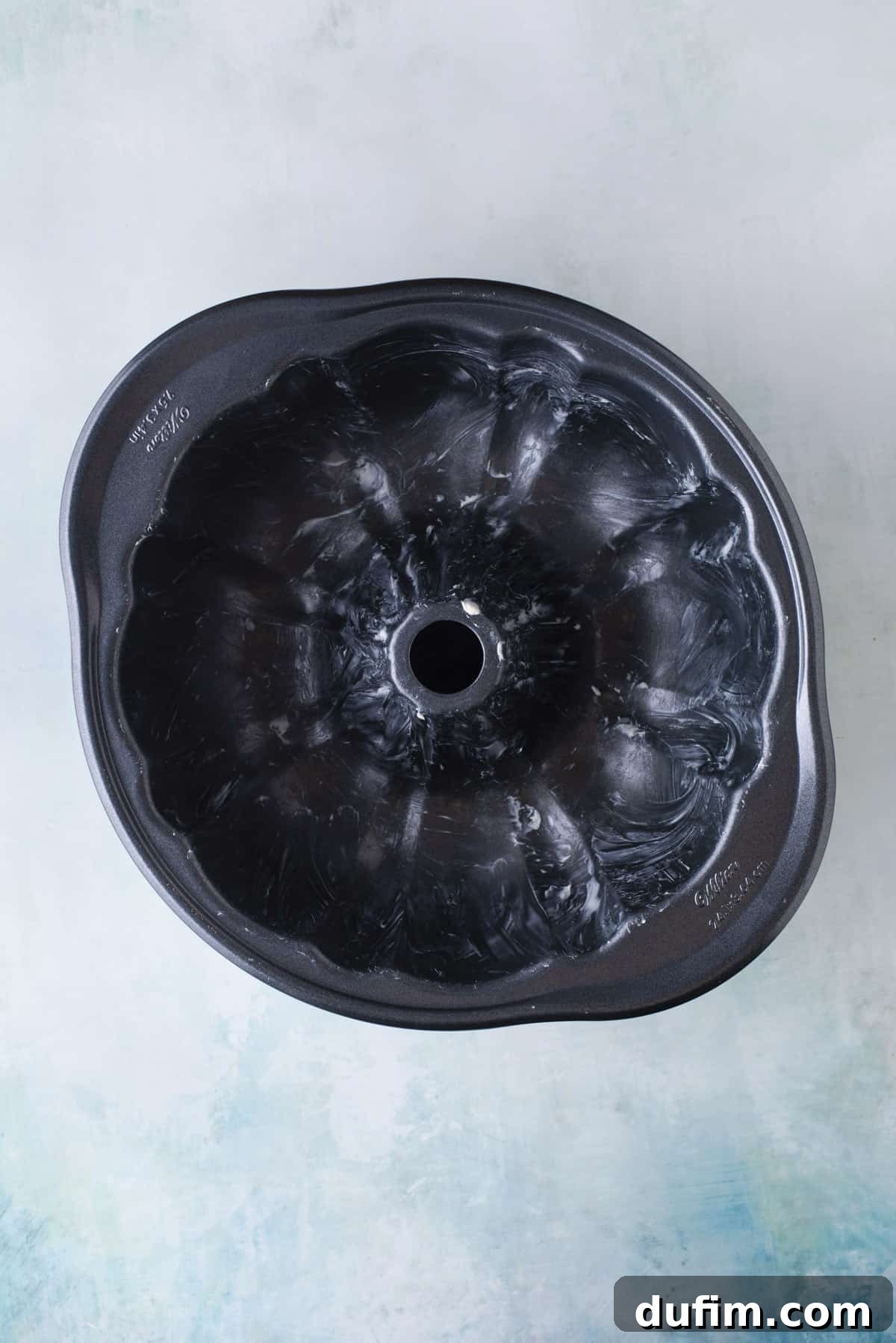
- The Critical Step: Prepare Your Bundt Pan: This is arguably the most crucial step for a perfect bundt cake release! Liberally grease a 9-inch bundt pan (confirming your pan size is important) with softened butter. Don’t be shy – get the butter into every single nook, crevice, and intricate design of the pan. You want a thick, even coating. Once the entire interior of the pan is thoroughly coated with butter, add a few tablespoons of all-purpose flour. Hold the pan over a sink or trash can and rotate it, gently tapping the sides as you go, to distribute the flour evenly across all buttered surfaces. Ensure the entire interior is covered with a thin, uniform layer of flour. Invert the pan and tap firmly to remove any excess flour; too much flour can create a gummy texture on your cake’s exterior.
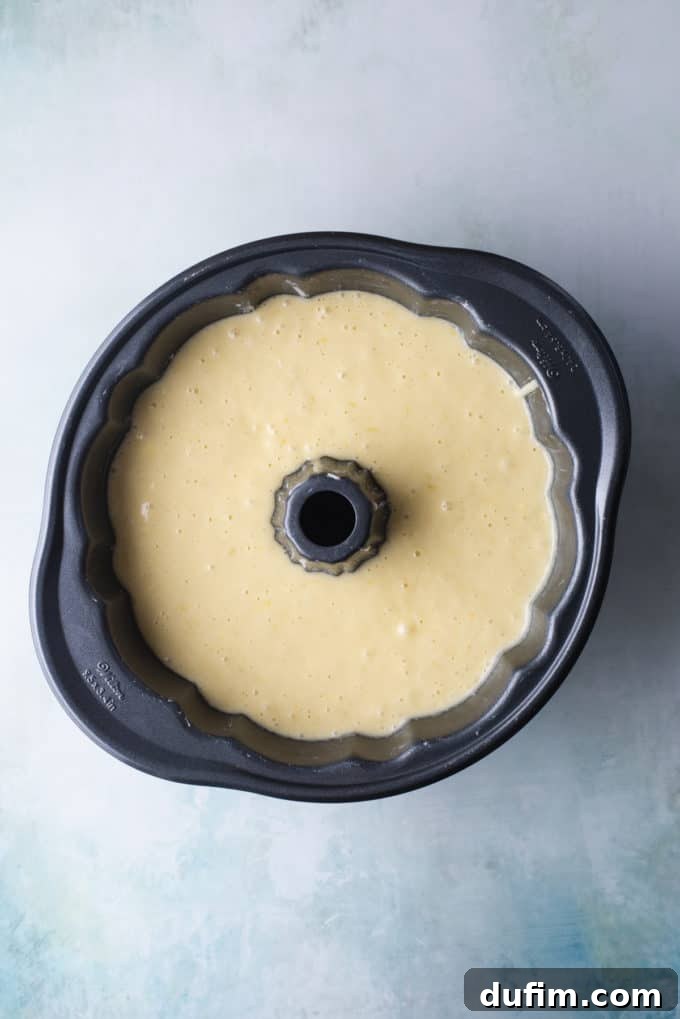
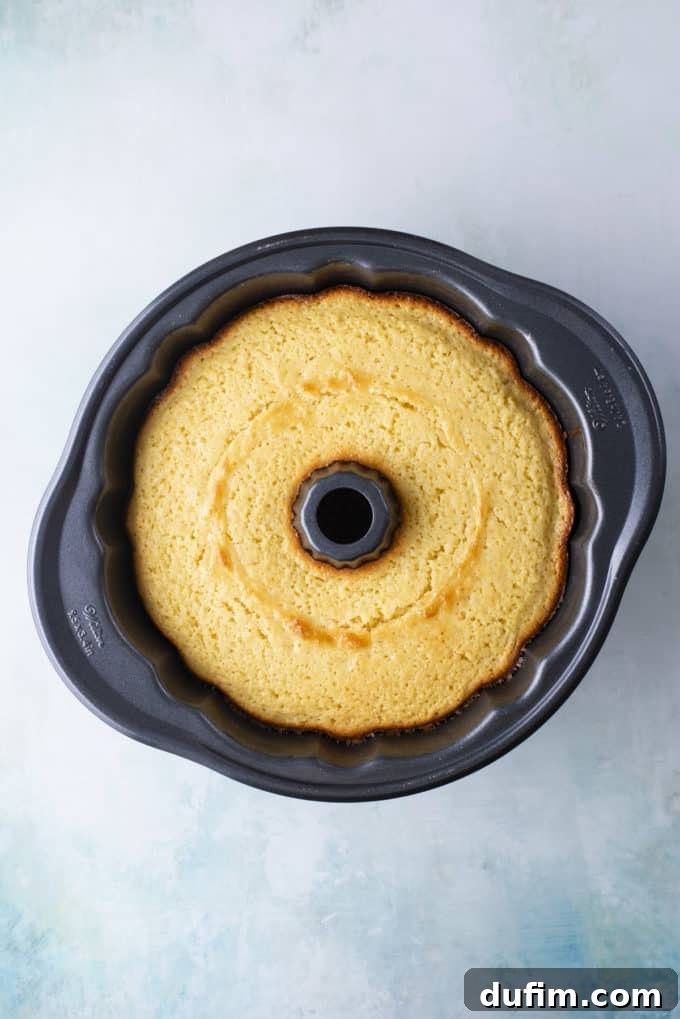
- Bake to Perfection: Gently transfer the prepared cake batter into your greased and floured bundt pan. Smooth the top lightly with a spatula if needed. Bake in the preheated oven for 50-55 minutes. The cake is done when the top appears golden brown and set, and a wooden skewer or toothpick inserted into the center comes out clean or with only a few moist crumbs attached. If you notice the cake browning too quickly on the top before it’s fully cooked through, you can lightly tent it with aluminum foil for the final 15 minutes of baking to prevent over-browning.
- Cooling and Release: Once baked, remove the bundt cake from the oven. Allow it to cool in the pan, right side up, on a wire cooling rack for precisely 15 minutes. This crucial cooling period allows the cake to firm up slightly and pull away from the pan’s sides, making release easier. After 15 minutes, carefully invert the pan over a piece of parchment paper or a clean serving plate. Give the bottom of the pan a few gentle taps to encourage the cake’s release. If it doesn’t release immediately, you can let it sit inverted for another 5 minutes. Once released, allow the cake to cool completely on the wire rack before you even think about adding the glaze. A warm cake will simply absorb or melt the glaze.
Creating the Irresistible Lemon Glaze
While your bundt cake cools, prepare this simple yet flavorful lemon glaze that will add the perfect finishing touch.
- Mix Glaze Ingredients: In a small bowl, sift the powdered sugar. Sifting is an important step to prevent lumps and ensure a silky-smooth glaze. Add 2 tablespoons of fresh lemon juice, 2 tablespoons of milk or heavy cream, and the vanilla extract. Whisk all ingredients together until you achieve a smooth, pourable consistency. If the glaze is too thick, add another teaspoon of lemon juice; if it’s too thin, add a bit more sifted powdered sugar, a teaspoon at a time, until it reaches your desired consistency. Taste and adjust as needed, then whisk in the pinch of salt to enhance its flavor.
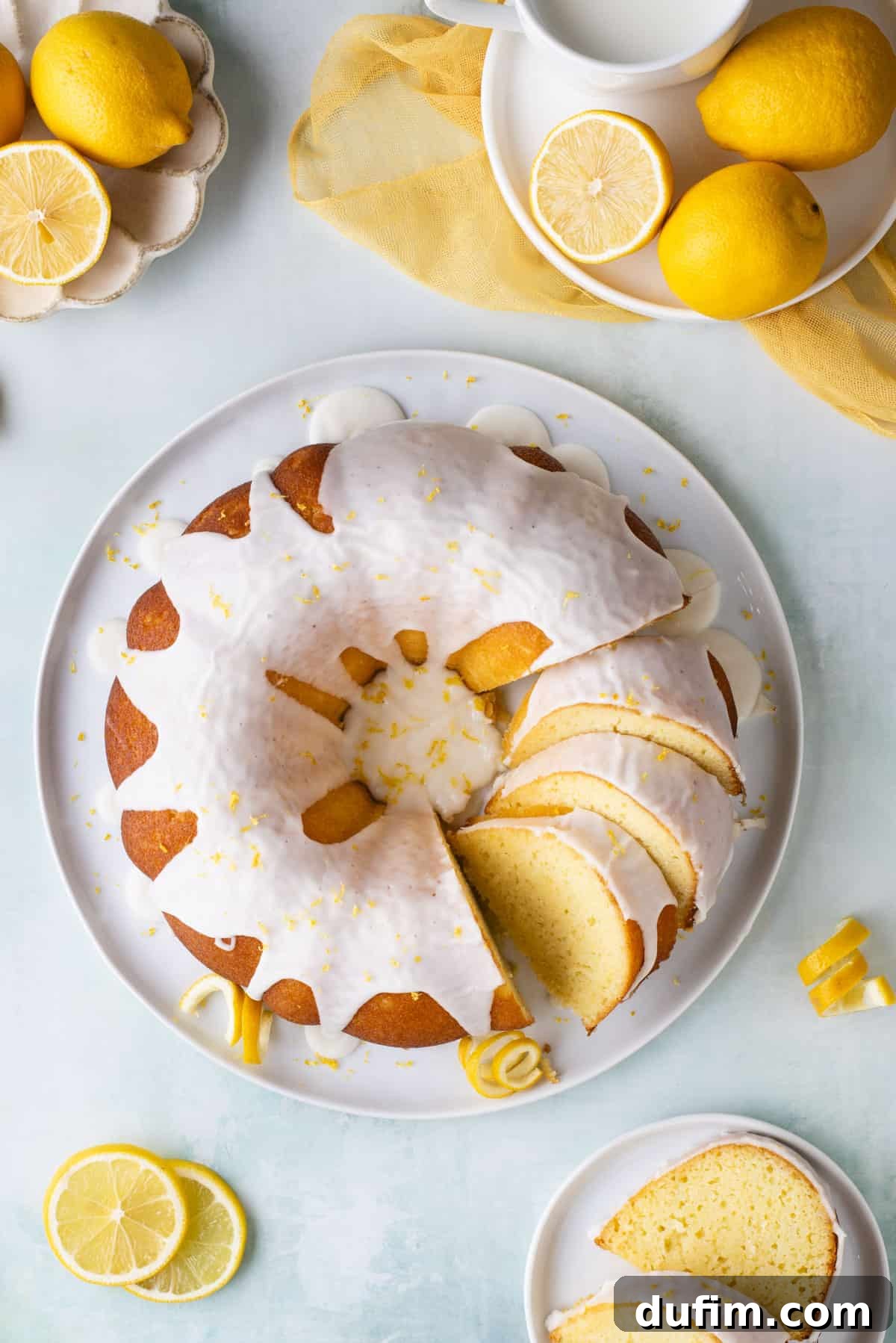
- Glaze and Serve: Once your lemon bundt cake is completely cool, generously drizzle the prepared lemon glaze over the top, allowing it to elegantly cascade down the sides and into the center. For the best presentation and flavor, allow the glaze to set and firm up for about 30-60 minutes before slicing and serving. This allows the glaze to develop a slight crust and prevents it from running too much when cut.

Lemon Bundt Cake Recipe Variations and Ingredient Swaps
While this recipe is carefully balanced to achieve the best possible results, sometimes dietary needs or ingredient availability require a few thoughtful substitutions. For optimal flavor and texture, I always recommend sticking to the original recipe. However, if you find yourself needing to make a swap, here are some considerations:
- Lemon Juice: Freshly squeezed lemon juice offers the most vibrant and authentic flavor. If fresh lemons are unavailable, you can substitute bottled lemon juice. Be aware, however, that bottled varieties may slightly alter the bright, crisp lemon flavor profile of the cake and glaze.
- Lemon Zest: The zest is where much of the essential lemon oil and intense flavor reside. Fresh lemon zest is truly unparalleled. If you don’t have fresh lemons, you can experiment with fresh lime zest or orange zest for a different citrus twist. Keep in mind that this will certainly alter the overall flavor, creating a lime bundt cake or an orange bundt cake, which are delicious in their own right but different from the intended lemon profile.
- Sour Cream: Sour cream is a secret weapon in this recipe, contributing significantly to the cake’s exceptional moisture and rich, tender crumb. If you absolutely need a substitute, full-fat plain unsweetened Greek yogurt can be used. It will offer a similar tang and moisture, though the texture might vary slightly.
- Dairy-Free Option: For a dairy-free version, you could explore plant-based alternatives for butter, milk, and sour cream. Use a good quality plant-based butter substitute, unsweetened almond or soy milk, and a dairy-free sour cream alternative. Results may vary slightly in texture and richness.
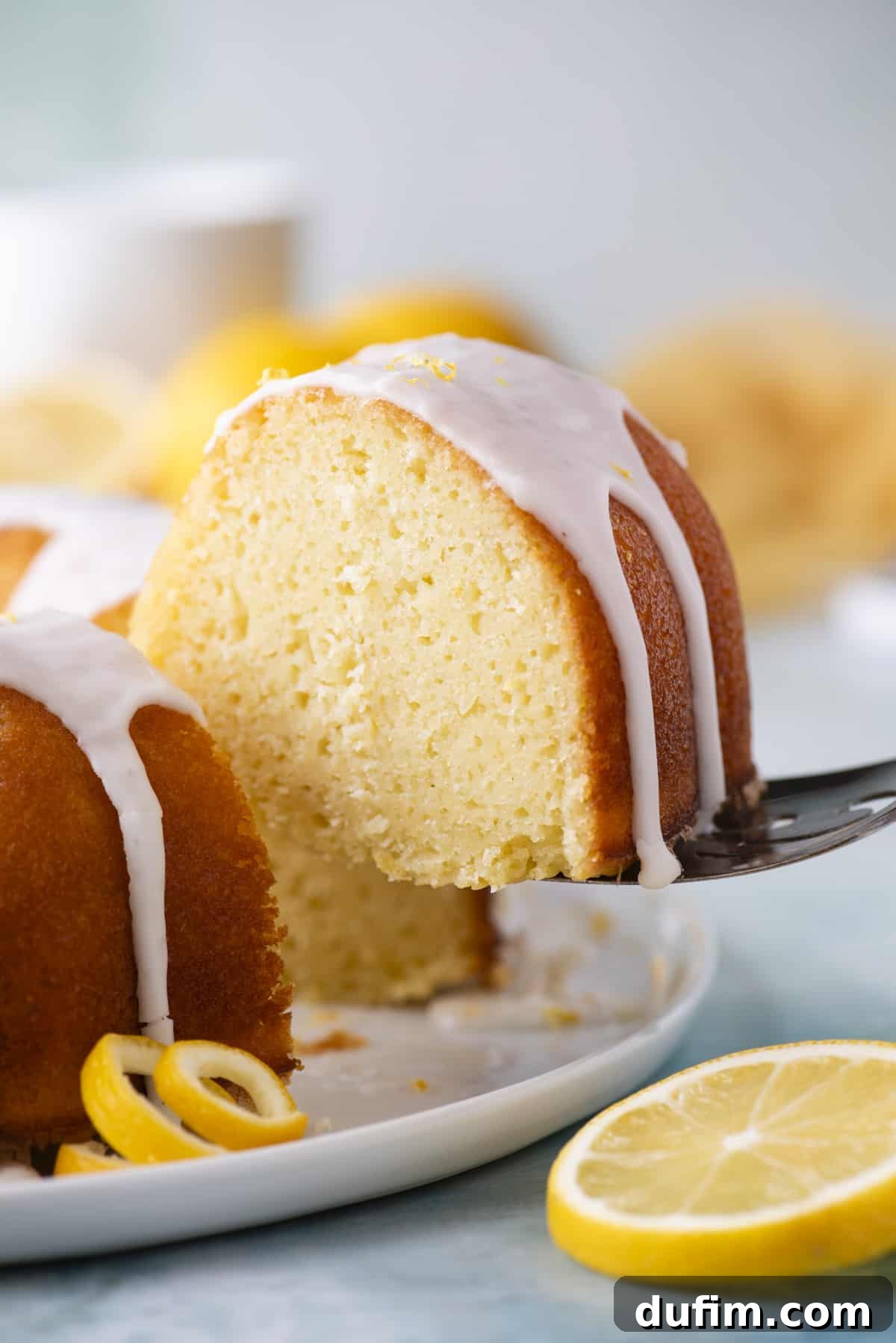
How to Store Your Moist Lemon Bundt Cake for Maximum Freshness
Proper storage is key to keeping your delicious lemon bundt cake moist and flavorful for days. Fortunately, this cake stores beautifully, allowing you to enjoy slices over several days or prepare it in advance for an event.
To store leftover cake, ensure it has completely cooled down to room temperature. Once cool, wrap the entire cake or individual slices tightly in aluminum foil or plastic wrap. Alternatively, you can place the cake in an airtight container. Stored at room temperature, your lemon bundt cake will remain wonderfully fresh and moist for up to 3-4 days. While it can be refrigerated, room temperature storage is generally preferred for bundt cakes as it helps maintain their soft texture. If refrigerating, bring slices to room temperature before serving for the best flavor and texture.

Frequently Asked Questions About Baking Lemon Bundt Cake
The primary difference lies in the pan used. A bundt cake is baked in a distinctive bundt pan, which gives it its iconic large, circular, fluted shape with a hole in the middle, resembling a giant donut. This unique shape allows for more even heat distribution during baking. Bundt cakes are typically known for being denser, more moist, and often deeper than many traditional layer cakes or sheet cakes.
The secret to an easy and clean release is meticulous pan preparation. Start by liberally greasing every part of your bundt pan with softened butter, ensuring all nooks and crannies are covered. Then, lightly dust the entire buttered interior with all-purpose flour, tapping out any excess. After baking, allow the cake to cool in the pan on a wire rack for about 15 minutes. This cooling period helps the cake firm up and contract slightly. Finally, invert the pan onto a serving plate or a piece of parchment paper, and gently tap the bottom to help the cake release. Patience is key!
Neither immediately removing it nor letting it cool completely in the pan is ideal. The best practice is a two-stage cooling process: First, allow the bundt cake to cool in its pan on a wire rack for about 10-15 minutes. This allows the cake to set and slightly pull away from the sides. After this initial cooling, carefully invert the pan to release the cake, then let the cake cool completely on the wire rack before applying any glaze or frosting. This ensures a firm cake and prevents condensation from making it soggy.
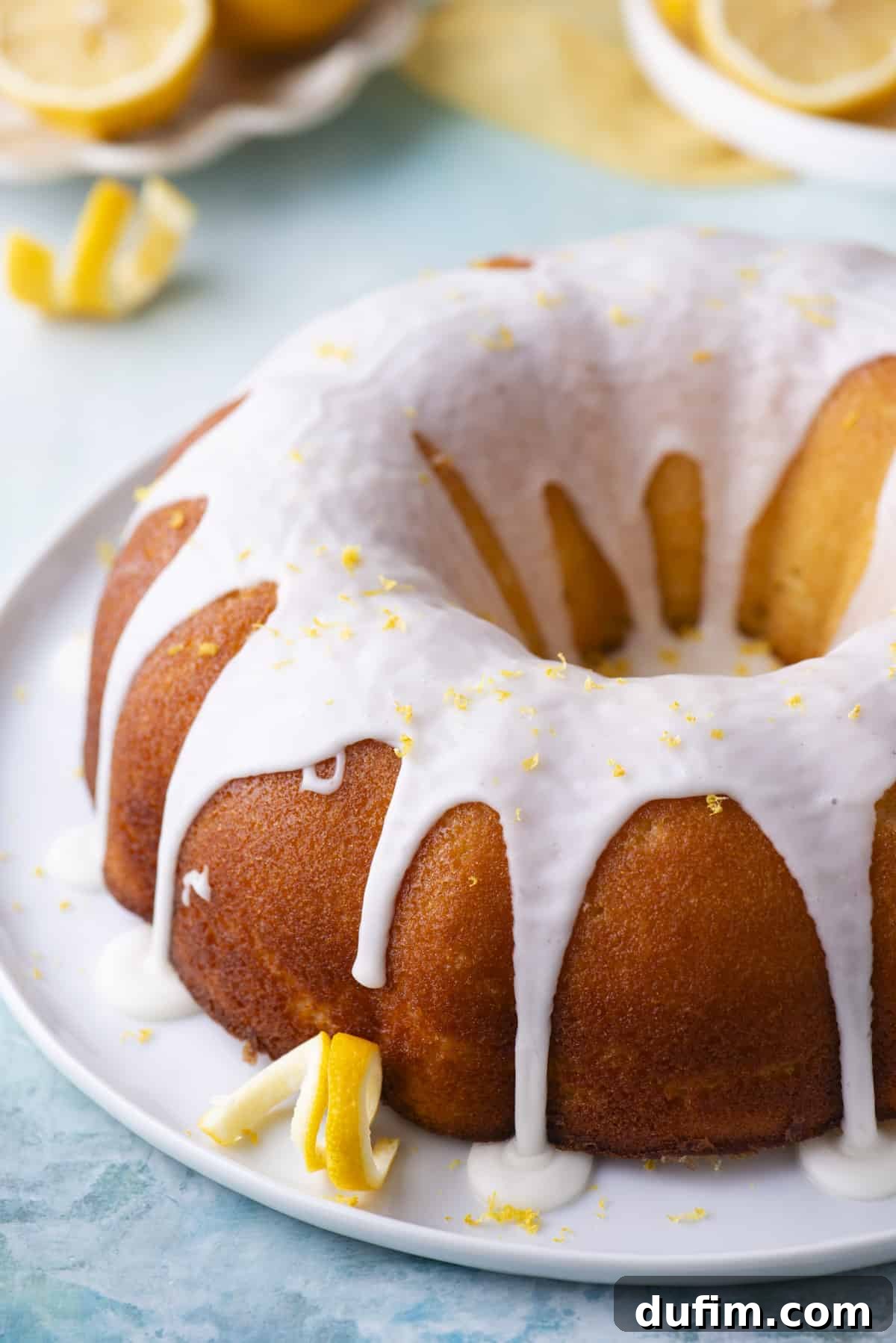
Explore More Delicious Bundt Cake Recipes
If you’ve fallen in love with the charm and deliciousness of bundt cakes, there are many more exciting flavors to discover. Expand your baking repertoire with these other fantastic bundt cake creations:
- Classic Banana Nut Bundt Cake
- Rich and Decadent Chocolate Bundt Cake
- Festive Chocolate Peppermint Bundt Cake
- Traditional German Chocolate Bundt Cake
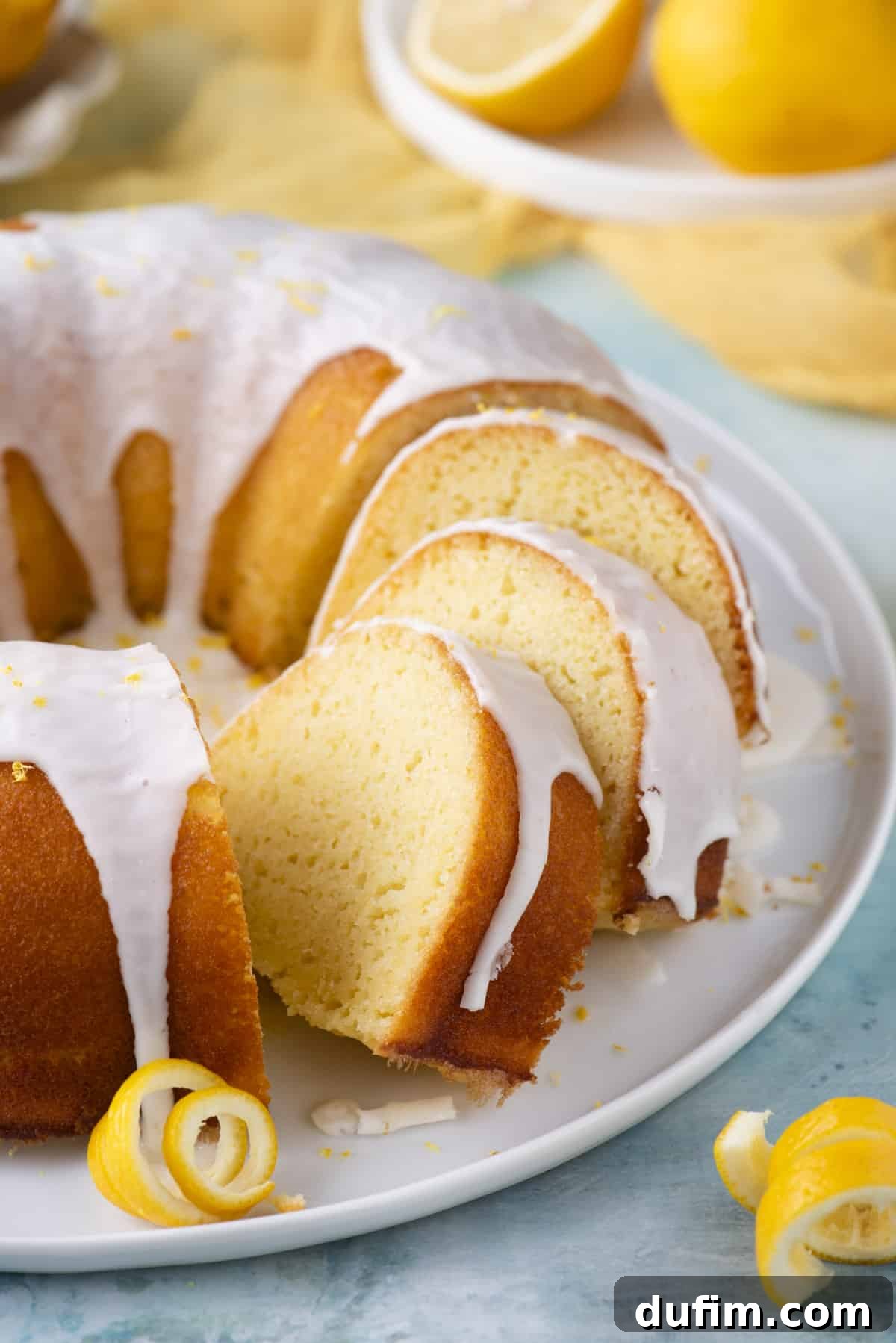
Enjoy this recipe!
The Best Moist Lemon Bundt Cake
By: Beth
Cook Time: 55 minutes
Cooling Time: 10-15 minutes
Servings: 16
Rate This Recipe
Print Recipe
This easy lemon bundt cake recipe consistently delivers on both exquisite taste and stunning presentation. Follow my simple, foolproof steps to create an incredibly moist, tender cake infused with bright lemon flavor, elegantly topped with a silky smooth lemon glaze.
Equipment You’ll Need
- 9-inch Bundt Cake Pan
- Large Glass Mixing Bowls
- Electric Mixer (Stand or Handheld)
- Rubber Spatula
- Kitchen Scale (optional, for precise measurements)
- Wire Cooling Rack
Ingredients for the Bundt Cake
- 3 cups (360g) all-purpose flour
- 2 ¼ tsp baking powder
- 1 ½ tsp salt
- 1 cup (226g) unsalted butter, softened to room temperature (2 sticks)
- 1 ½ cups (298g) granulated sugar
- Zest from 3 fresh lemons
- 6 large eggs, at room temperature
- ½ cup (114g) sour cream
- 4 Tbsp fresh lemon juice (from 2-3 lemons)
- 1 Tbsp vanilla extract
- ¾ cup (177ml) whole milk, at room temperature
For the Lemon Glaze
- 2 cups (227g) powdered sugar, sifted after measuring
- 2 Tbsp fresh lemon juice
- 2 Tbsp milk or heavy cream
- ⅛ tsp salt
Instructions
Preparing the Bundt Cake
- Preheat Oven: Preheat your oven to 350°F (175°C).
- Combine Dry Ingredients: In a mixing bowl, thoroughly whisk together the all-purpose flour, baking powder, and salt. Set aside.
- Cream Butter, Sugar, Zest: In a large mixing bowl, using an electric mixer on medium speed, beat the room temperature unsalted butter, granulated sugar, and lemon zest for 1-2 minutes until the mixture is light in color and fluffy.
- Add Eggs: Add the large eggs to the mixture, three at a time, beating well after each addition until fully incorporated.
- Mix Wet Additions: Gently mix in the sour cream, fresh lemon juice, and vanilla extract until just combined.
- Alternate Dry and Wet with Milk: Add half of the dry ingredient mixture to the wet mixture and beat on low speed until mostly combined. Next, add the whole milk and beat again on low. Finally, add the remaining dry ingredients, mixing on low speed only until no flour streaks are visible. Avoid overmixing.
- Prepare Bundt Pan: Liberally grease a 9-inch bundt pan with softened butter, ensuring every curve and crevice is coated. Dust the buttered pan with a few tablespoons of all-purpose flour, rotating and tapping the pan to evenly coat the entire interior. Invert the pan and tap out any excess flour.
- Bake Cake: Transfer the prepared batter to the bundt pan. Bake in the preheated oven for 50-55 minutes, or until the top is golden brown, appears set, and a toothpick inserted into the center comes out clean. If the cake browns too quickly, tent it loosely with foil for the last 15 minutes.
- Cool and Release: Remove the cake from the oven and let it cool in the pan on a wire rack for 15 minutes (do not invert yet). After 15 minutes, carefully invert the bundt pan onto a serving plate or piece of parchment paper, tapping the bottom gently to release the cake. Allow the cake to cool completely on the wire rack before glazing.
Crafting the Lemon Glaze
- Prepare Glaze: Sift the powdered sugar into a small bowl. Add 2 tablespoons of fresh lemon juice, 2 tablespoons of milk or heavy cream, and the vanilla extract. Whisk until smooth. Adjust consistency by adding more lemon juice (to thin) or powdered sugar (to thicken). Stir in the ⅛ tsp salt.
- Apply Glaze: Drizzle the prepared lemon glaze generously over the completely cooled bundt cake. Allow the glaze to set for 30-60 minutes before slicing and serving.
Recipe Video Overview
Watch this helpful video to see the lemon bundt cake baking process in action, from pan preparation to the final drizzle of glaze. Visual guidance can often make tricky steps much clearer!
(Video content would typically be embedded here for visual instructions)
Nutritional Information (Approximate Per Serving)
Serving: 1 slice
Calories: 376 kcal
Carbohydrates: 53g
Protein: 6g
Fat: 16g
Saturated Fat: 9g
Polyunsaturated Fat: 1g
Monounsaturated Fat: 4g
Trans Fat: 0.5g
Cholesterol: 108mg
Sodium: 332mg
Potassium: 90mg
Fiber: 1g
Sugar: 35g
Vitamin A: 547IU
Vitamin C: 2mg
Calcium: 74mg
Iron: 2mg
Important Nutrition Disclosure
All nutritional values provided are approximate estimations and are offered to the reader as a courtesy. Please note that altering ingredients and/or quantities will directly affect and change the estimated nutritional calculations. This information is not a substitute for professional nutritional advice.
If you loved baking and tasting this exquisite Lemon Bundt Cake, please consider leaving a rating and a comment below! Your feedback helps other bakers discover and enjoy this recipe too.