
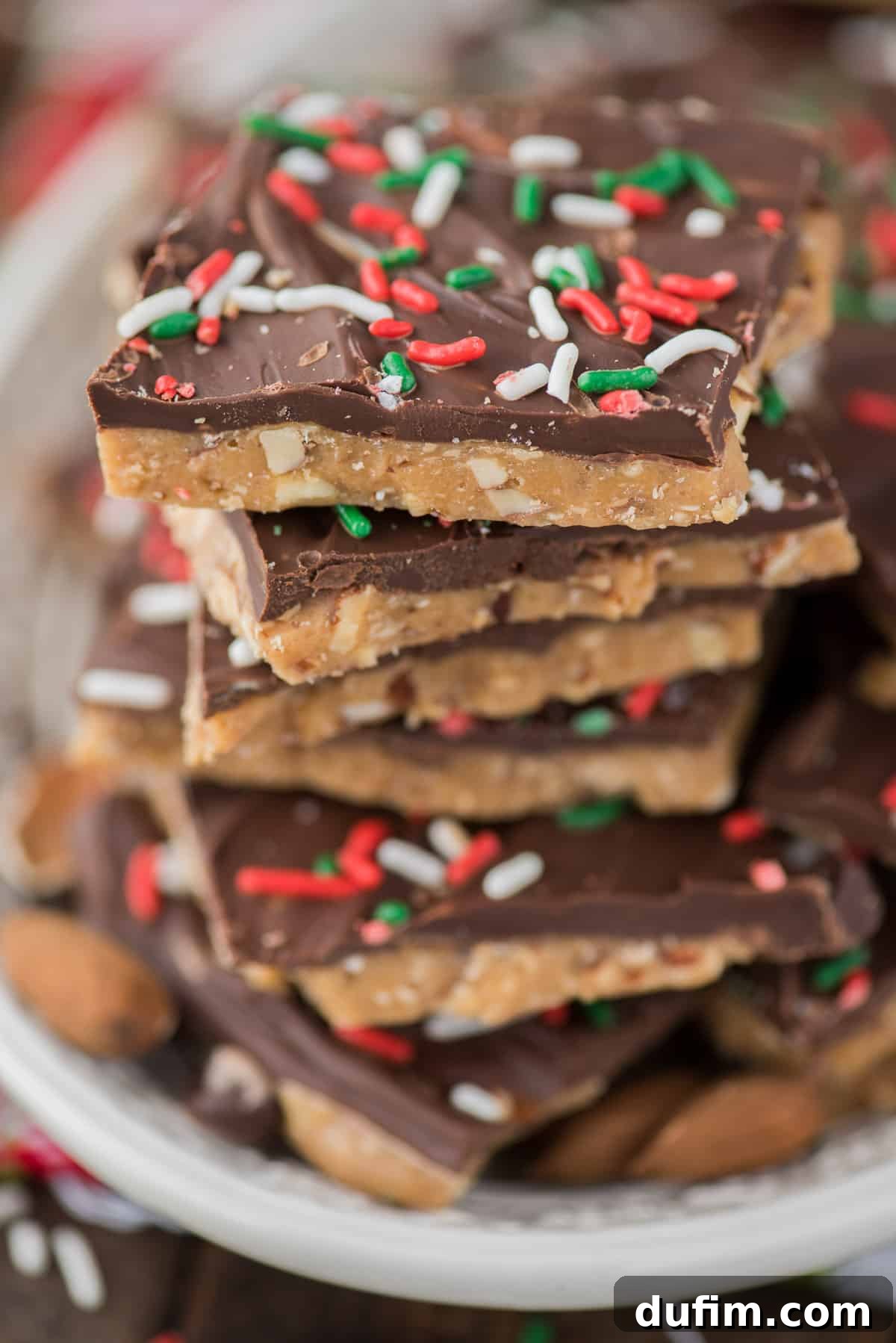
Dive into the delightful world of homemade English toffee! Our ultimate guide provides you with a meticulously crafted English toffee recipe, complete with clear instructions for both candy thermometer users and those who prefer a more intuitive approach. Get ready to create a truly irresistible treat that will undoubtedly become your go-to homemade Christmas candy!
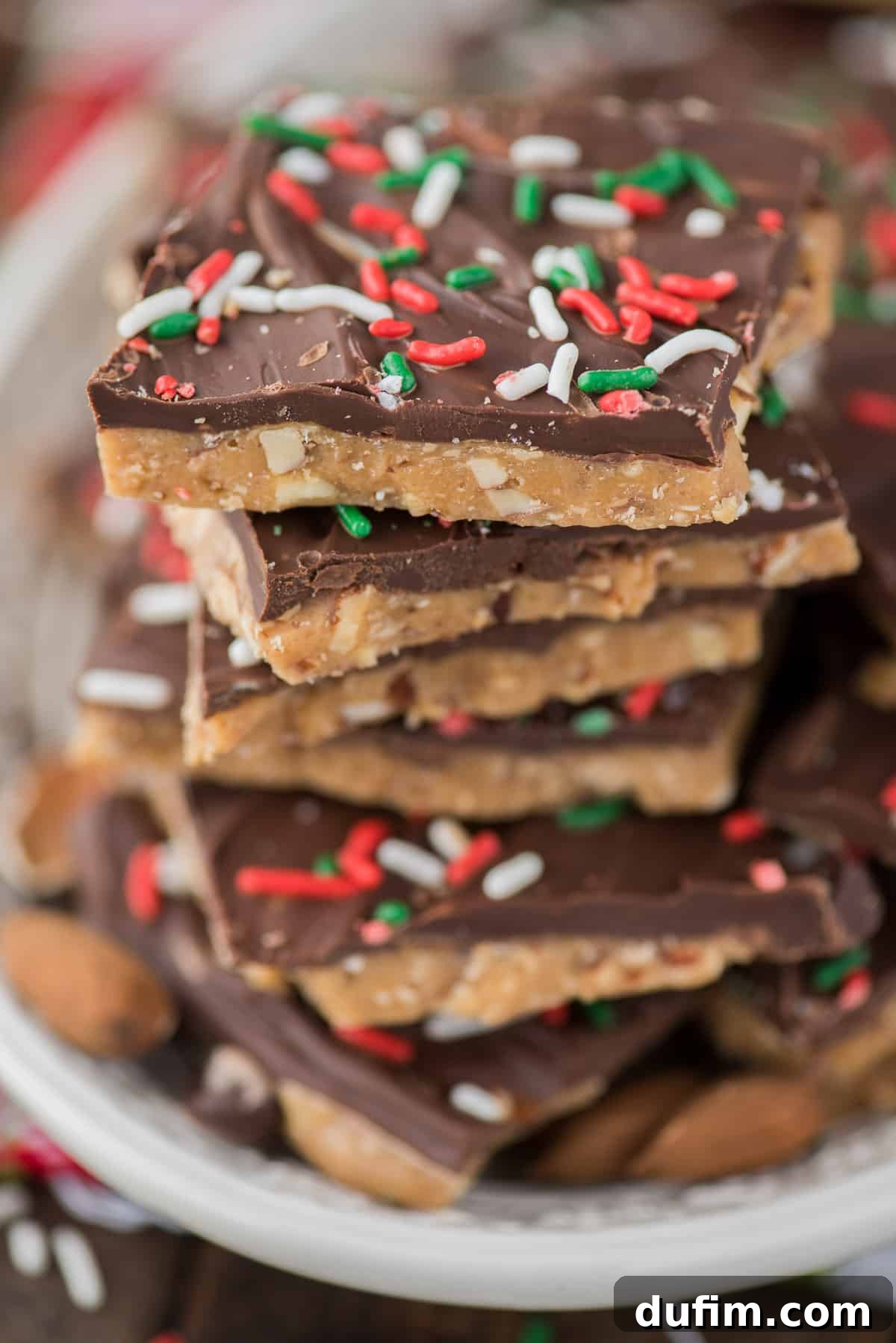
Welcome to the most comprehensive guide you’ll find on making English toffee! I’ve packed this post with invaluable tips, tricks, and detailed steps to ensure your homemade English toffee recipe turns out perfectly every single time. Forget the fear of candy making; with these insights, success is within your reach!
Let’s be realistic from the start: candy making, especially toffee, is an art that requires precision and a bit of practice. When I first embarked on my toffee journey, even with my baking experience, my initial three batches were utter failures. It’s a testament to the subtle nuances and critical factors involved in achieving that perfect, crisp, buttery goodness.
But here’s the good news: I’ve learned from every mistake, refined my technique, and compiled all my knowledge into this ultimate resource. I am going to pass on every crucial tip and trick to you, so you can bypass the common pitfalls and achieve glorious results on your very first attempt at this exquisite English toffee recipe!
What is English Toffee? A Delectable Hard Candy Explained
English toffee is a beloved confection, characterized by its distinctively hard, brittle, and buttery texture. At its heart, it’s a simple yet magical blend of butter and sugar, meticulously heated on the stovetop until it caramelizes and reaches the “hard crack” stage. This critical stage occurs around 300ºF (149ºC), where the sugar molecules undergo a transformation, yielding a candy that snaps cleanly when broken, rather than bending or chewing.
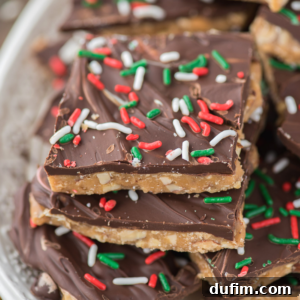
The result is a rich, intensely sweet, and utterly buttery candy base, which is traditionally topped with a layer of melted chocolate and often sprinkled with finely chopped nuts, such as almonds. Once fully cooled and set, the sheet of toffee is broken into irregular, irresistible pieces, ready for enjoyment.
While similar to caramel in its primary ingredients, English toffee differentiates itself through its higher cooking temperature and firm texture. Caramel remains soft and chewy, whereas toffee delivers a satisfying, crisp crunch. If you appreciate the delightful snap of toffee, you might also enjoy other hard candies like this hard tack candy recipe, perfect for expanding your homemade candy repertoire!
Essential Kitchen Tools for Perfect English Toffee
Having the right tools is paramount for successful candy making. Here’s what you’ll need to prepare your homemade English toffee:
- Heavy-Duty Baking Sheet: A sturdy baking sheet provides a stable surface for cooling your toffee. Choose one that is light in color to prevent over-browning on the bottom.
- Silicone Mat or Parchment Paper: Essential for easy release. A silicone mat (like Silpat) is highly recommended for its non-stick properties and even heat distribution, but good quality parchment paper will also work.
- Heavy-Bottomed Saucepan: A 2-quart or 3-quart saucepan with a thick bottom is crucial. This helps distribute heat evenly and prevents the sugar from scorching. Stainless steel is often preferred for its durability and even heating.
- Candy Thermometer: While not strictly mandatory (we’ll cover how to make toffee without one!), a candy thermometer is a game-changer for accuracy. It takes the guesswork out of reaching the precise hard crack stage.
- Heat-Resistant Silicone Spatula: For constant stirring and spreading the hot toffee. A sturdy, heat-resistant spatula is indispensable.
- Oven Mitts: You’ll be handling a very hot pan and pouring molten sugar. High-quality oven mitts are non-negotiable for safety.
High-Quality Ingredients for Irresistible Toffee
The simplicity of English toffee means that the quality of your ingredients truly shines through. Here’s a breakdown of what you’ll need to create this buttery masterpiece. For precise ingredient quantities and comprehensive instructions, please refer to the recipe card located further down this post.
- Whole Almonds: Keeping the skin on adds a lovely texture and rustic appeal. You can lightly toast them for enhanced flavor. Other nuts like pecans or walnuts can also be used for variation.
- Unsalted Butter: The star of the show! Unsalted butter allows you to control the overall saltiness of your toffee. If you only have salted butter, you can use it, but be sure to omit the additional salt from the recipe. High-quality butter makes a noticeable difference.
- Granulated Sugar: The foundation of the toffee’s sweetness and structure. Use regular white granulated sugar for the best results.
- Salt: A touch of salt perfectly balances the sweetness and enhances all the flavors. Omit if using salted butter.
- Vanilla Extract: Adds a warm, aromatic depth to the toffee. Be sure to add it at the correct stage to preserve its delicate flavor.
- Milk Chocolate Chips: These melt into a smooth, creamy topping that beautifully complements the crunchy toffee. High-quality milk chocolate creates the best texture and flavor. Feel free to use dark chocolate for a less sweet, richer contrast.
- Christmas Jimmie Sprinkles (Optional): A fun and festive addition, especially when making this for the holidays. Get creative with your toppings!
Mastering English Toffee: Expert Tips for Success
Making English toffee can feel daunting, but with these pro tips, you’ll be well on your way to a perfect batch. I’ve distilled years of experience and a few failed attempts into actionable advice, ensuring your toffee journey is a delicious one!
- Preparation is Your Secret Weapon (Mise en Place): Candy making moves quickly, and there’s no time to scramble for ingredients or tools. Before you even turn on the stove, have *everything* prepped and ready: almonds chopped and toasted, chocolate chips measured, baking sheet lined, and your spatula and oven mitts within arm’s reach. This proactive approach eliminates stress and allows you to focus on the cooking process. I recommend planning to buy enough ingredients for at least two batches. My first few attempts were learning experiences, not perfect outcomes. Treat your initial batch as a “test run”—observe how the mixture behaves, how quickly it changes color, and the pace required. This mental shift removes pressure and optimizes your learning curve.
- The Candy Thermometer: Your Trusty Guide: While it is possible to make this recipe without a candy thermometer, having one is incredibly beneficial. It provides an objective measure of your candy’s temperature, removing all guesswork. Consistently, my thermometer proved spot-on, aligning perfectly with the visual cues of color and texture changes. If you don’t have one, don’t worry—I’ll elaborate on the visual cues you need to look for. If you do use one, ensure it’s calibrated correctly by testing it in boiling water (it should read 212°F or 100°C at sea level).
- Embrace Patience and Self-Compassion: Even for seasoned bakers like myself, there’s a definite learning curve with candy making. It requires attention, consistency, and a willingness to learn. Don’t get discouraged if your first batch isn’t absolutely perfect. Remember, you’re learning a new skill! Take your time, focus on the process, and as I mentioned, having extra ingredients means a redo is less stressful. Once you master it, you’ll be rewarded with intensely buttery, sugary, and perfectly crunchy homemade toffee that is wonderfully addicting!
- Humidity Matters: Believe it or not, the humidity in your kitchen can impact candy making. On very humid days, sugar can absorb moisture, making it harder for the candy to reach the desired temperature and set properly. If it’s a particularly damp day, you might find your toffee takes longer to cook or has a slightly softer texture. Choose a dry day if possible for the best results.
Crucial Guidance: Important Notes Before You Start Making Toffee
Before you begin, please take a moment to thoroughly read these essential tips. They are designed to prevent common issues and guide you towards flawless English toffee on your first try!
- Continuous Stirring is Non-Negotiable: Once your butter, sugar, salt, and vanilla extract (let’s call this “the mixture”) are simmering in the pot, you cannot leave it unattended for more than 20 seconds without stirring. This is not a time for multitasking! Have all other components ready and waiting so that as soon as the toffee hits its perfect color and temperature, you can immediately pour it onto your prepared silicone mat. Consistent stirring prevents burning on the bottom and promotes even cooking.
- Observe the Color Transformation: For most of the cooking process (roughly the first 8-10 minutes), the mixture will maintain a pale, yellowish hue. Don’t be fooled; the dramatic color change happens rapidly towards the very end. Once you see it shift to a beautiful amber brown, continue cooking and stirring for no more than 60 additional seconds. This final minute is crucial for reaching the hard crack stage without burning.
- Embrace the Boil and Foam: As the mixture heats, it will begin to boil and foam vigorously. This is entirely normal! There’s no need to panic; you’re doing everything right. Continue your consistent stirring, ensuring you stir for 5-10 seconds at least every 20 seconds. This stage is demanding, but critical for proper caramelization.
- Maintain Consistent Heat: This tip is fundamental to preventing separation. It is vital that you DO NOT raise or lower the heat setting once the mixture begins to cook. Fluctuations in temperature can cause the butter to separate from the sugar, resulting in an unappealing, oily, and solid mass that simply won’t combine. A heavy-bottomed pan will aid significantly in maintaining steady heat.
- The Candy Thermometer’s Target: If you are using a candy thermometer, aim for precisely 300ºF (149ºC). As the mixture approaches this temperature, typically between 285-300ºF, you will notice the significant color change to amber. As soon as it hits 300ºF, promptly remove the pan from the heat and stir in the chopped almonds.
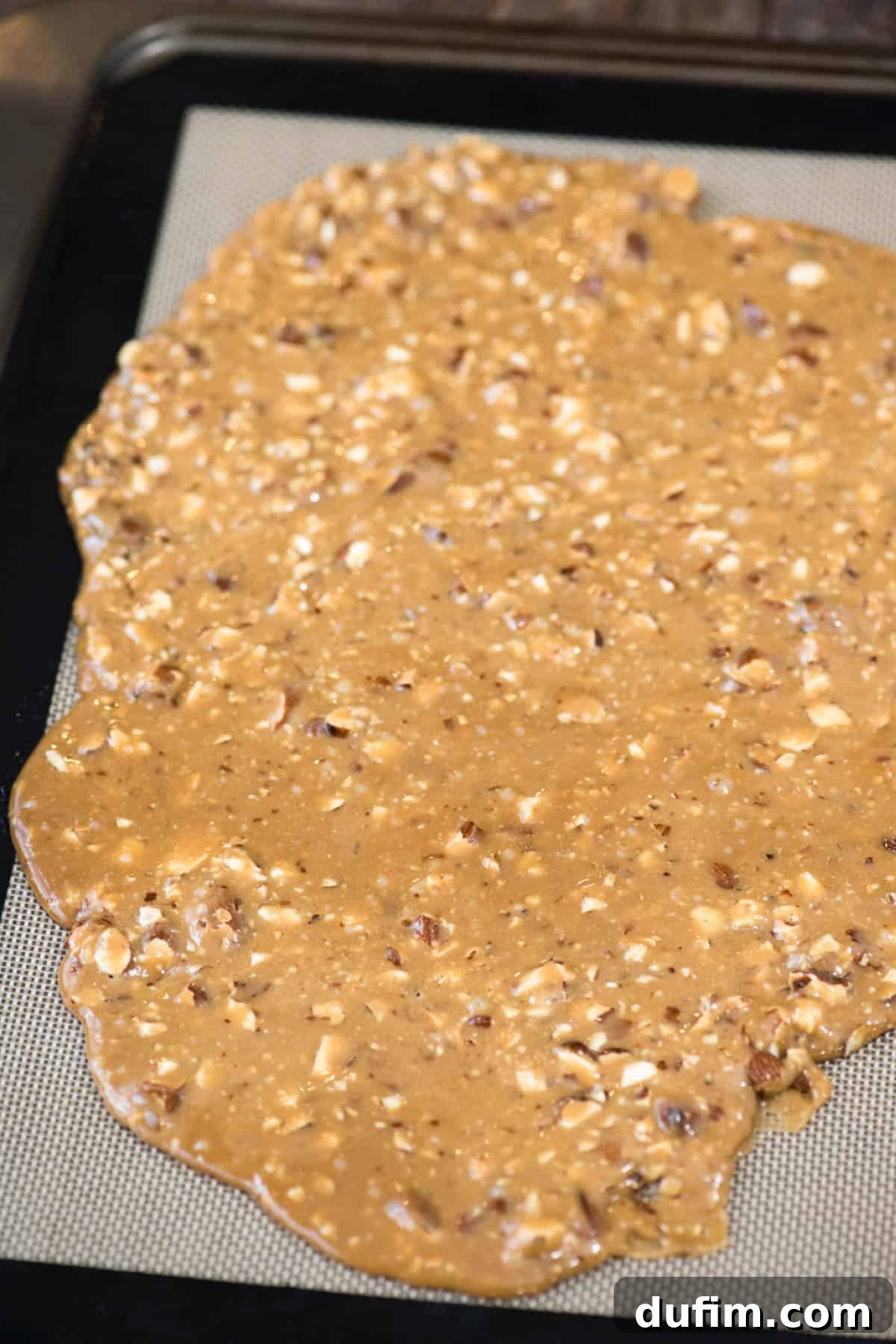
- Act Fast After Removing from Heat: The moment the almonds are stirred in, swiftly (and safely, using oven mitts!) pour the hot toffee mixture onto your prepared silicone mat or parchment-lined baking sheet. Working quickly with your spatula, spread the toffee into a thin, even layer. It sets very rapidly, so speed and precision here are key.
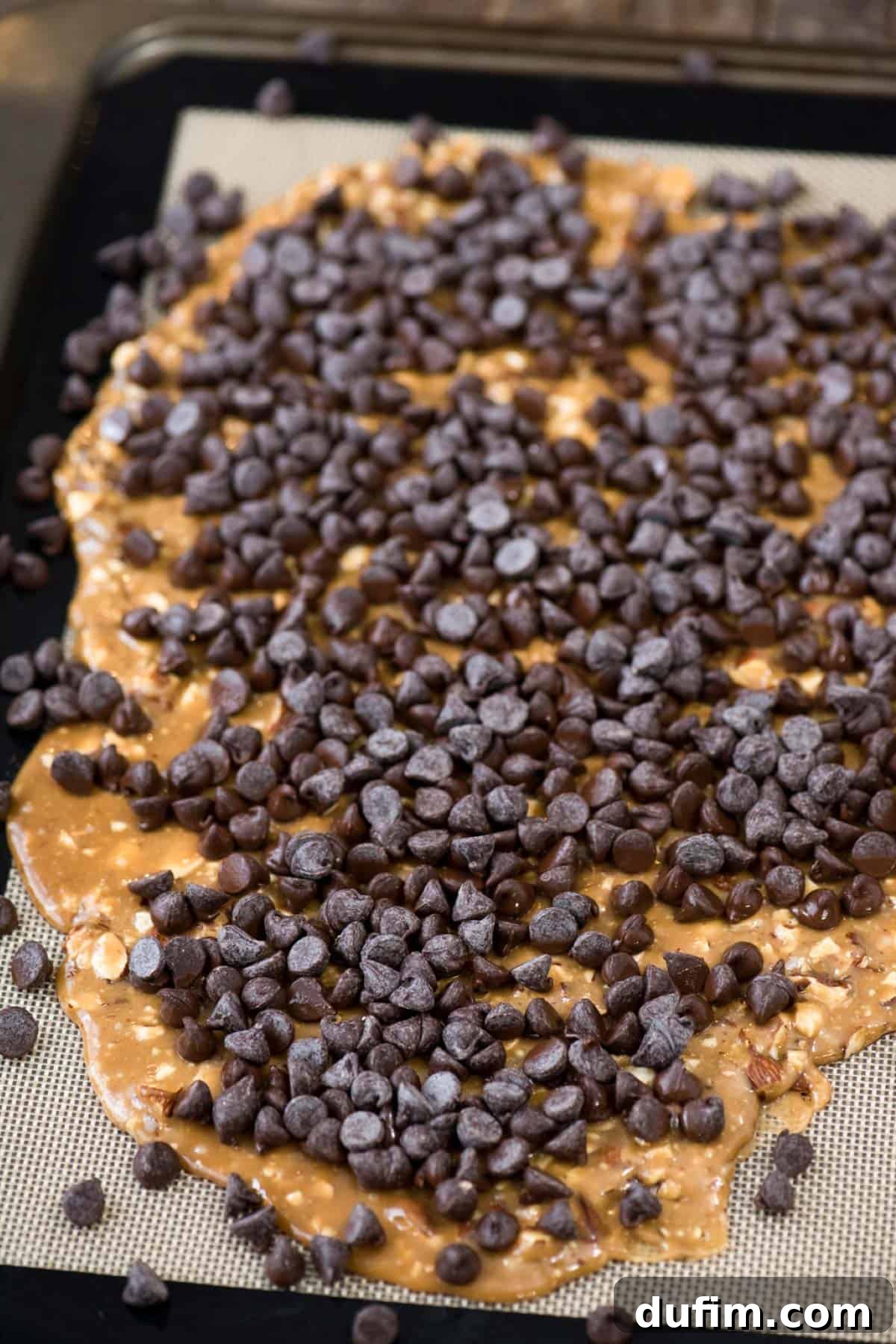
- Perfecting the Chocolate Layer: Allow the spread toffee to cool for just 2-3 minutes. This slight cooling allows the surface to firm up just enough. Then, generously sprinkle your milk chocolate chips over the warm toffee. Let the chips sit for about a minute, allowing the residual heat to gently melt them. Finally, use your spatula to spread the now-softened chocolate into a beautiful, even layer across the toffee.

Troubleshooting Your Toffee: Common Issues & Solutions
Even with the best intentions, things can sometimes go awry in the kitchen. Here are solutions to the most frequent problems encountered when making English toffee.
Why Did My Toffee Separate?
Toffee separation, where the butter seems to separate from the sugar, often results in a greasy, crumbly mess. The primary cause is inconsistent heating. If the temperature fluctuates—either too high, too low, or rapidly changed—the emulsion of butter and sugar can break. Using a heavy-bottomed pan or a Dutch oven is crucial, as these cookware types distribute heat much more evenly, significantly reducing the risk of separation. Avoid raising or lowering the heat dramatically during cooking.
How to Fix Separated Toffee
If your toffee does separate, don’t despair immediately! You might be able to salvage it. Remove the pan from the heat and try adding a tablespoon of hot water, then stir vigorously with a heat-resistant spatula or whisk until the mixture recombines. You may need to return it to very low heat briefly while stirring to encourage the emulsion to reform. However, prevention is always better than cure; focus on steady, consistent heat from the start.
Why Did My Toffee Turn Out Chewy or Soft?
Chewy or soft toffee is a clear indication that the candy mixture was not heated long enough to reach the hard crack stage. Crystallization, which creates the brittle texture, occurs only at high temperatures (around 300°F/149°C). If you removed it from the heat too early, the sugar syrup wouldn’t have cooked sufficiently to become firm. This is where a candy thermometer is incredibly helpful. Without one, you must rely on visual cues, ensuring the mixture is a deep amber brown before removing it from the heat. Remember the advice: be kind to yourself, and consider having enough ingredients for a second batch as a learning opportunity!
Why is My Toffee Grainy?
Grainy toffee is usually caused by sugar crystals forming. This can happen if sugar crystals cling to the sides of the saucepan and fall back into the mixture, or if you stir too vigorously once the mixture starts boiling, causing sugar crystals to splash onto the sides of the pan. To prevent this, ensure your saucepan is impeccably clean before you start. Once the sugar and butter mixture begins to boil, avoid stirring directly on the sides of the pan. You can also use a wet pastry brush to gently wash down any sugar crystals that form on the pan’s interior above the boiling line.
My Toffee Burnt, What Went Wrong?
Burnt toffee is often a result of heat that is too high, insufficient stirring, or using a pan that is too thin and heats unevenly. High heat can cause the sugar to caramelize too quickly, leading to burning before the desired temperature is reached. Ensure you are cooking over medium heat and stirring almost constantly, especially towards the end of the cooking process. Unfortunately, once toffee burns, there’s no way to salvage the burnt flavor, and it’s best to discard the batch and start fresh.

How To Store Homemade English Toffee for Optimal Freshness
Proper storage is key to keeping your delicious homemade English toffee fresh, crunchy, and enjoyable for as long as possible.
Room Temperature Storage: Once the toffee has completely cooled and been broken into pieces, store it in an airtight container or a heavy-duty ziplock bag. Place the container on your kitchen counter or in a cool, dry pantry. Stored this way, English toffee will maintain its ideal texture and flavor for up to 1 week. Ensure it’s kept away from direct sunlight or heat sources, which can cause the chocolate to melt or the toffee to soften prematurely.
Freezing for Long-Term Enjoyment: English toffee freezes beautifully, making it an excellent candidate for making ahead or enjoying later. To freeze, arrange the cooled, broken pieces in a single layer on a parchment-lined baking sheet and flash freeze for about an hour until solid. Then, transfer the frozen toffee pieces to an airtight freezer-safe storage bag or container. You can layer the pieces with parchment paper to prevent sticking. When properly frozen, homemade toffee can be stored for up to 6 months. To enjoy, simply remove the desired amount from the freezer and let it come to room temperature for a few minutes.
Frequently Asked Questions About English Toffee
Yes, absolutely! I myself have a gluten sensitivity, which is why I love making toffee—it’s naturally gluten-free. The core ingredients (butter, sugar, almonds, chocolate) are typically free from gluten. However, it’s always wise to verify the labels of your specific brands of almonds and chocolate chips to ensure they do not carry “may contain wheat” warnings, especially if you have a severe sensitivity or allergy.
While both caramel and toffee share similar foundational ingredients like sugar and butter, they are distinct confections achieved through different cooking temperatures and resulting textures. Toffee is cooked to a higher temperature (around 300ºF or hard crack stage), which gives it its signature brittle, crunchy, and snappy texture. Caramel, on the other hand, is cooked to a lower temperature (typically 245ºF or firm ball stage), resulting in a soft, chewy, and pliable consistency.
Absolutely! While milk chocolate chips are traditionally used and offer a classic creamy sweetness, you can certainly experiment with other types of chocolate. Dark chocolate provides a lovely bittersweet contrast to the buttery toffee, while white chocolate can add a different kind of sweetness and appearance. Feel free to use your favorite! Just ensure you’re using good quality chocolate chips or finely chopped bars for the best melting and flavor.
Lightly toasting the almonds (or any nuts you choose) before adding them to the toffee is highly recommended. Toasting brings out their natural nutty flavor, enhancing the overall taste and aroma of the toffee. You can do this quickly in the microwave as specified in the recipe, or spread them on a baking sheet and toast them in a preheated oven at 350°F (175°C) for about 5-7 minutes, stirring once, until fragrant.
Yes, vanilla extract is classic, but you can certainly experiment! A tiny pinch of cinnamon or a few drops of almond extract (in addition to or instead of vanilla) can add interesting nuances. Just be mindful that strong extracts can overpower the delicate butter flavor, so start with a small amount.
More Festive Christmas Desserts to Explore
If you’ve enjoyed making this homemade English toffee, you’ll love these other festive treats perfect for the holiday season or any special occasion:
- Irresistible Swirled Peppermint Bark
- Easy & Delicious Haystack Cookies
- Copycat Sticky Paws (Williams Sonoma Style)
- Festive Peppermint Kiss Oreo Balls
Average rating displayed.
Classic English Toffee
Beth
15 minutes
2 hours
2 hours
15 minutes
20
servings
Print Recipe
Equipment
-
Christmas Jimmies Sprinkles
-
Candy Thermometer
-
Silicone Baking Mat
-
Heat-Resistant Spatula
-
Heavy-Bottomed Saucepan (2-3 quart)
-
Oven Mitts
Ingredients
- 1 cup (142g) whole almonds , with the skin on
- 1 cup (226g) unsalted butter, 2 sticks
- 1 cup (198g) granulated sugar
- ¼ tsp salt
- ½ tsp vanilla extract
- 2 cups (340g) milk chocolate chips, or one 12 oz package
- Christmas jimmie sprinkles (optional, for topping)
Instructions
-
Critical First Step: Before you begin any cooking, please read the section titled “Crucial Guidance: Important Notes Before You Start Making Toffee” in this post thoroughly. This will equip you with essential tips for a successful batch.
-
Roughly chop the whole almonds. Don’t worry about perfect uniformity; a variation in size adds character. Place the chopped almonds in a microwave-safe glass bowl and microwave for 2 minutes, stirring well after each minute to ensure even toasting. This brief toast enhances their flavor. Set them aside.1 cup (142g) whole almonds
-
Measure out 2 cups of milk chocolate chips and set them aside. Having them ready is crucial for rapid assembly later.
-
Line a sturdy baking sheet with a silicone baking mat or parchment paper. This non-stick surface is vital for easy toffee removal. Set this prepared sheet aside, within easy reach.
-
In a heavy 2-quart or 3-quart saucepan, combine the unsalted butter, granulated sugar, vanilla extract, and salt. Place the saucepan over medium heat. Stir constantly with your heat-resistant spatula until all the butter has completely melted and the ingredients are well combined.1 cup (226g) unsalted butter,
1 cup (198g) granulated sugar,
1/4 tsp salt,
1/2 tsp vanilla extract -
Once the butter is melted, you can set a 10-minute timer as a general guide. However, the toffee’s readiness is determined by its color and/or temperature. Continue cooking and stirring the mixture consistently for approximately 8 to 13 minutes. The mixture will appear pale and yellowish for most of this time, boiling and foaming vigorously (this is normal!). The crucial color change to a light brown or rich amber brown will happen rapidly towards the very end, usually around the 10-minute mark or when it reaches 285-300°F (140-149°C) on a candy thermometer. Once it achieves the amber brown color, continue cooking and stirring for no more than 60 additional seconds. Maintain stirring at least every 20 seconds for 5-10 seconds throughout this entire process; it’s extremely hands-on!
-
As soon as the mixture reaches the perfect amber color and/or 300°F, immediately remove the saucepan from the heat. Quickly stir in the pre-toasted chopped almonds until they are evenly distributed throughout the hot toffee.
-
Working quickly and carefully (using oven mitts!), pour the hot toffee mixture onto your lined baking sheet. Use your spatula to rapidly spread the mixture into a thin, even layer. The toffee cools and sets very fast, so swift action is essential here to achieve an even thickness.
-
Immediately after spreading the toffee, sprinkle the reserved milk chocolate chips evenly over the entire surface. Allow the chocolate chips to sit for about 1 minute; the residual heat from the toffee will gently melt them. Then, with a clean spatula, spread the now-softened chocolate into a smooth, even layer across the toffee.2 cups (340g) milk chocolate chips
-
For a festive touch, sprinkle with Christmas jimmie sprinkles while the chocolate is still soft.Christmas jimmie sprinkles
-
Allow the toffee to cool completely and set on the counter at room temperature. This can take a couple of hours. Once fully hardened, break the toffee into irregular, bite-sized pieces. Store the finished English toffee in an airtight container to maintain its freshness and crunch.
Video Tutorial
Nutrition Information (per serving)
Calories:
220
kcal
|
Carbohydrates:
19
g
|
Protein:
2
g
|
Fat:
16
g
|
Saturated Fat:
8
g
|
Polyunsaturated Fat:
1
g
|
Monounsaturated Fat:
5
g
|
Trans Fat:
1
g
|
Cholesterol:
28
mg
|
Sodium:
35
mg
|
Potassium:
53
mg
|
Fiber:
1
g
|
Sugar:
17
g
|
Vitamin A:
284
IU
|
Calcium:
22
mg
|
Iron:
1
mg
Nutrition Disclosure
All nutritional values are approximate and provided to the reader as a courtesy. Changing ingredients and/or quantities will alter the estimated nutritional calculations.
Did you love this recipe? Share your thoughts below!