
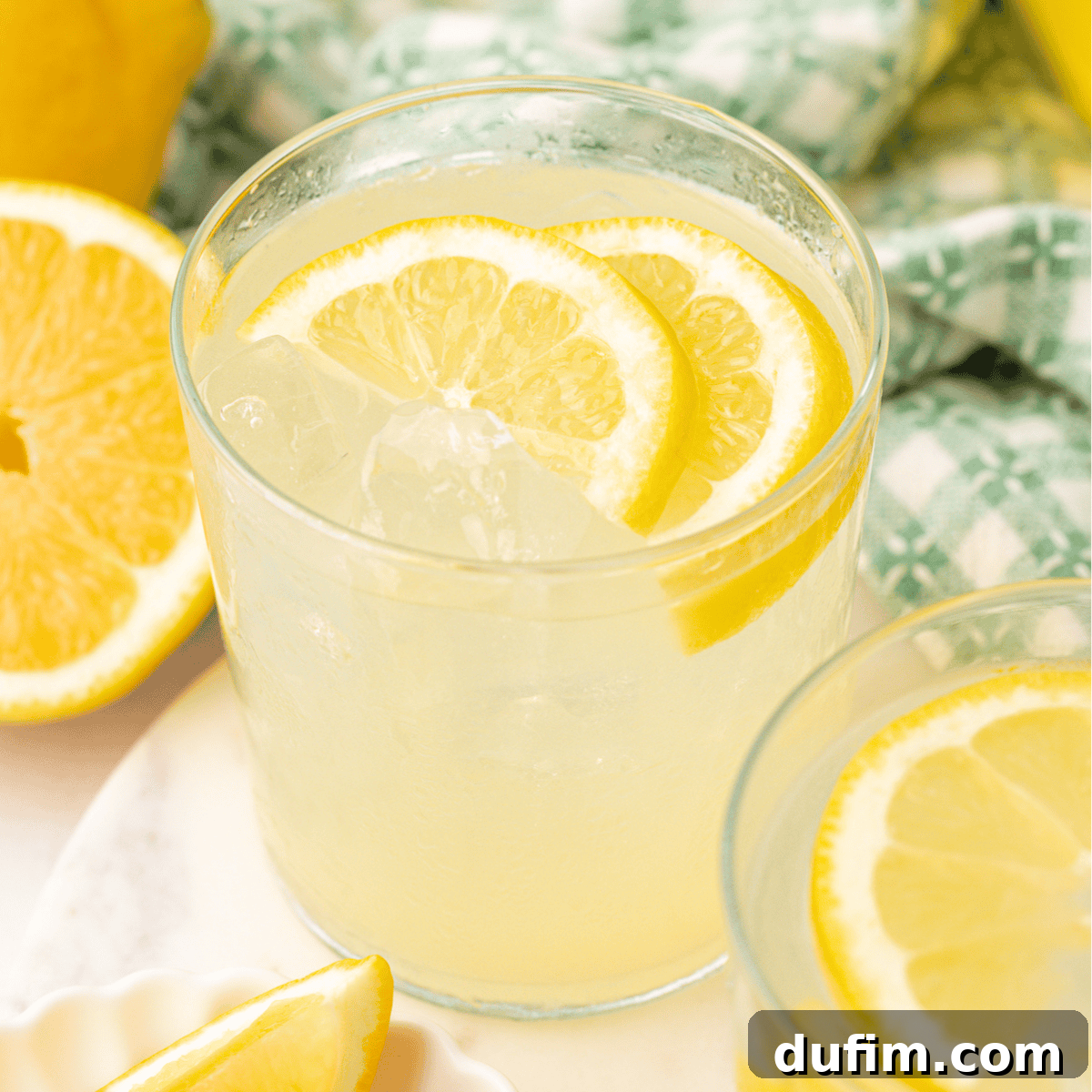
Forget everything you thought you knew about homemade lemonade. After countless batches and meticulous testing, I’ve finally perfected the elusive lemon-to-sugar balance. Most recipes lean on a 1:1 simple syrup ratio, resulting in a drink that’s often cloyingly sweet, masking the bright, zesty essence of fresh lemons. My signature approach delicately dials back the sugar, allowing the vibrant, natural flavor of the lemons to truly shine through.
The result is a beverage that is brilliantly bright, wonderfully balanced, and incredibly refreshing. You won’t find any sugar overload or an unpleasantly sour pucker here. This is real lemonade, crafted to perfection, by a seasoned culinary pro who understands how to develop truly irresistible flavors that just *work*.

Why This Homemade Lemonade Recipe Truly Works
As a recipe developer with years of experience refining everything from bakery-style muffins to delicate buttery scones, I’ve cultivated a keen intuition for achieving the “sweet spot” in flavor profiles. When it came to perfecting the ultimate homemade lemonade recipe, I approached it with the same level of dedication and scientific curiosity. My kitchen became a testing ground where I meticulously experimented with various lemon-to-water ratios, adjusted sugar levels incrementally, and even considered chilling times to unlock the most vibrant and authentic lemon taste.
Many traditional lemonade recipes call for a simple syrup made with equal parts sugar and water (a 1:1 ratio). While this method is common, I consistently found it resulted in a drink that was far too sweet. This excessive sweetness didn’t just mute the fresh lemon flavor; it completely overpowered it, making the beverage taste more like sugary water than a refreshing, tangy lemonade. My refined version deliberately scales back the sugar, finding that delicate balance that allows the inherent brightness and zest of the lemons to dominate, without being overly sour or causing an uncomfortable pucker. It’s the perfect happy medium – truly a perfectly balanced sweet and tart flavor.
With hundreds of recipes tested and a reputation for pinpointing flavor just right, I can confidently say that this is the best lemonade recipe you’ll turn to all summer long. Whether you’re preparing a large batch for a backyard barbecue, a casual picnic, or simply craving a homemade, nostalgic drink on a hot afternoon, this recipe is as straightforward to make as it is deeply satisfying. You don’t need a fancy juicer, complex kitchen gadgets, or gourmet chef skills. All you require are fresh, ripe lemons, a good squeeze, and a lemonade recipe you can wholeheartedly trust to deliver consistent, delicious results every single time.
Essential Ingredients for Fresh Lemonade from Scratch
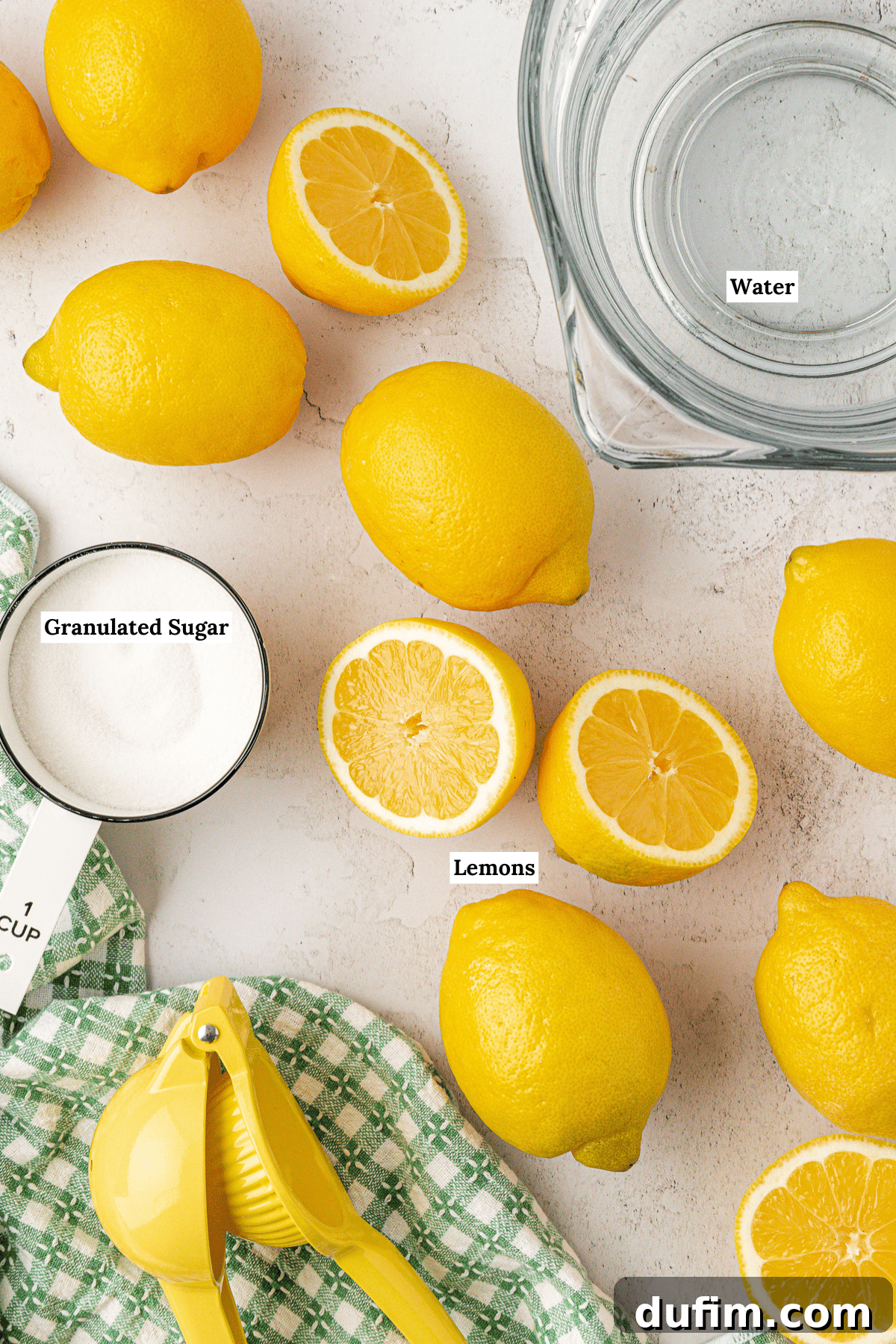
Crafting truly delicious fresh lemonade relies on just three fundamental ingredients, but their quality and the precise ratios in which they are combined make all the difference. Here’s a closer look at what you’ll need to make the best lemonade:
- Freshly Squeezed Lemon Juice: This is the heart and soul of your lemonade. There’s simply no substitute for the bright, aromatic zest and vibrant acidity that comes from real lemons. Always strain the juice through a fine mesh sieve to capture any seeds and pulp, ensuring a smooth and pleasant drinking experience.
- Granulated Sugar: While many recipes advocate for a 1:1 sugar-to-water ratio for simple syrup, I’ve discovered this often overpowers the delicate citrus notes. My perfected recipe uses a 3:4 sugar-to-water ratio for the simple syrup. This slight reduction in sugar provides just the right amount of sweetness to enhance the lemons without dulling their natural tanginess, allowing them to truly shine.
- Cold Water: The unsung hero! High-quality, cold water is essential for diluting the concentrated lemon and sugar mixture, transforming it into a refreshing drink. Starting with cold water for the final mix helps keep your lemonade chilled and ready to enjoy immediately.
Choosing the right lemons is also crucial. Look for lemons that are firm, heavy for their size, and have smooth, thin skins, as these typically yield more juice. Organic lemons can also offer a more intense flavor profile.

How Many Lemons Are Needed for Homemade Lemonade?
To ensure you have ample fresh lemon juice for this recipe, it’s wise to plan for approximately 7 medium-sized lemons. On average, a single lemon yields about 2 to 3 tablespoons of juice. Since this homemade lemonade recipe calls for 1 cup (which is equivalent to 16 tablespoons) of lemon juice, having 7 lemons on hand provides a comfortable buffer. This ensures you won’t run short and can even account for slight variations in the juiciness of individual lemons.
How to Make the Best Lemonade Recipe with Fresh Lemon Juice
This easy homemade lemonade takes just a few minutes of active preparation and delivers a flavor far superior to any store-bought alternative. Follow these simple steps for a refreshing summer drink:
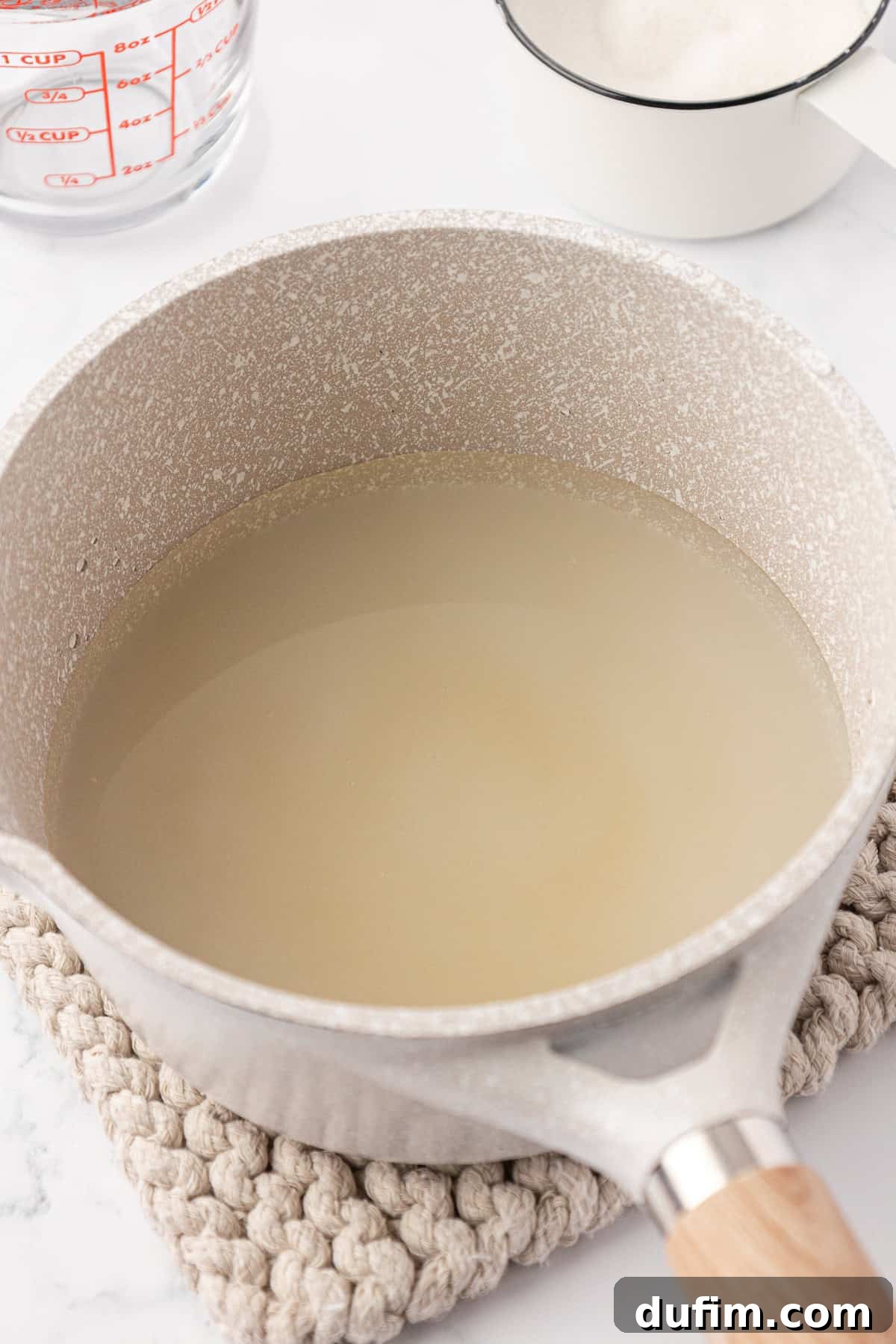
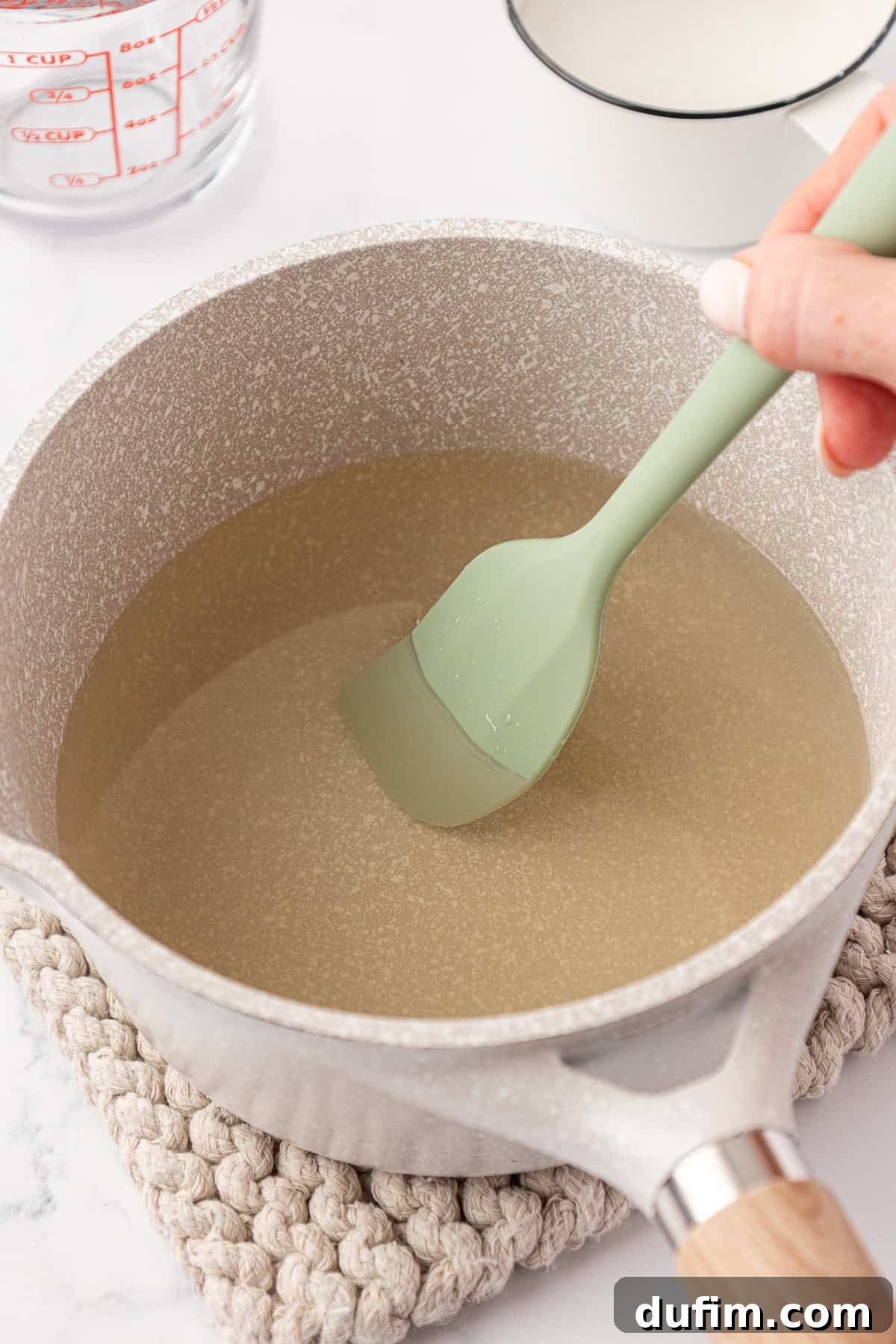
- Prepare the Simple Syrup: In a small saucepan, combine 1 cup of water with ¾ cup of granulated sugar. Place the saucepan over medium heat, stirring occasionally. Continue to stir until the sugar completely dissolves into the water. You’ll notice the mixture transform from cloudy to perfectly clear once dissolution is complete. This process typically takes only 2-3 minutes. Once clear, remove the saucepan from the heat and allow the simple syrup to cool down completely before proceeding. Cooling is crucial to prevent it from “cooking” your lemon juice later.
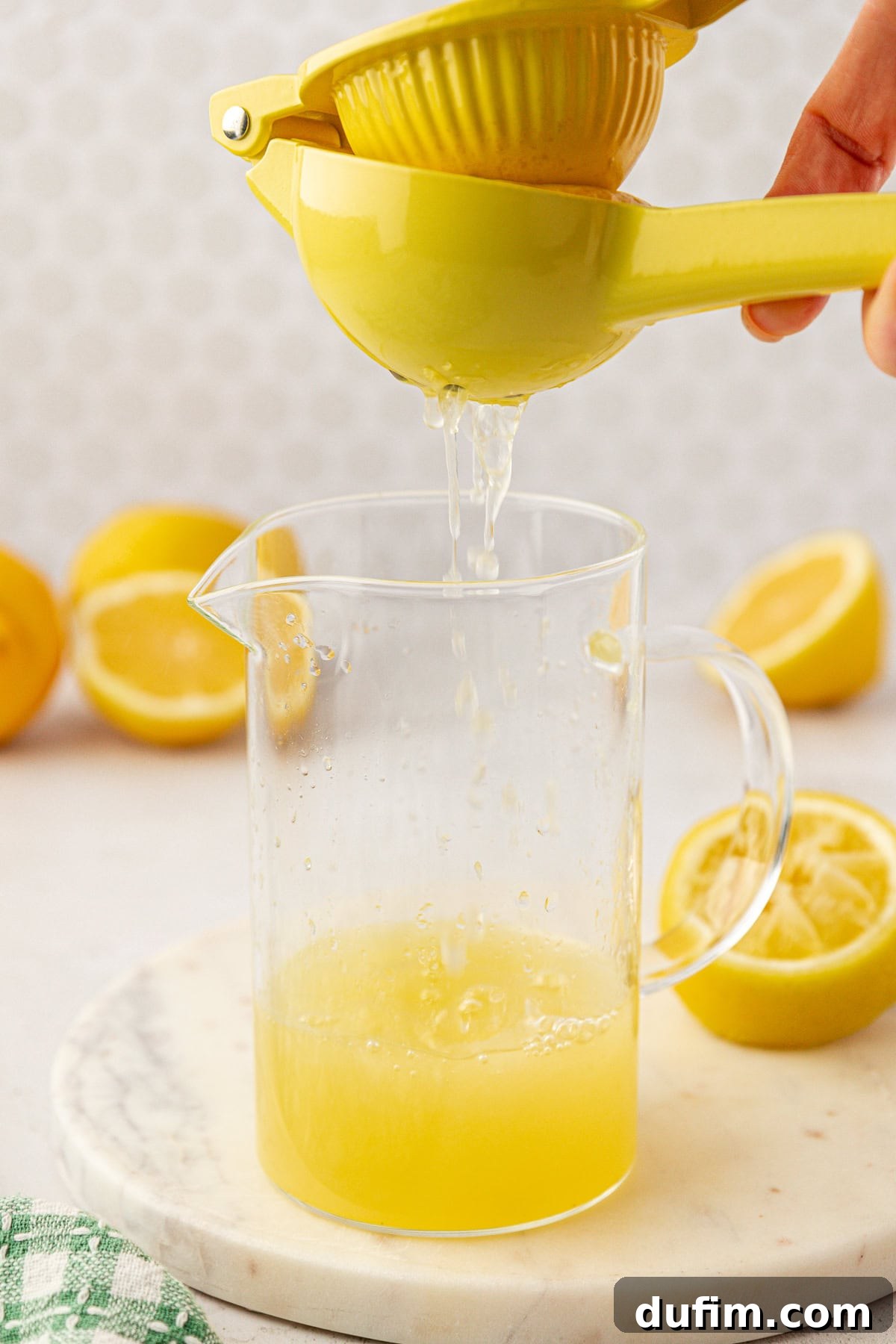
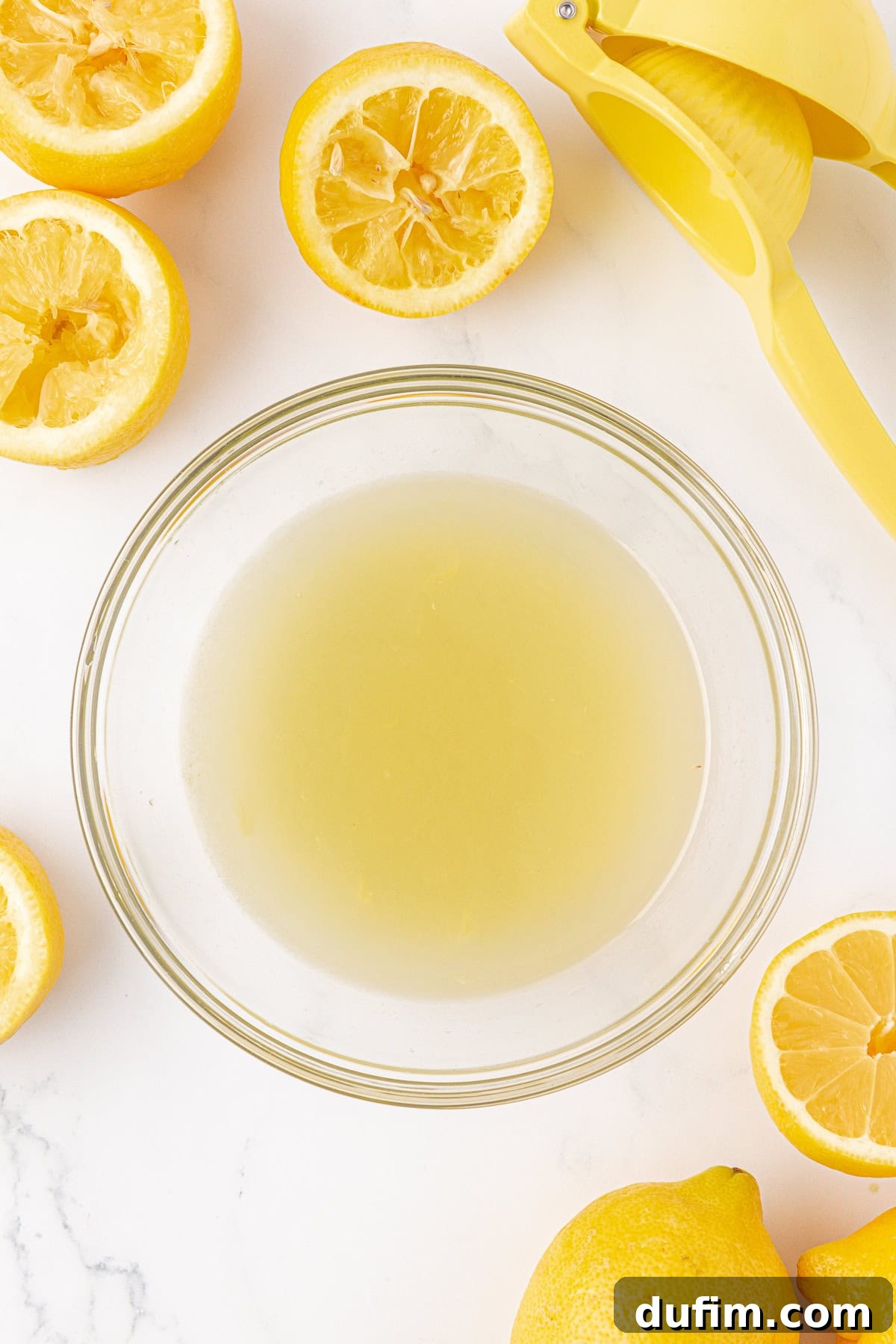
- Extract Fresh Lemon Juice: While your simple syrup cools, begin squeezing enough lemons to yield 1 full cup of fresh lemon juice. For best results and a smooth drink, strain the freshly squeezed juice through a fine mesh sieve. This will effectively remove any seeds and undesirable pulp, leaving you with pure, vibrant lemon essence.
- Combine and Taste Test: Once the simple syrup has thoroughly cooled, pour it into a large pitcher. Add the strained lemon juice and 5 cups of cold water. Stir all the ingredients together vigorously until everything is well combined. Now for the best part – taste your homemade lemonade! This is your opportunity to customize. If you prefer a lighter flavor, gradually add a little more cold water. If you enjoy a more tart, zesty kick, stir in an additional splash of fresh lemon juice.

Easy Lemonade Recipe Variations to Try
My base homemade lemonade recipe is incredibly versatile and serves as a fantastic foundation for various flavor twists. Elevate your refreshment game by trying some of these delightful variations:
- Raspberry Lemonade: Infuse your classic lemonade with the sweet and slightly tart notes of fresh raspberries. This variation adds a beautiful pink hue and a burst of berry flavor, making it a perfect summer treat.
- Pink Lemonade: Achieve that iconic rosy color and subtly sweeter flavor profile, often achieved with a touch of cranberry or cherry juice, or even a few muddled red berries.
- Strawberry Lemonade: Muddled fresh strawberries bring a natural sweetness and lovely aroma to the tangy lemonade, creating a crowd-pleasing combination.
- Brazilian Lemonade: A unique and creamy take on lemonade, typically made with whole limes, sweetened condensed milk, and water, blended until frothy and refreshing.
- Mint Lemonade: Add a handful of fresh mint leaves to your pitcher for a cooling, aromatic twist that’s incredibly invigorating on a hot day.
- Sparkling Lemonade: For a bubbly sensation, replace some or all of the still water with sparkling water or club soda just before serving.
Expert Tips for Making the Best Lemonade from Fresh Lemons
This lemonade recipe is not just refreshing; it’s designed to be practical and easy. Here are a few invaluable tips I swear by to make your homemade lemonade even better and simpler to prepare:
- Maximize Juice from Your Lemons: Before you even reach for your juicer, place each lemon on your kitchen counter and roll it firmly back and forth using the palm of your hand. This simple action helps to break down the internal membranes, making the lemons much easier to juice. For an extra boost, microwave your whole lemons for 15-20 seconds. Warm lemons yield significantly more juice!
- Always Opt for Fresh Lemon Juice Over Bottled: It might be tempting to grab that squeeze bottle of pre-packaged lemon juice, but resist the urge. Bottled lemon juice often tastes flat, dull, and can even carry a slight metallic aftertaste. Freshly squeezed lemon juice, on the other hand, boasts bright acidity, vibrant citrus oils, and a true “zing” that is absolutely essential for authentic, delicious lemonade. If you want homemade lemonade that genuinely tastes like lemons, this step is non-negotiable.
- Create a Simple Syrup for Silky Smooth Sweetness: While you *could* stir granulated sugar directly into cold water, it often leads to sugar granules settling stubbornly at the bottom of your pitcher. The solution is a quick simple syrup. By heating your sugar and water (using the recommended 3 parts sugar to 4 parts water ratio) just until the sugar completely dissolves, you create a smooth, homogenous sweetener that blends effortlessly into your lemonade. This ensures every sip is perfectly sweet and never grainy.
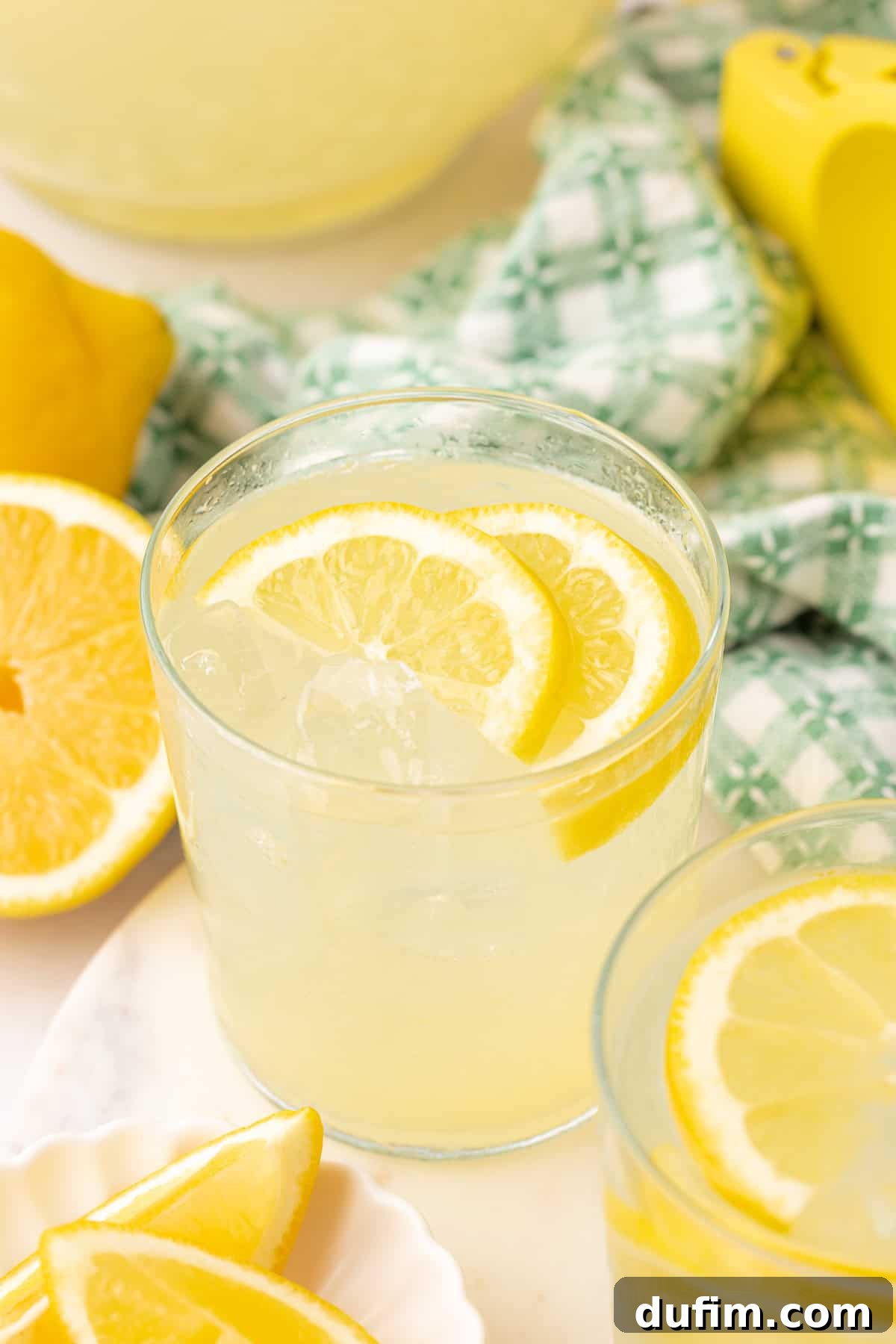
- Serve with Plenty of Ice and Garnish: Lemonade is best served very cold. Fill your glasses generously with ice. For an added touch of elegance and flavor, garnish each glass with fresh lemon slices, a few mint leaves, or even some fresh berries.
- Make it Ahead: This lemonade is fantastic for making in advance. Prepare a large pitcher the day before your event, and store it in the refrigerator. The flavors will meld beautifully, making it even more delicious.
Fresh Squeezed Lemonade Recipe Storage Tips
Your freshly squeezed lemonade will maintain its delightful taste and freshness when stored in an airtight pitcher or container in the refrigerator for approximately 5-6 days. It’s perfectly normal for some natural separation to occur over time, so simply give it a quick stir before serving to redistribute the flavors.
Looking to extend its life or have some on hand for spontaneous refreshments? Freeze any extra homemade lemonade in ice cube trays. These frozen lemonade cubes are perfect for adding to water, iced tea, or even future batches of lemonade without diluting the flavor. They’re also wonderful for blending into smoothies or making refreshing slushies!

Fresh Lemonade Recipe FAQs
Yes, you can certainly experiment with other sweeteners like honey, maple syrup, or agave nectar, but be aware that they will impart a different flavor profile to your homemade lemonade. If using honey, I recommend starting with about ½ cup and dissolving it thoroughly in warm water first to create a “honey simple syrup” for easier blending. Taste and adjust by adding more if you prefer a sweeter drink.
The possibilities are endless! You can enhance your fresh lemonade with various additions. Try fresh herbs such as mint, basil, or rosemary for an aromatic twist. Berries like raspberries, strawberries, or blueberries add sweetness and a beautiful color. Cucumber slices provide a cool, crisp dimension, and a splash of sparkling water creates a delightful fizzy beverage.
Lemonade is a beloved, refreshing non-alcoholic drink primarily made from fresh lemon juice, water, and a sweetener, typically sugar. It’s celebrated for its distinctive balance of sweet and tart flavors, making it an ideal thirst-quencher, especially during warm weather.
The origins of lemonade can be traced back to medieval Egypt, around 1000 AD. The earliest known version was a drink called qatarmizat, which combined lemon juice with sugar. This refreshing concoction gradually spread across the Middle East and through Europe over centuries, evolving into the classic sweet-tart drink that is widely enjoyed around the world today.
No, classic homemade lemonade, especially when made with a balanced amount of sugar and plenty of water as in this recipe, does not dehydrate you. In fact, it can be an effective and delicious way to help maintain hydration, particularly on hot days when fluid intake is crucial. However, extremely sugary drinks can sometimes have a mild diuretic effect, so moderation is key.
No, traditional homemade lemonade is naturally caffeine-free. Its simple ingredients are fresh lemon juice, water, and a sweetener, none of which contain caffeine. It’s a great choice for a refreshing drink at any time of day, without the stimulant effect.
For the best flavor, use Eureka or Lisbon lemons, which are common varieties known for their strong acidity and abundant juice. Look for lemons that feel heavy for their size and have thin, smooth skins, as these typically yield more juice. Organic lemons can also offer a richer, more complex citrus flavor.
More Recipes Perfect for Summer Days
- Strawberry Cake
- Fruit Pizza
- No-Bake Lemon Pudding Pie
- Homemade Fried Ice Cream
- Watermelon Mint Salad

BEST Homemade Lemonade Recipe
By: Beth
Prep Time: 5 minutes
Cook Time: 10 minutes
Yields: 7 cups
If you’re tired of lemonade that’s either too sweet or too tart, this homemade lemonade recipe is your new go-to. I tested various ratios to achieve the perfect balance—resulting in a fresh, vibrant, and perfectly lemon-forward drink. It’s the kind of classic, refreshing lemonade from scratch you’ll want to sip all summer long.
Ingredients
- 1 cup (237ml) water (for simple syrup)
- ¾ cup (149g) granulated sugar
- 1 cup (237ml) fresh lemon juice, freshly squeezed and strained
- 5 cups (1183ml) cold water
Instructions
- Make the simple syrup: In a small saucepan, combine 1 cup water and ¾ cup granulated sugar. Heat over medium heat, stirring occasionally, until the sugar completely dissolves. The mixture will transition from cloudy to clear. This typically takes about 2-3 minutes. Remove from heat and allow to cool completely.
- Squeeze lemons: While the simple syrup cools, squeeze enough lemons to obtain 1 cup of fresh lemon juice. Strain the juice through a fine mesh sieve to remove any seeds and pulp for a smooth consistency.
- Combine ingredients: In a large pitcher, combine the cooled simple syrup, the fresh lemon juice, and 5 cups of cold water. Stir everything together until well mixed. Taste the lemonade and adjust according to your preference—add a little more water for a lighter flavor, or a splash more lemon juice if you prefer it tarter.
Nutrition Information
All nutritional values are approximate and provided as a courtesy to the reader. Please note that changing ingredients or quantities will alter the estimated nutritional calculations.
- Serving Size: 1 cup
- Calories: 90 kcal
- Carbohydrates: 24g
- Protein: 0.1g
- Fat: 0.2g
- Saturated Fat: 0.01g
- Polyunsaturated Fat: 0.01g
- Monounsaturated Fat: 0.001g
- Sodium: 11mg
- Potassium: 36mg
- Fiber: 0.1g
- Sugar: 22g
- Vitamin A: 2 IU
- Vitamin C: 13mg
- Calcium: 8mg
- Iron: 0.04mg