
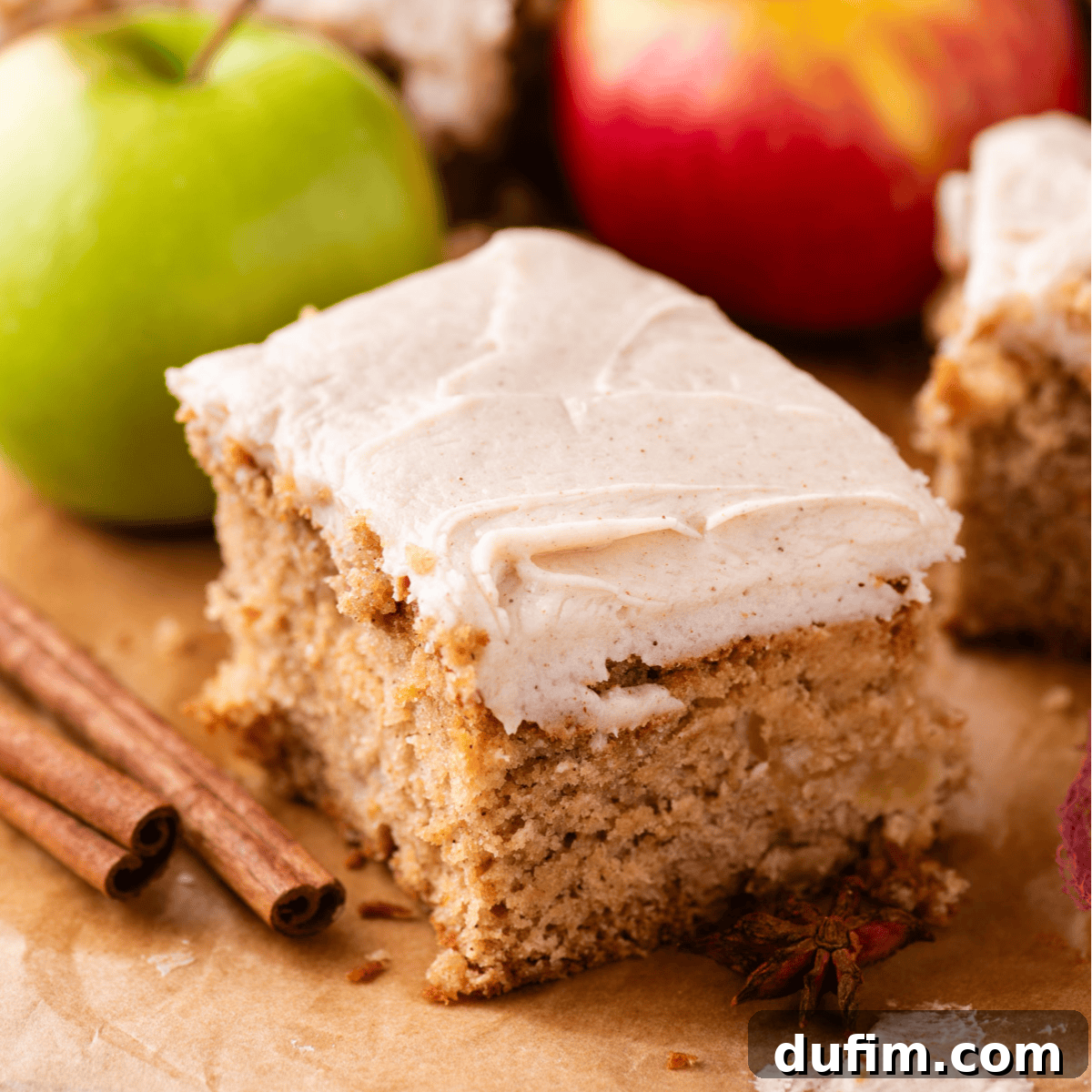
Welcome to the ultimate guide for crafting a truly exceptional apple cake! Forget recipes that merely “work”; this recipe has been meticulously refined and tested to ensure consistent, bakery-quality results in your own kitchen. Through careful adjustments to the fat and moisture balance, and extensive testing of apple sizes (hint: perfectly diced ¼-inch pieces strike the ideal harmony of texture and flavor), I’ve perfected a cake that is wonderfully moist, delicately fluffy, and structurally robust enough to hold its shape beautifully. This is the apple cake you can rely on to impress every time, delivering that coveted bakery-worthy experience right at home.
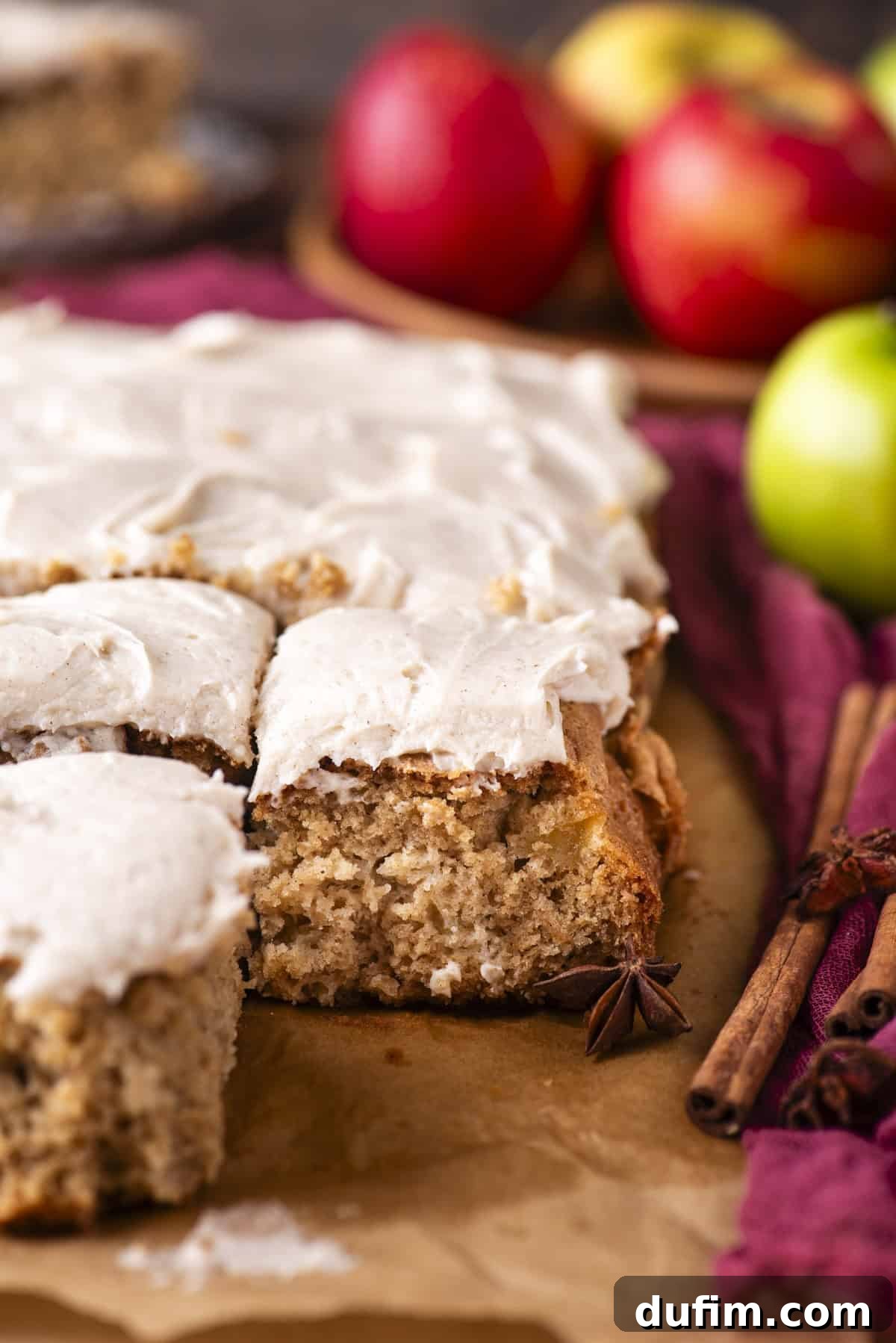
Crafting the Perfect Apple Cake: A Journey of Refinement
Baking an apple cake might seem straightforward, but the unique properties of apples—adding both moisture and weight—can make achieving the ideal crumb structure quite challenging. My journey to perfect this recipe began with a classic approach, utilizing ingredients like oil and sour cream, which are staples for creating incredibly moist layer cakes. While the initial flavor was undeniably delicious, the combination of extra fat and moisture, coupled with the apples, resulted in a cake crumb that was simply too loose, overly wet, and prone to crumbling. It lacked the desired structural integrity that defines a truly great cake.
Determined to create a truly reliable recipe, I returned to the kitchen to meticulously refine every aspect. The first key adjustment was increasing the flour content. Flour provides the essential gluten structure, which is crucial for holding the cake together, especially with the added weight and moisture from the apples. Next, I reduced the amount of oil, mitigating the excess fat that contributed to the crumbly texture. Perhaps the most significant change was swapping out sour cream for applesauce. This ingredient not only reintroduced a crucial element of moisture but also brought a natural tartness and a brighter, fresher apple flavor that the original recipe lacked. This careful rebalancing created a cake that remained incredibly moist and tender but now boasted a tighter, more cohesive crumb that sliced cleanly and held its shape beautifully. The applesauce subtly amplifies the natural apple essence, making each bite taste fresh and bright rather than heavy.
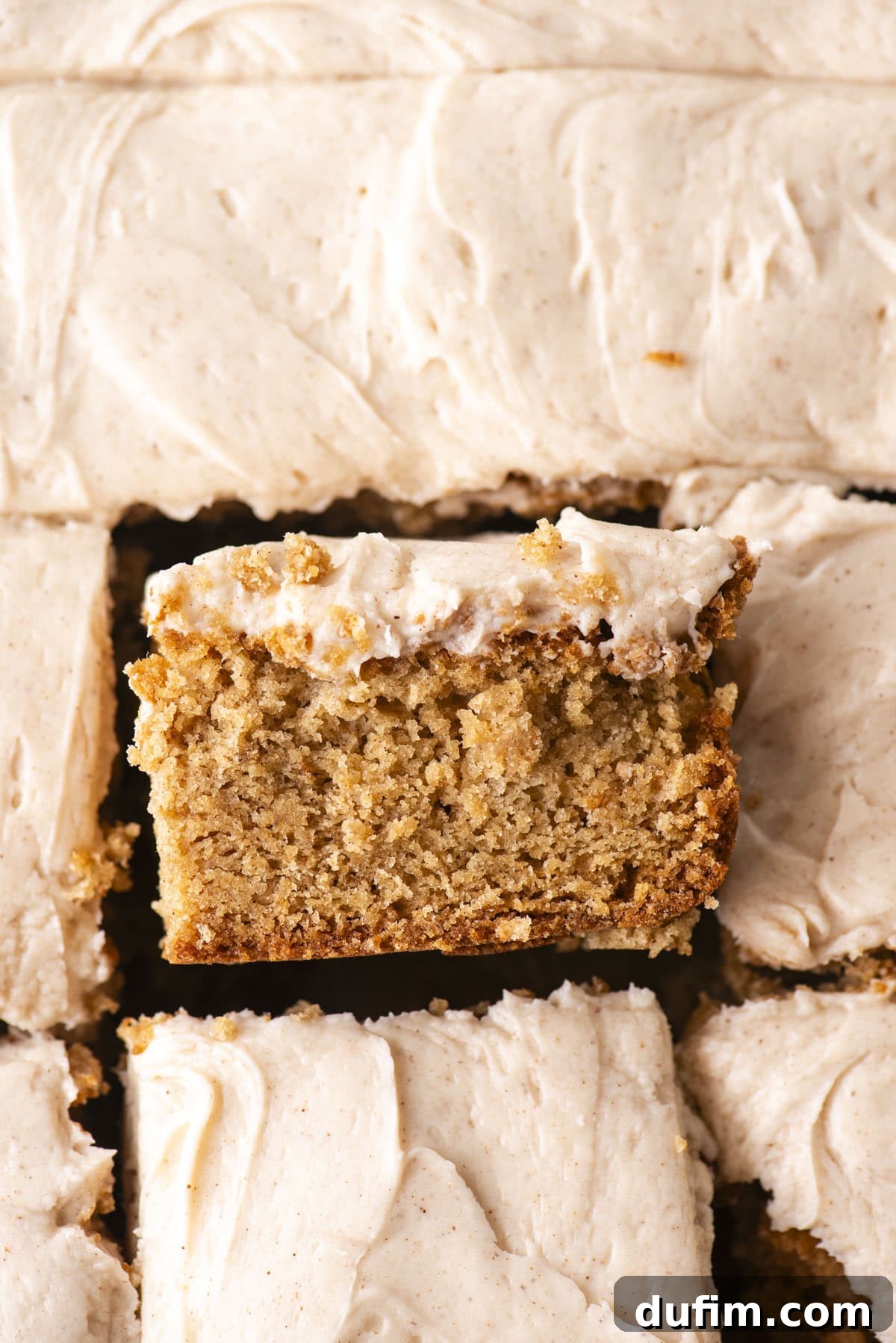
Another critical element I explored during my extensive testing, drawing insights from both apple bundt cake and apple coffee cake recipes, was the size of the apple chunks. My experiments revealed that half-inch apple pieces tended to make the batter overly wet in certain areas, leading to undesirable pockets and disruptions in the cake’s delicate crumb structure. The larger pieces sometimes released too much moisture unevenly, resulting in inconsistent baking. In contrast, quarter-inch diced apples proved to be the “sweet spot.” These smaller pieces remained distinct within the batter but distributed themselves much more evenly, adding delightful bursts of tender apple throughout the cake without compromising its overall stability or uniform texture. This meticulous attention to detail ensures every bite delivers a consistent, delightful experience, making this cake a true standout.
The culmination of this persistent trial-and-error, combined with years of experience in developing reliable dessert recipes, is this cinnamon-forward apple cake. It’s a cake that feels incredibly fluffy and moist, yet it never crumbles or falls apart on your fork, maintaining its elegant presentation. Designed to be approachable for home bakers, this recipe has been thoroughly tested and proven to deliver consistent, bakery-worthy results you can truly trust. Each slice offers a harmonious blend of warm spices, tender apples, and a perfectly balanced cake crumb, inviting you to elevate your baking with this truly special apple cake!
Selecting the Best Apples for Your Apple Cake
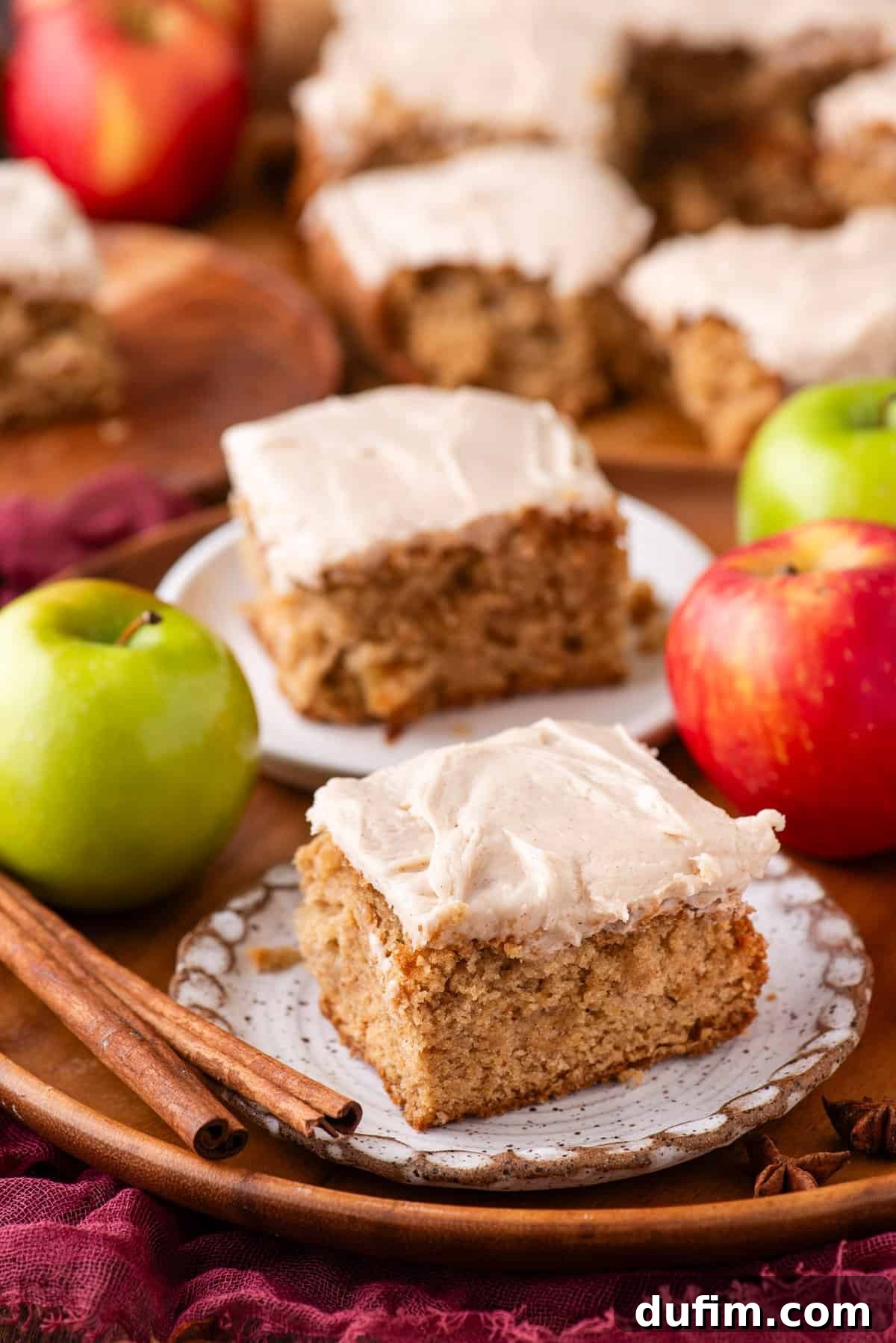
The type of apple you choose can significantly impact the final texture and flavor of your cake. For baking, it’s crucial to select apples that are crisp and sturdy, rather than those that are soft, mealy, or grainy. These firm varieties will hold their shape better during baking, providing delightful pockets of tender apple throughout the cake without turning into an unappetizing mush. For the most balanced and complex flavor profile, I highly recommend combining both tart and sweet apple varieties. The tartness adds a bright, invigorating contrast to the sweetness of the cake and frosting, while the sweet apples contribute a comforting depth and a pleasant natural sugary note.
Here are some excellent apple choices that perform beautifully in this cake:
- For Tartness: Braeburn, Jonathan, Pacific Rose, and Granny Smith apples are fantastic options. Granny Smith, in particular, is a classic for baking due to its robust firm texture and its distinctive sharp tang that holds up exceptionally well under heat, preventing the cake from becoming overly sweet.
- For Sweetness: Jazz, Pink Lady, Fuji, and Honeycrisp apples offer a wonderful sweetness and often possess a crisp texture that bakes beautifully. Honeycrisp is particularly beloved for its juicy, firm flesh and bright flavor, making it a favorite for many bakers.
Feel free to experiment with combinations, such as a mix of Granny Smith for zest and Honeycrisp for sweetness, to find your perfect balance of flavors and textures. The goal is always to have apples that contribute delicious flavor and appealing texture without dissolving into the cake batter, ensuring a delightful surprise in every forkful.
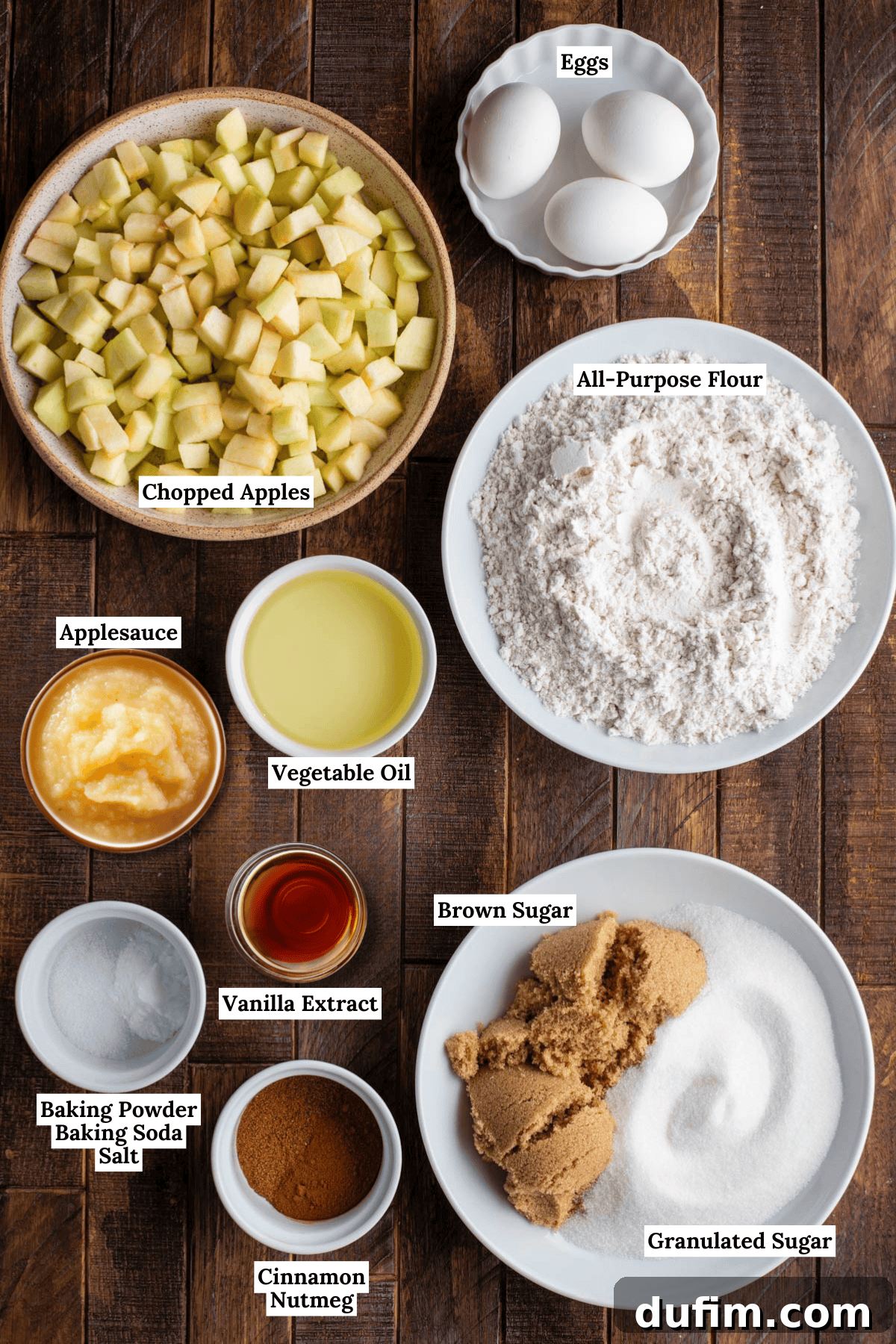
How to Make the Best Apple Cake: A Step-by-Step Guide
Creating this delicious apple cake is an enjoyable and rewarding process, and I’m here to guide you through each step. Even if you’re a novice baker, you can achieve fantastic results on your first attempt with these clear, easy-to-follow instructions. The full list of ingredients can be found in the comprehensive recipe card below. Let’s get baking and create some magic in your kitchen!
For the Cake: Detailed Instructions
- Prepare Your Oven and Pan: Begin by preheating your oven to a precise 350°F (175°C). This ensures the oven is at the correct temperature when the cake goes in, promoting an even rise. Lightly grease a 9×13-inch baking pan. For easier removal of the entire cake after baking, which is especially helpful for frosting or serving, you can also line the pan with parchment paper, allowing a slight overhang on the sides for convenient lifting.
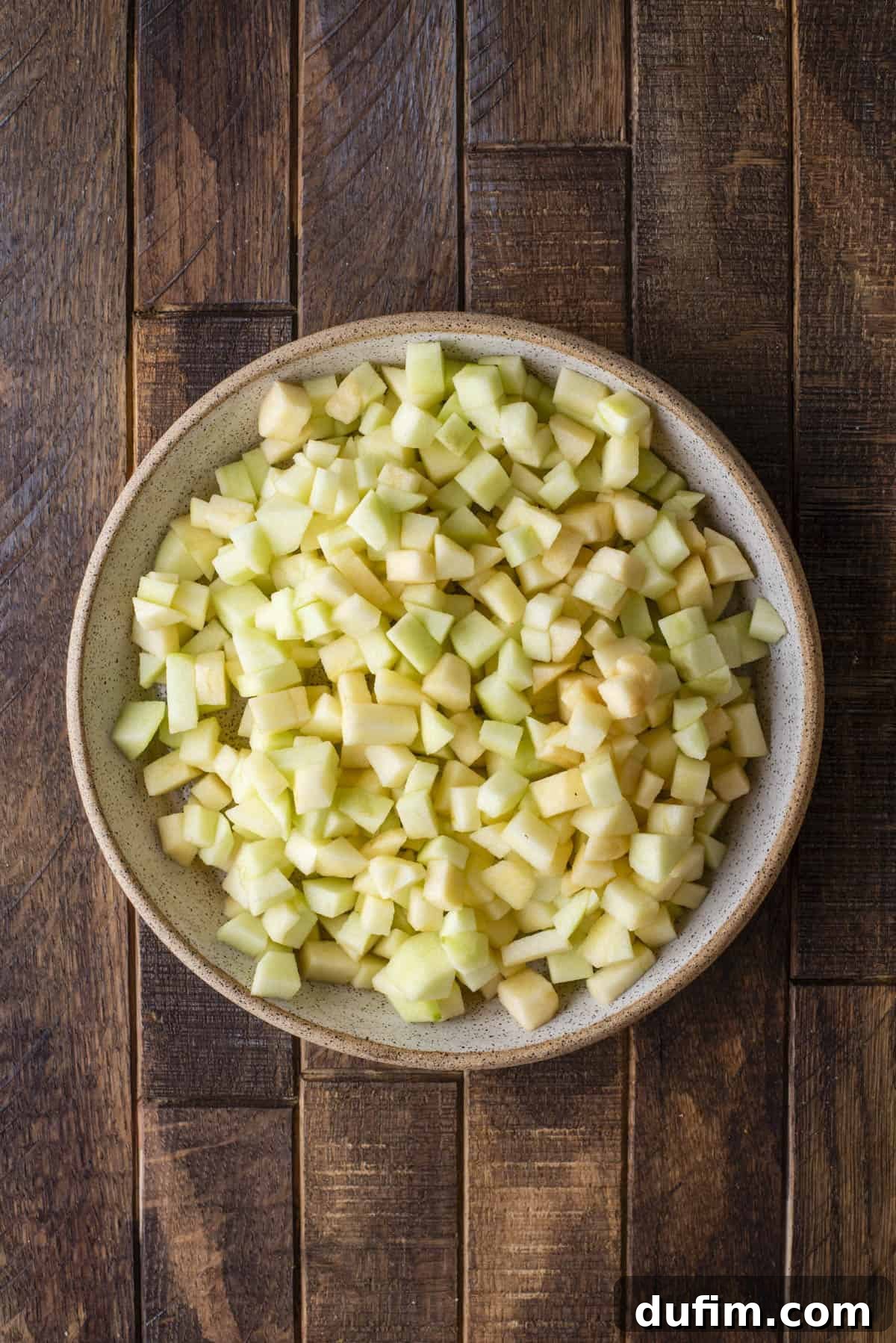
- Prepare the Apples: Carefully peel and core your chosen apples. The most crucial step for the best texture in this cake is to dice them into uniform ¼-inch chunks. This even sizing ensures that the apples bake consistently throughout the cake, preventing overly wet pockets or crunchy, undercooked bits. You’ll need approximately 2.5-3 cups total, which is roughly 285-315 grams. While ¼-inch is highly recommended for optimal texture and distribution, if you strongly prefer larger pieces, you may cut them into ½-inch chunks; however, be aware this might slightly alter the cake’s crumb consistency and moisture distribution.
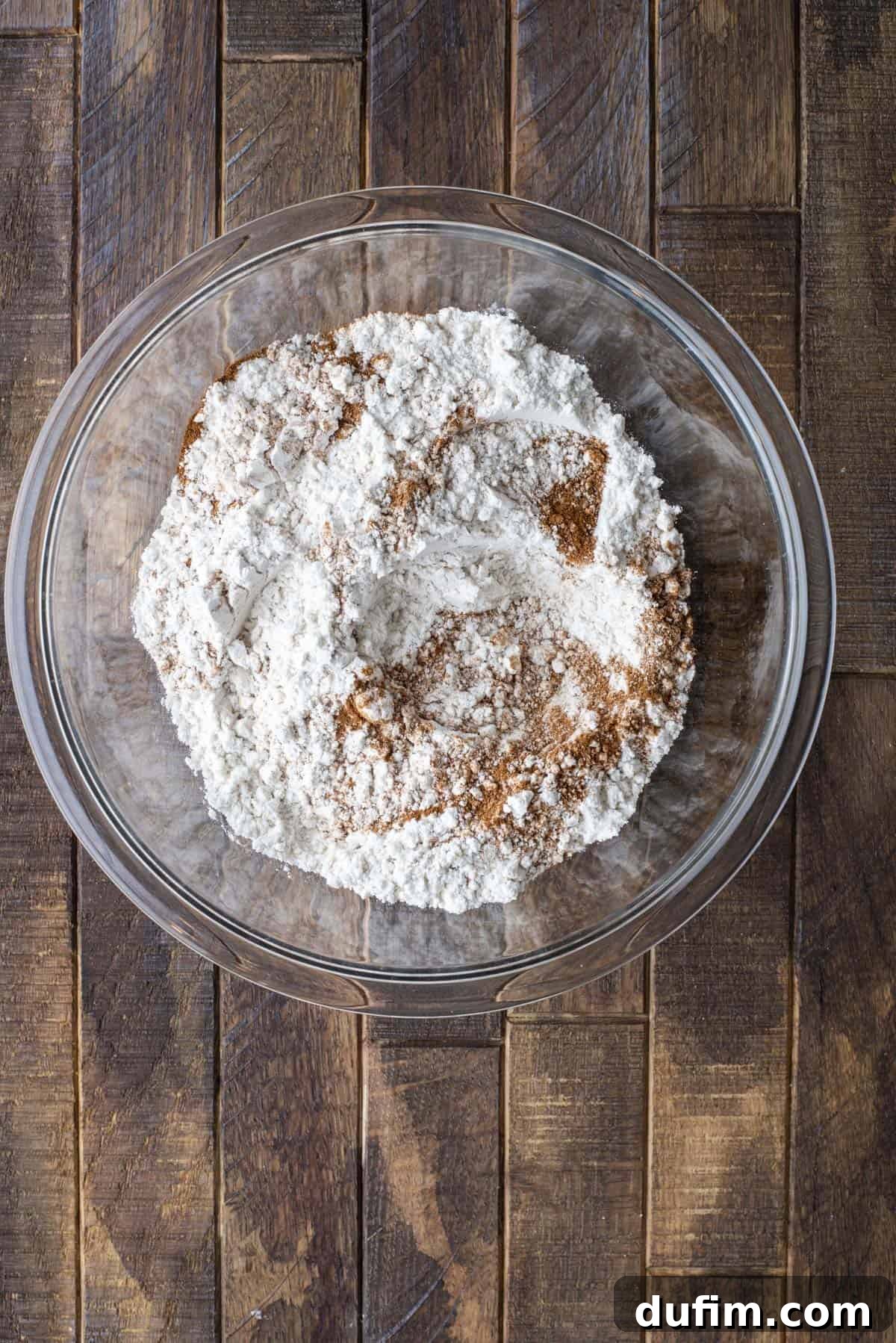
- Combine Dry Ingredients: In a medium bowl, thoroughly whisk together the all-purpose flour, baking powder, baking soda, salt, ground cinnamon, and ground nutmeg. Whisking vigorously for about 30 seconds ensures these leavening agents and warming spices are evenly distributed throughout the flour. This is crucial for a uniform rise, consistent texture, and balanced flavor throughout your cake. Set this bowl aside for later use.
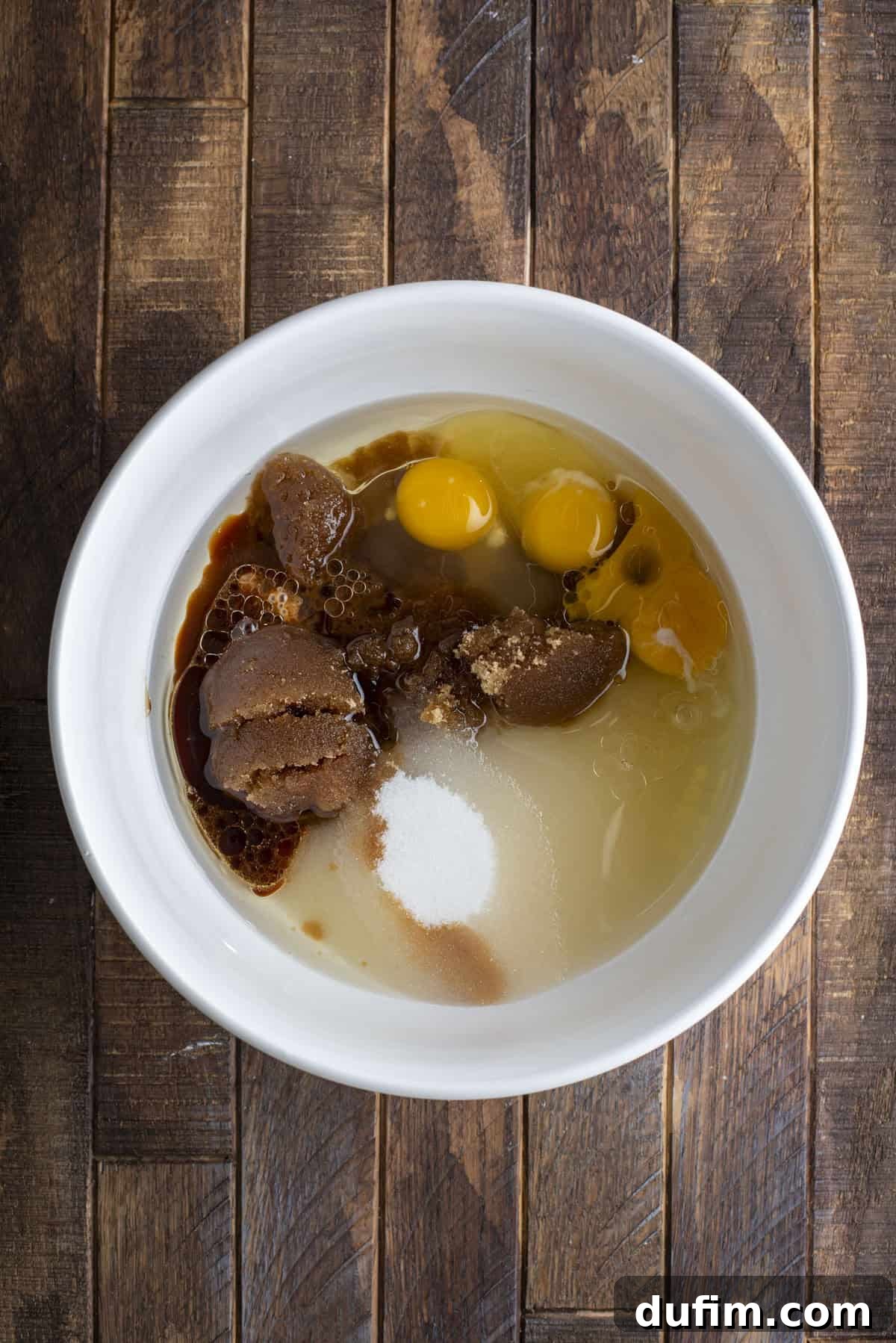
- Combine Wet Ingredients: In a large mixing bowl, whisk together the granulated sugar, brown sugar, vegetable oil, applesauce, large eggs, and vanilla extract. Whisk until the mixture is completely smooth, homogenous, and all the ingredients are well combined. This step ensures that all the sugary goodness and moistening agents are fully incorporated before the dry ingredients are added, preventing lumps and ensuring a tender crumb.
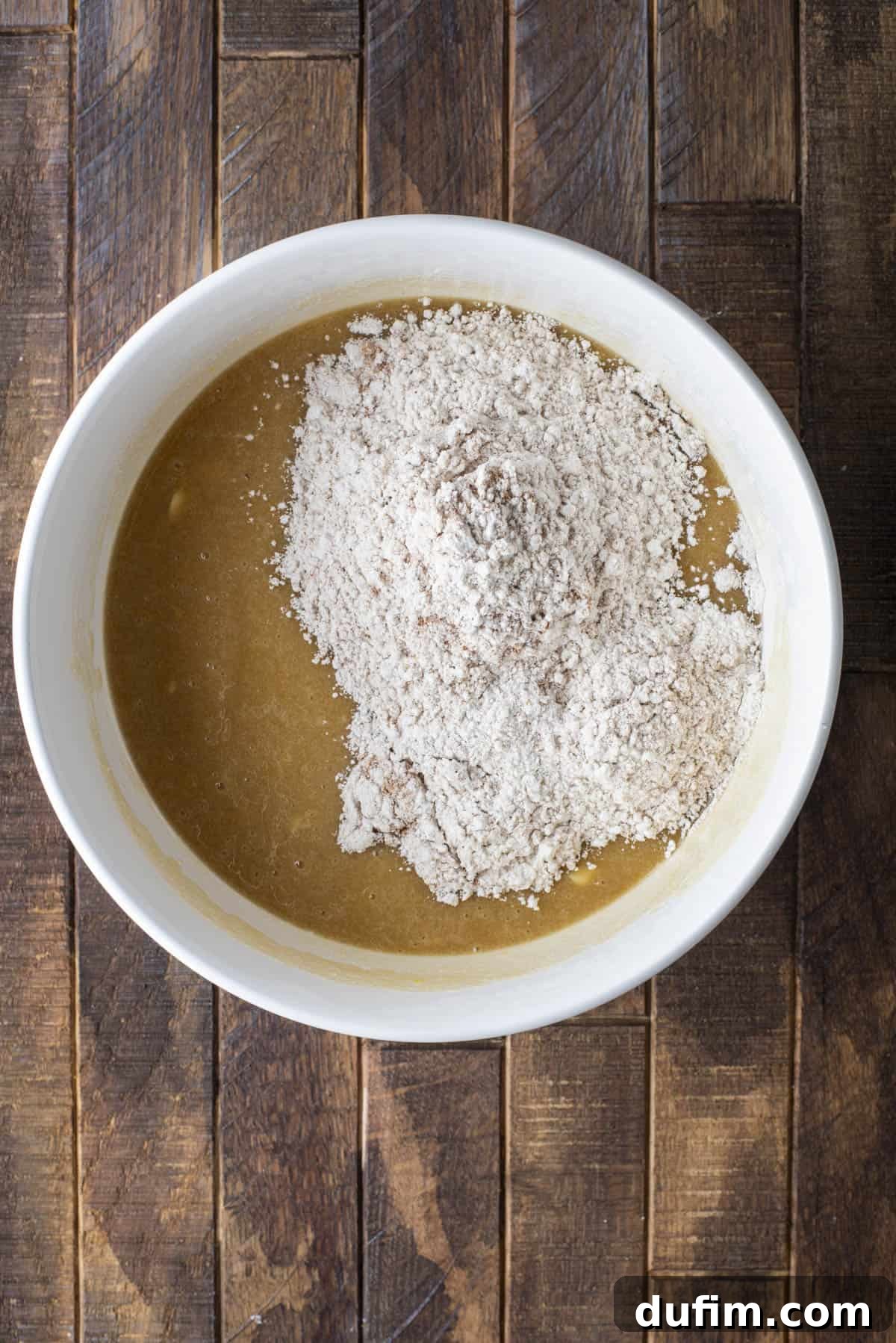
- Begin Combining Wet and Dry Ingredients: Add half of the whisked dry ingredients to your wet mixture. Stir gently with a spatula or spoon, just until they are combined. Avoid overmixing at this stage to prevent developing too much gluten, which can lead to a tough, dense cake. A few small lumps in the batter are perfectly normal and will disappear during baking.
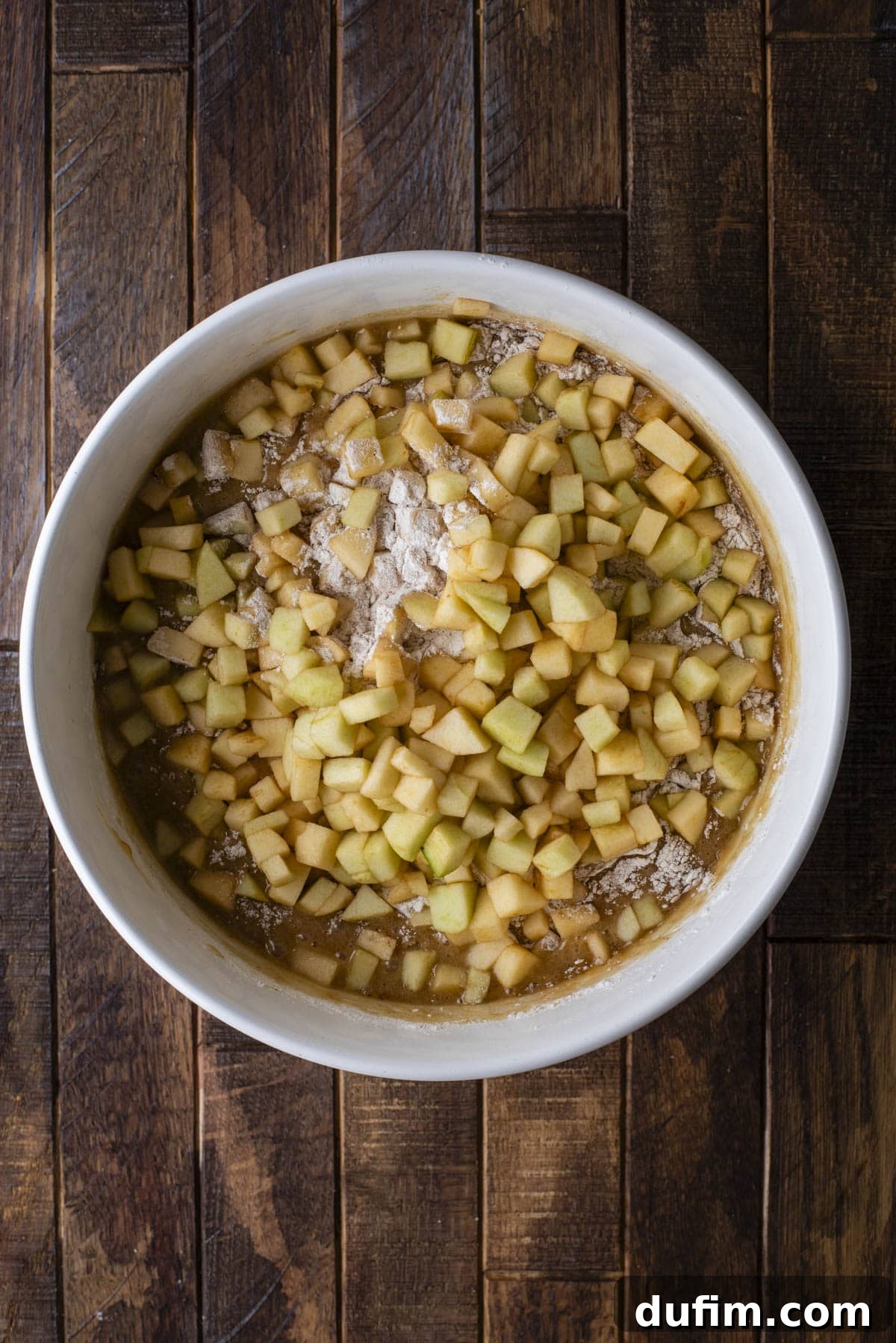
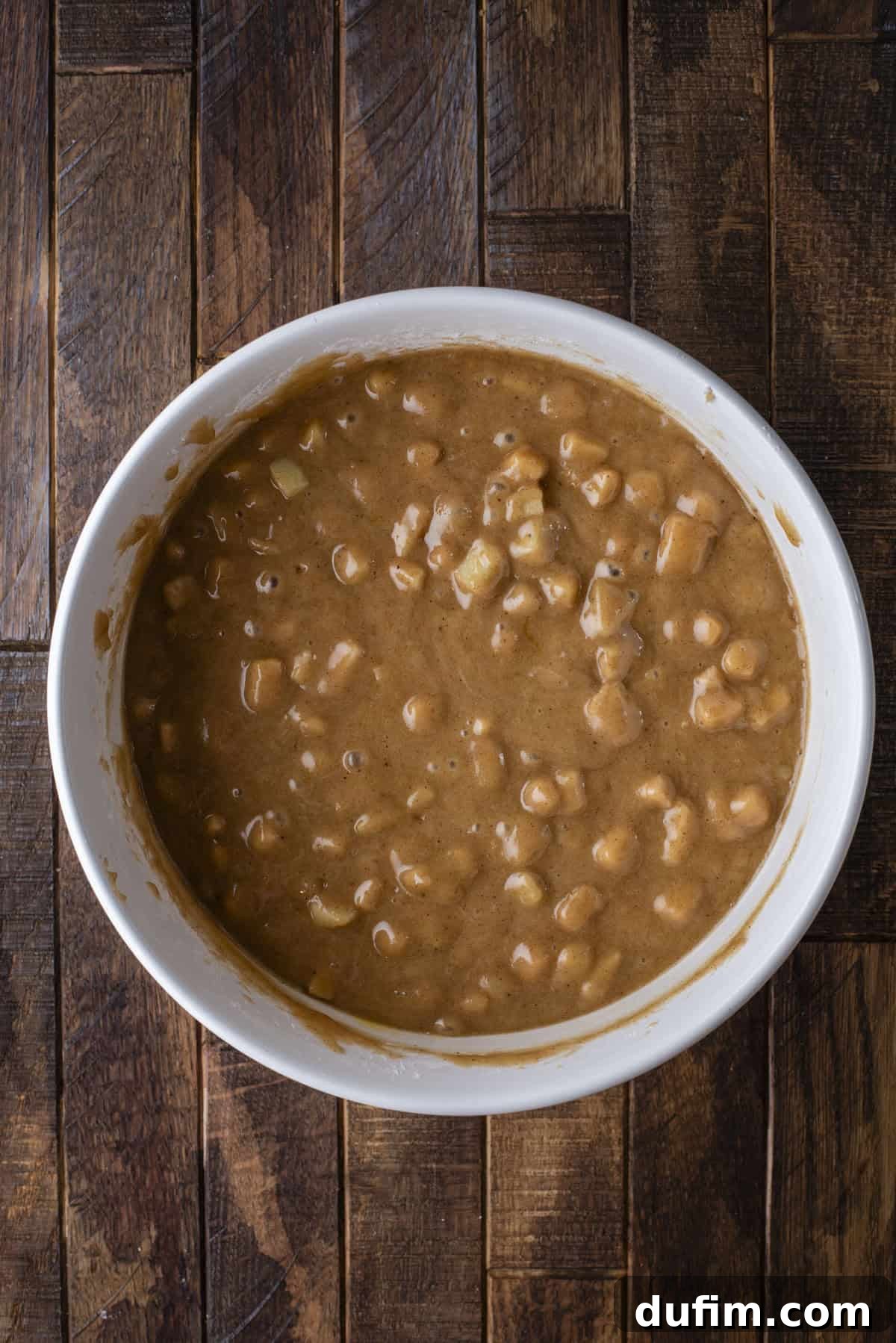
- Finish Cake Batter: Now, add the remaining dry ingredients along with your carefully diced apples. Mix gently until everything is just evenly incorporated. The goal here is to distribute the apples and the last bit of dry ingredients without overworking the batter. Overmixing at this final stage can negatively impact the cake’s tender crumb and lead to a less desirable texture.
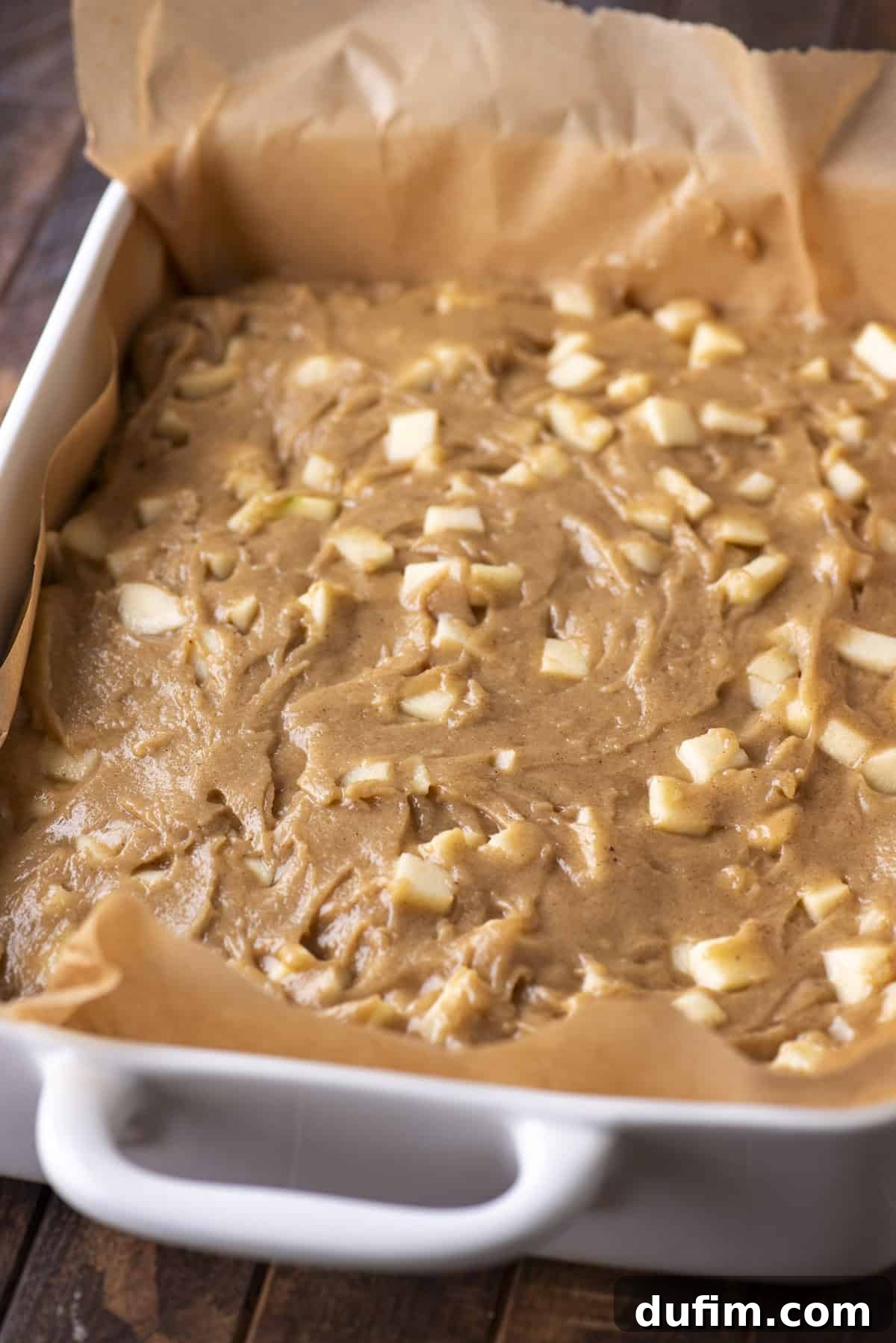
- Transfer Batter to Pan: Pour the completed batter into your prepared 9×13-inch pan. Use a spatula to gently smooth the top, ensuring an even layer for consistent baking. This also helps in achieving a uniform rise and a beautiful golden-brown crust.
- Bake to Perfection: Bake for approximately 50-55 minutes. Since oven temperatures can vary significantly, it’s always best to rely on a visual and tactile test for doneness rather than just the timer. To check, insert a toothpick into the very center of the cake. It should come out clean or with a few moist crumbs attached. If it comes out wet with raw batter, continue baking in 5-minute increments until done.
- Cool Completely: This step is absolutely vital and cannot be rushed! Allow the cake to cool completely in the pan, preferably on a wire rack, before attempting to frost it. Frosting a warm cake will inevitably cause the butter and cream cheese in the frosting to melt and slide off, creating a messy result. Patience here will be greatly rewarded with a beautifully presented and delicious cake!
For the Irresistible Cinnamon Cream Cheese Frosting
No apple cake is truly complete without a rich, tangy cream cheese frosting, especially one infused with warm, aromatic cinnamon. This frosting complements the cake’s flavors perfectly and adds an extra layer of indulgence. Here’s how to make it perfectly smooth and delicious:
- Cream Butter and Cream Cheese: In a mixing bowl, combine room temperature unsalted butter and cream cheese. It is absolutely crucial that both ingredients are at true room temperature. This allows them to cream together smoothly, creating a uniform, lump-free frosting base. Use an electric mixer on medium speed and beat for 1-2 minutes until the mixture is light, fluffy, and well whipped, showing increased volume.
- Mix in Remaining Ingredients: Add the vanilla extract, powdered sugar (also known as confectioners’ sugar), and ground cinnamon to the creamed mixture. Start mixing on low speed to avoid a cloud of powdered sugar, then increase to medium. Beat again for 1-2 minutes, frequently stopping to scrape down the sides and bottom of the bowl with a spatula. Continue mixing until all ingredients are fully incorporated and the frosting is smooth and creamy.
- Adjust Consistency (if needed): If your frosting appears too thick or stiff for easy spreading, you can add a splash of milk or heavy cream. Begin by adding ½ to 1 teaspoon at a time, beating after each addition, until it reaches your desired creamy, spreadable consistency. Be careful not to add too much liquid at once.
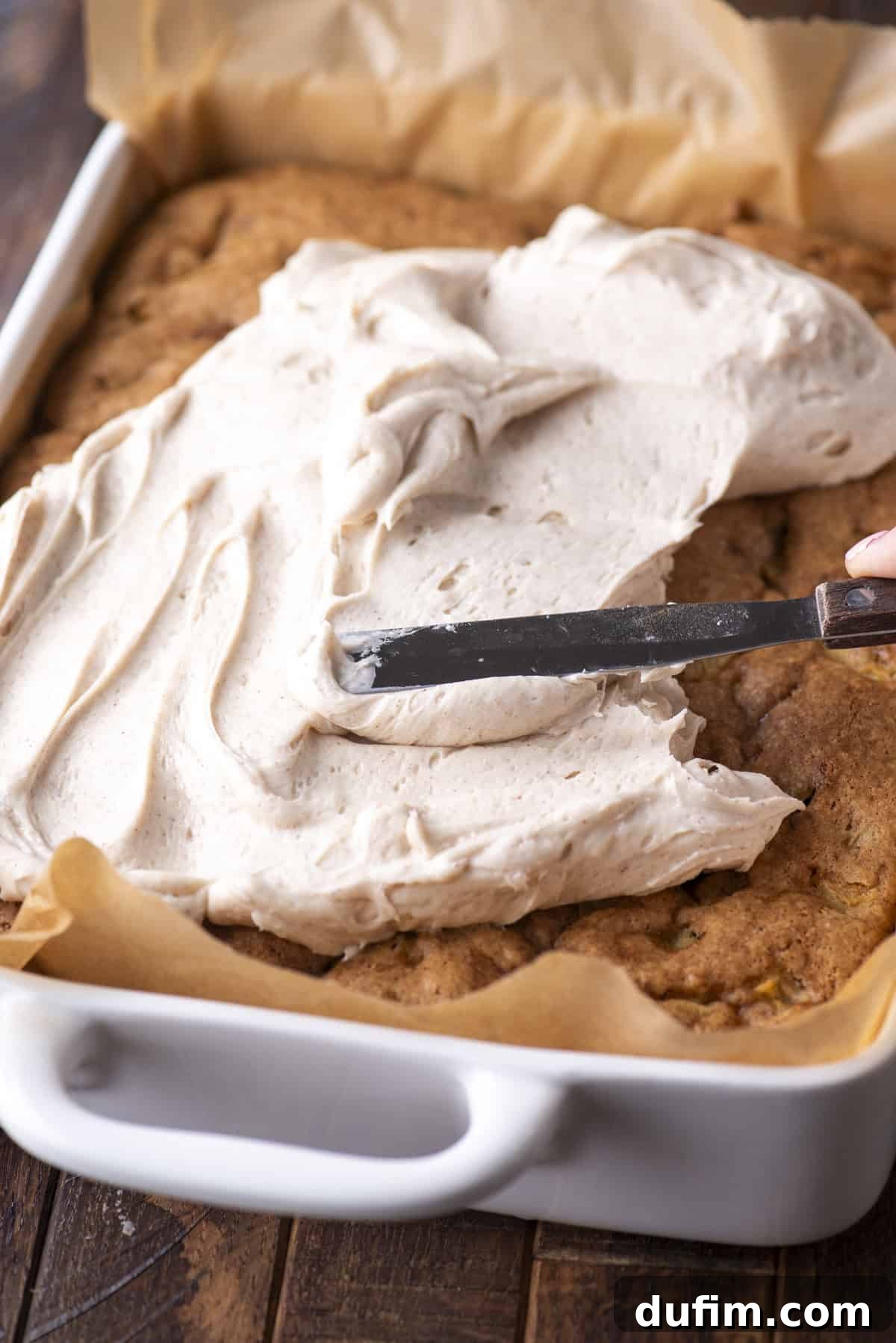
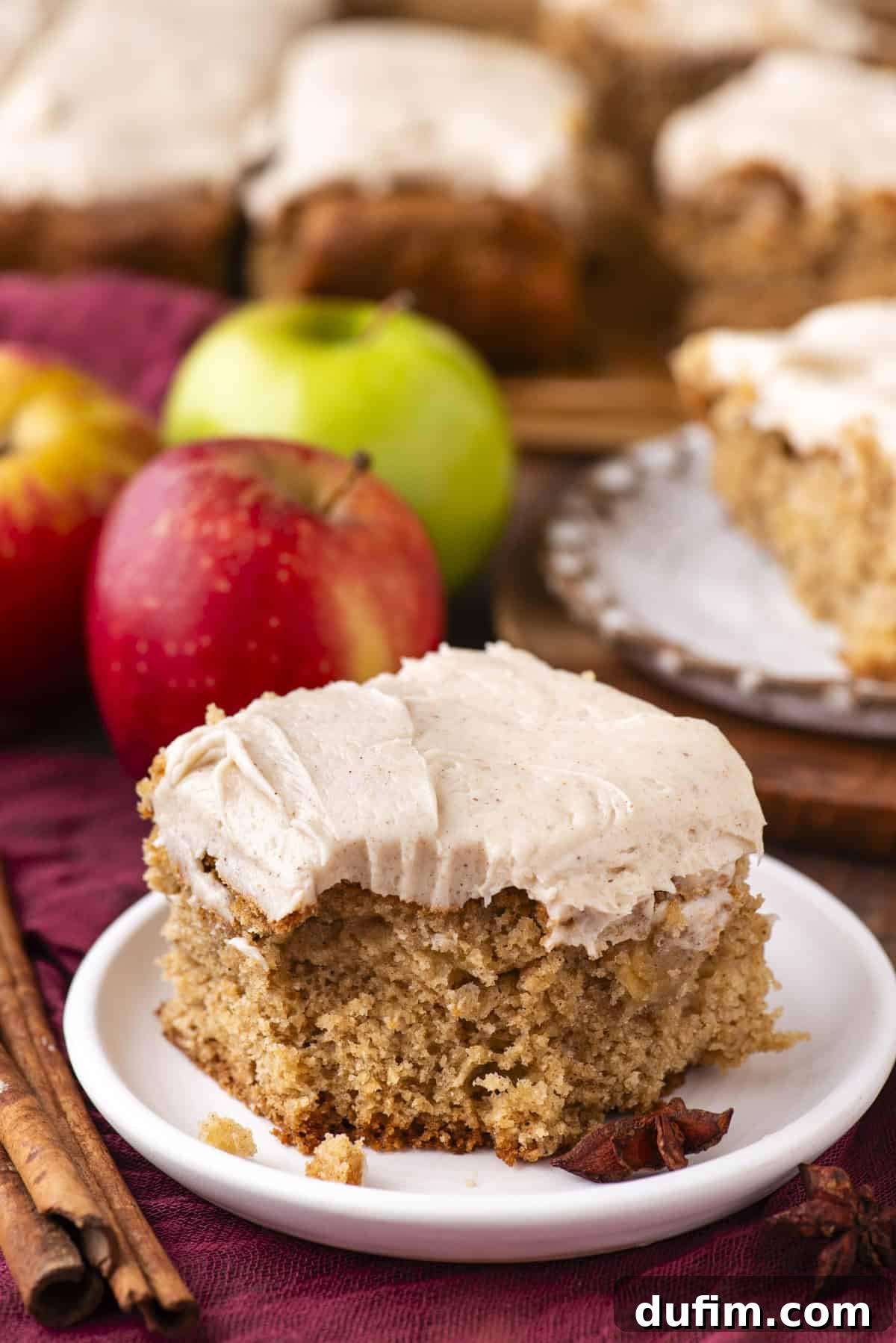
- Frost the Cooled Cake: Once the cake is completely cool to the touch, use an offset spatula or the back of a spoon to spread this luscious cinnamon cream cheese frosting evenly over the top. For a rustic look, you can create swirls, or smooth it out for a more polished finish.
Gluten-Free Apple Cake Variation
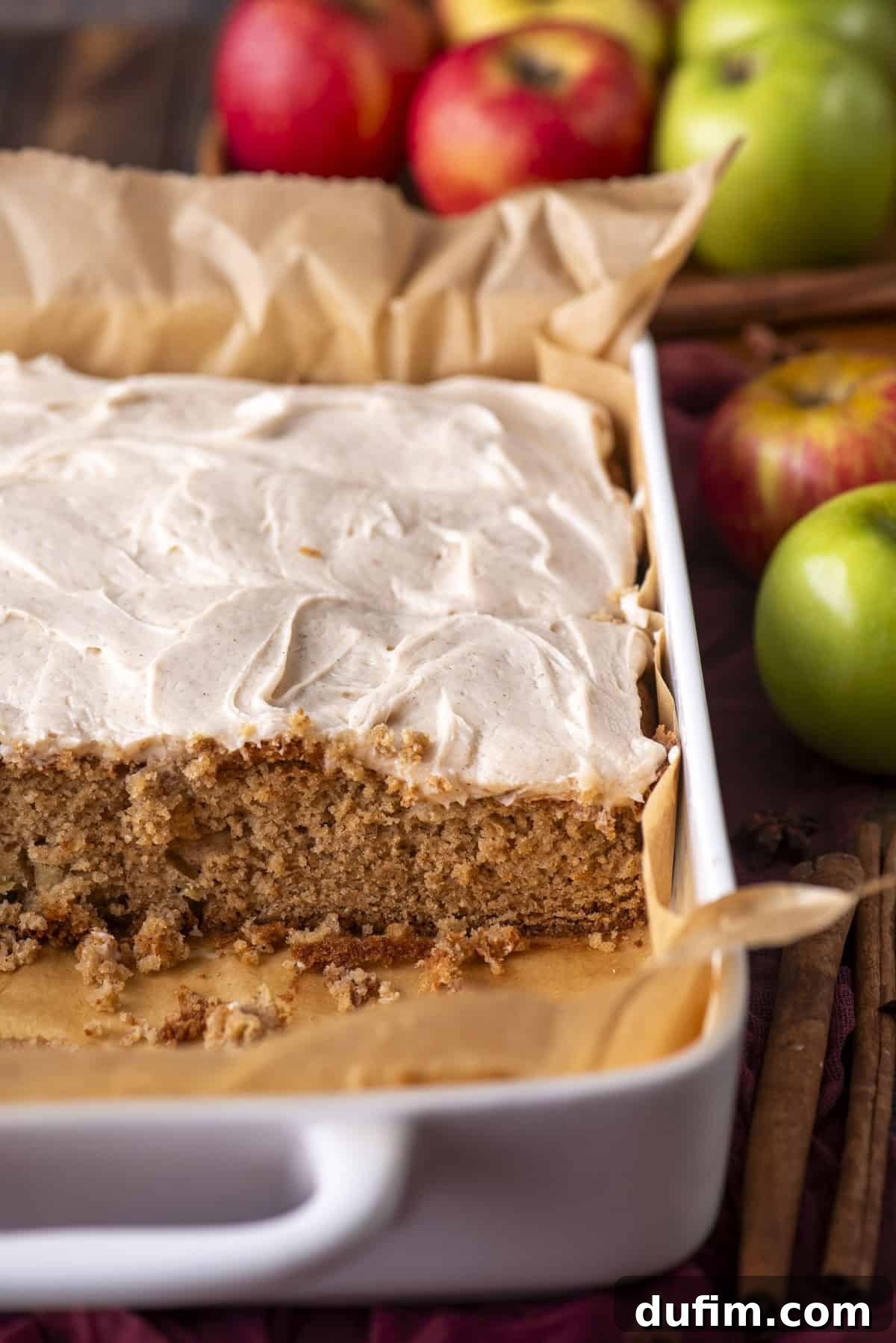
For those with gluten sensitivities, celiac disease, or simply choosing a gluten-free diet, this apple cake recipe is easily adaptable. The key to success lies in selecting a high-quality, reliable gluten-free flour blend. I highly recommend King Arthur’s Gluten-Free Measure for Measure Flour. This particular blend is expertly formulated to be a direct one-for-one substitute for regular all-purpose flour in most standard baking recipes, including this apple cake. Simply swap the specified amount of all-purpose flour with the same amount of this gluten-free alternative (by weight is always most accurate for GF baking), and follow the remaining recipe steps exactly as written. You’ll still achieve a wonderfully moist, flavorful, and structurally sound apple cake that everyone can enjoy!
Storing and Freezing Your Delicious Apple Cake
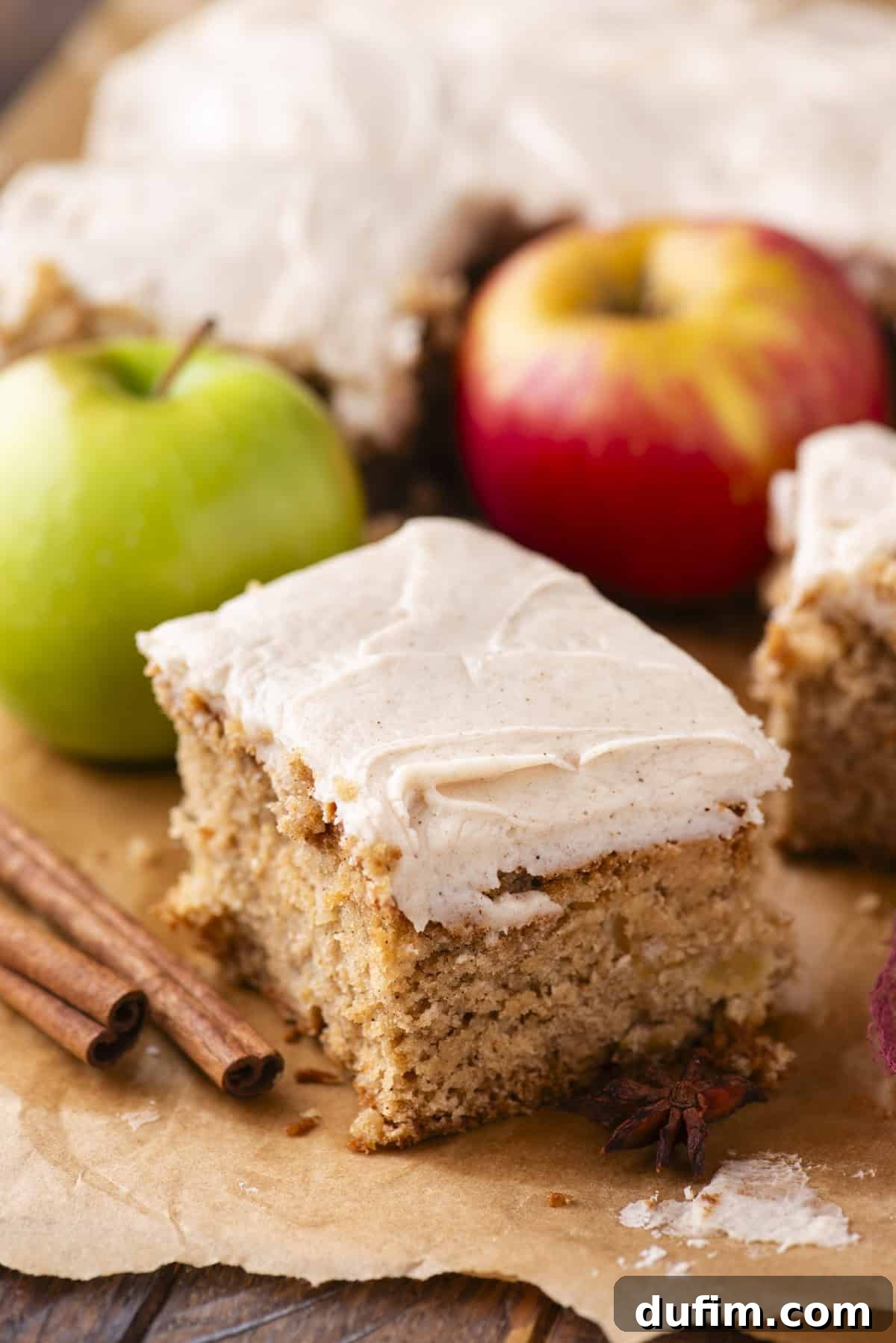
To keep your apple cake fresh and delightful for as long as possible, proper storage is essential, especially with cream cheese frosting, which requires refrigeration. Once the cake has fully cooled to room temperature, store it in an airtight container in the refrigerator. It will remain wonderfully fresh, moist, and delicious for 3-4 days. For optimal flavor and texture, I recommend bringing it to room temperature for about 30 minutes before serving. This allows the frosting to soften beautifully and the cake’s flavors to fully bloom.
If you wish to enjoy this cake at a later date, it freezes exceptionally well! For the best results, I highly recommend freezing the cake *before* adding the frosting. Once the baked cake has cooled completely to room temperature, wrap it tightly first in several layers of plastic wrap, then in a layer of heavy-duty aluminum foil. This double-layer protection is crucial for preventing freezer burn and keeping the cake fresh. It can be frozen for up to 3 months. When you’re ready to serve, simply thaw the wrapped cake in the refrigerator overnight. Once thawed, you can then prepare the cinnamon cream cheese frosting fresh and spread it generously over the cake, ensuring a perfect texture and taste, just like it was freshly baked.
Expert Tips for the Best Apple Cake
Achieving a truly outstanding apple cake goes beyond just following the steps. Here are some expert tips to ensure your cake turns out perfectly every time:
- Room Temperature Ingredients: For both the cake batter and the frosting, ensure your butter, cream cheese, and eggs are at true room temperature. This allows them to emulsify properly, creating a smooth, homogenous batter and a lump-free, airy frosting, which are key to a light and consistent texture in your finished products.
- Don’t Overmix: When combining wet and dry ingredients, mix just until the flour streaks disappear. Overmixing develops gluten, resulting in a tougher, denser cake. A few small lumps in the batter are perfectly fine and often preferred over an overmixed batter.
- Measure Accurately: Precision is paramount in baking. Especially with flour, using a kitchen scale to measure by weight (grams) is far more precise than volumetric cups. Too much flour is a common cause of dry cakes.
- Even Apple Distribution: While our recipe’s batter consistency helps prevent this, always ensure your diced apples are evenly coated in the batter. This helps prevent them from sinking to the bottom of the pan during baking, ensuring apple goodness in every bite.
- Test for Doneness: Every oven is different, and baking times can vary. Always rely on the toothpick test for doneness, not just the timer. A clean toothpick or one with a few moist crumbs attached is ideal; a wet toothpick indicates more baking time is needed.
- Quality Spices: Fresh, high-quality cinnamon and nutmeg make a noticeable difference in flavor. Old or stale spices will not provide the same warmth and aroma.
Creative Variations and Serving Suggestions
While this cinnamon apple cake is fantastic as is, feel free to get creative with additions or different serving styles to customize it to your liking:
- Nutty Addition: For an extra layer of texture and nutty flavor, fold in ½ to 1 cup of chopped walnuts or pecans with the diced apples during the final mixing stage of the batter.
- Spice it Up: Enhance the spice profile even further by adding a pinch of ground ginger, allspice, or a touch of cardamom to the dry ingredients for a deeper, more complex warmth that complements the apples beautifully.
- Caramel Drizzle: For an extra indulgence, drizzle warm, gooey caramel sauce over individual slices of cake just before serving. A sprinkle of sea salt can elevate this even further.
- Toasted Coconut: Sprinkle toasted shredded coconut on top of the cream cheese frosting for a delightful tropical twist and added texture.
- Boozy Infusion: For an adult twist, lightly brush the cooled cake layers with a rum or apple brandy simple syrup before frosting.
This versatile cinnamon apple cake is perfect for a cozy afternoon tea, a festive holiday dessert, a potluck, or simply a sweet treat to enjoy with your morning coffee. Serve it chilled straight from the fridge for a firmer frosting, or let it come to room temperature for about 30 minutes for a softer, creamier experience. A scoop of premium vanilla bean ice cream or a dollop of freshly whipped cream makes an excellent accompaniment for a truly decadent dessert, creating a memorable experience for your taste buds.
More Delicious Recipes Using Fresh Apples:
- Apple Bundt Cake
- Apple Pie Cookies
- Baked Apples
- Homemade Apple Pie from Scratch
Easy Apple Cake Recipe with Cinnamon Cream Cheese Frosting
This perfected apple cake is incredibly moist, fluffy, and bursting with cinnamon-apple flavor, topped with a luscious, tangy cream cheese frosting. A truly reliable recipe for consistent, bakery-quality results at home.
Prep Time: 20 minutes
Cook Time: 1 hour
Servings: 12 slices
Equipment
- Glass Mixing Bowl (large and medium)
- Spatula
- Kitchen Scale (highly recommended for accurate measurements)
- 9×13 inch Baking Pan
- Electric Mixer (handheld or stand mixer for frosting)
- Whisk
- Measuring cups and spoons
- Wire rack for cooling
Ingredients
For the Cake:
- 3 ½ cups (420g) all-purpose flour
- 1 ½ tsp baking powder
- 1 ½ tsp baking soda
- 1 tsp salt
- 2 tsp ground cinnamon
- ½ tsp ground nutmeg
- 1 cup (198g) granulated sugar
- 1 cup (213g) packed light or dark brown sugar
- ¾ cup (149g) vegetable oil (or other neutral oil)
- 1 cup (255g) unsweetened applesauce
- 3 large eggs, at room temperature
- 2 tsp pure vanilla extract
- 2 ½-3 cups (about 285-315g) diced apples, peeled, cored, and cut into uniform ¼-inch chunks (from 2-3 medium apples)
For the Cinnamon Cream Cheese Frosting:
- 8 oz (226g) full-fat cream cheese, softened to room temperature
- ½ cup (113g) unsalted butter, softened to room temperature
- 1 tsp pure vanilla extract
- 4-5 cups (454-567g) powdered sugar (confectioners’ sugar), sifted
- 1 tsp ground cinnamon
- Optional: 1-2 tbsp milk or heavy cream (for thinning, if needed)
Instructions
Cake:
- Preheat your oven to 350°F (175°C). Lightly grease a 9×13-inch baking pan. For easy removal, line the pan with parchment paper, leaving an overhang on the longer sides.
- Peel and core the apples, then dice them into uniform ¼-inch chunks. You should have 2 ½ to 3 cups (285-315g) of diced apples.
- In a medium bowl, whisk together the flour, baking powder, baking soda, salt, ground cinnamon, and ground nutmeg until thoroughly combined. Set aside.
- In a large mixing bowl, whisk together the granulated sugar, brown sugar, vegetable oil, applesauce, eggs, and vanilla extract until the mixture is smooth and well combined.
- Add half of the dry ingredients to the wet mixture. Stir gently with a spatula or spoon, just until the ingredients are mostly combined; avoid overmixing.
- Add the remaining dry ingredients along with the diced apples to the batter. Mix gently until everything is just evenly incorporated and no streaks of dry flour remain. Be careful not to overmix, as this can lead to a tough cake.
- Pour the finished batter into the prepared 9×13-inch pan. Use a spatula to gently smooth the top for even baking.
- Bake for 50-55 minutes, or until a wooden skewer or toothpick inserted into the center of the cake comes out clean or with a few moist crumbs attached.
- Allow the cake to cool completely in the pan on a wire rack before attempting to frost it. This is crucial for the frosting’s consistency.
Cinnamon Cream Cheese Frosting:
- In a mixing bowl, place the softened cream cheese and softened unsalted butter. Using an electric mixer, beat on medium speed for 1-2 minutes until the mixture is light, fluffy, and well whipped.
- Add in the vanilla extract, sifted powdered sugar, and ground cinnamon. Start mixing on low speed until combined, then increase to medium. Beat for another 1-2 minutes, frequently scraping down the sides of the bowl, until the frosting is smooth, creamy, and lump-free.
- If the frosting is too thick for spreading, add milk or heavy cream, 1 tablespoon at a time, beating after each addition until it reaches your desired creamy, spreadable consistency.
- Once the cake is completely cooled, spread the luscious cinnamon cream cheese frosting evenly over the top using an offset spatula or the back of a spoon.
Nutrition Information (Approximate)
All nutritional values are approximate and provided to the reader as a courtesy. Changing ingredients and/or quantities will alter the estimated nutritional calculations.
- Serving: 1 slice
- Calories: 713 kcal
- Carbohydrates: 108g
- Protein: 7g
- Fat: 29g
- Saturated Fat: 11g
- Polyunsaturated Fat: 9g
- Monounsaturated Fat: 7g
- Trans Fat: 0.4g
- Cholesterol: 86mg
- Sodium: 469mg
- Potassium: 139mg
- Fiber: 2g
- Sugar: 78g
- Vitamin A: 571 IU
- Vitamin C: 1mg
- Calcium: 85mg
- Iron: 2mg