
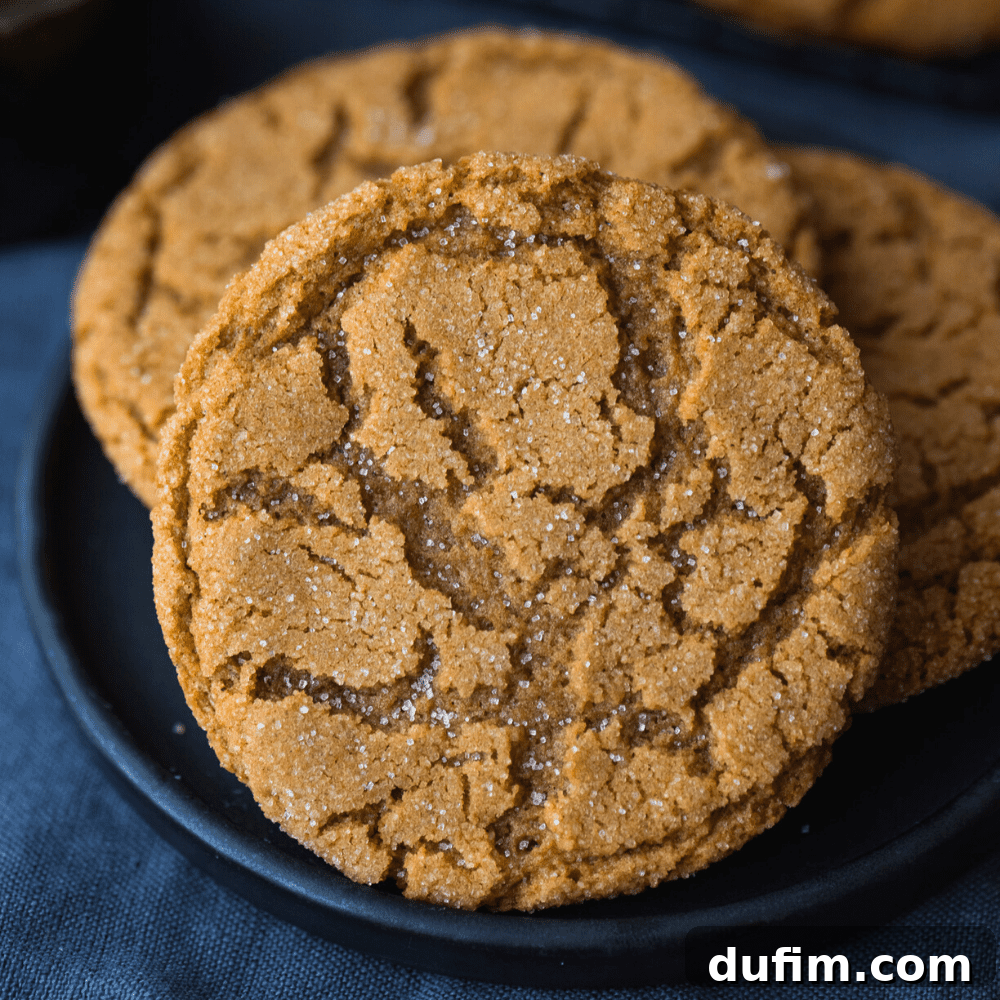
Welcome to the definitive guide for crafting the most irresistible ginger molasses cookies you’ll ever bake! I’ve poured countless hours into my kitchen, meticulously balancing the rich depth of molasses with the vibrant kick of various spices. My goal was to create a recipe that not only delivers incredible flavor but also offers versatility in texture. After extensive experimentation with bake times, I’m thrilled to share how you can easily adjust this recipe to create ginger molasses cookies that are either wonderfully soft-baked or delightfully chewy and crispy – perfectly tailored to your personal preference. These aren’t just cookies; they’re a celebration of classic holiday flavors, designed for bakers of all skill levels.
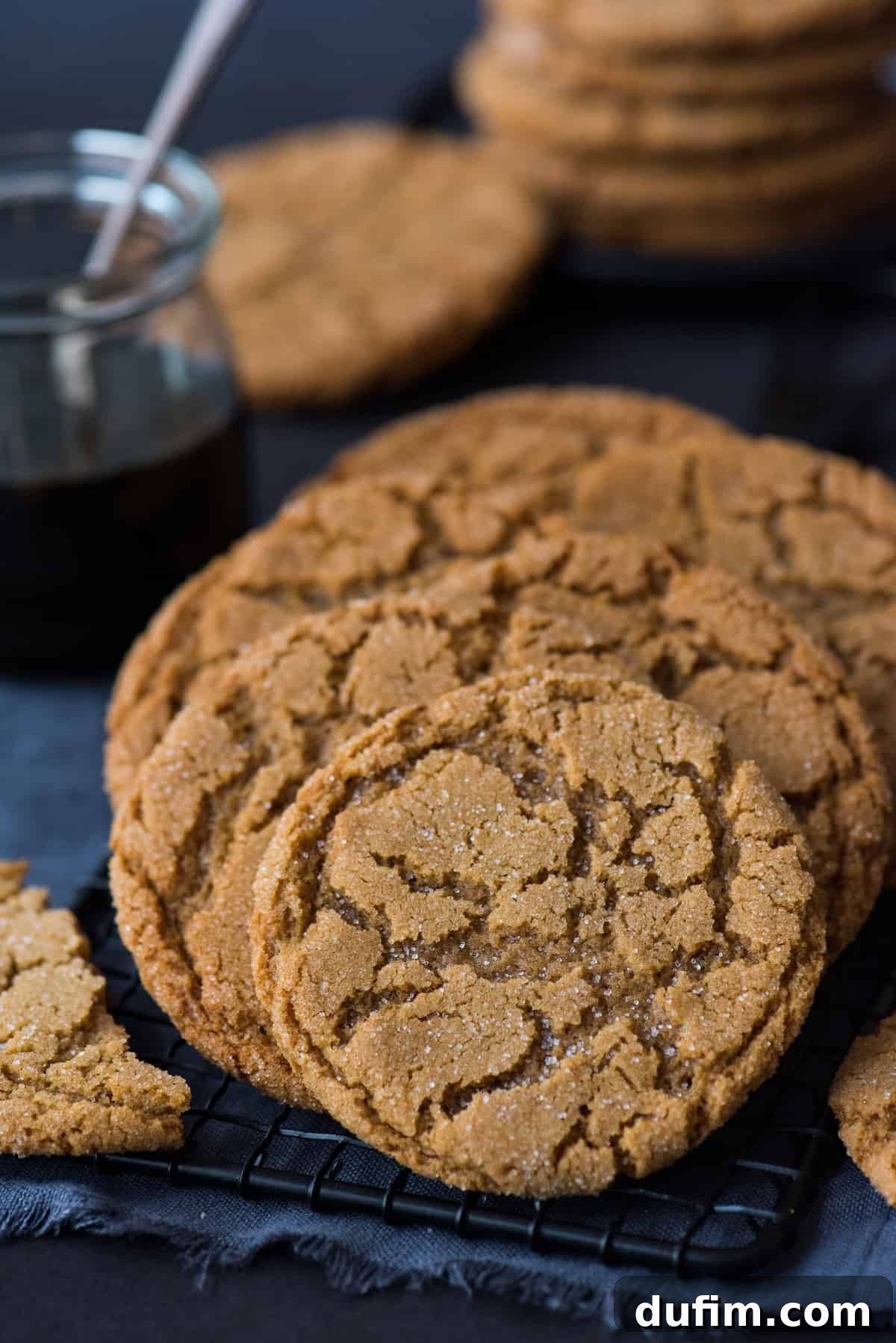
These cookies were so easy to make and came out looking exactly like the picture and were so delicious!!
-Jen
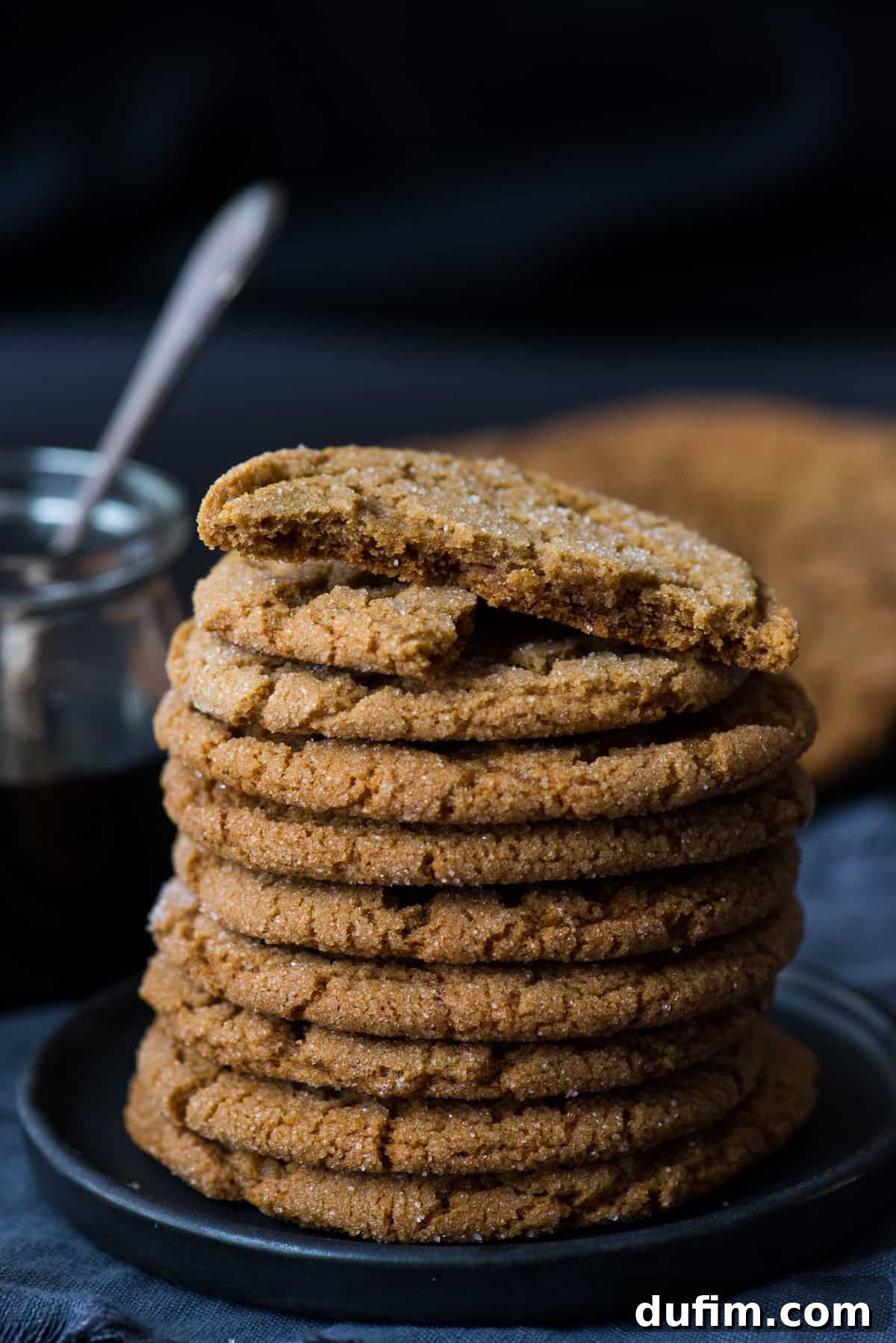
One of the most remarkable aspects of this ginger molasses cookie recipe is its adaptability. Whether you dream of a pillowy soft cookie that melts in your mouth or crave a cookie with a delightful chew and crispy edges, this recipe delivers. The secret lies in a simple adjustment to the bake time. For those who adore a soft, tender cookie, stick to the lower end of the baking spectrum. If you’re a fan of a crisper, more ginger snap-like texture, simply extend the baking time by a few minutes. This subtle change dramatically transforms the cookie’s bite, giving you complete control over your desired outcome.
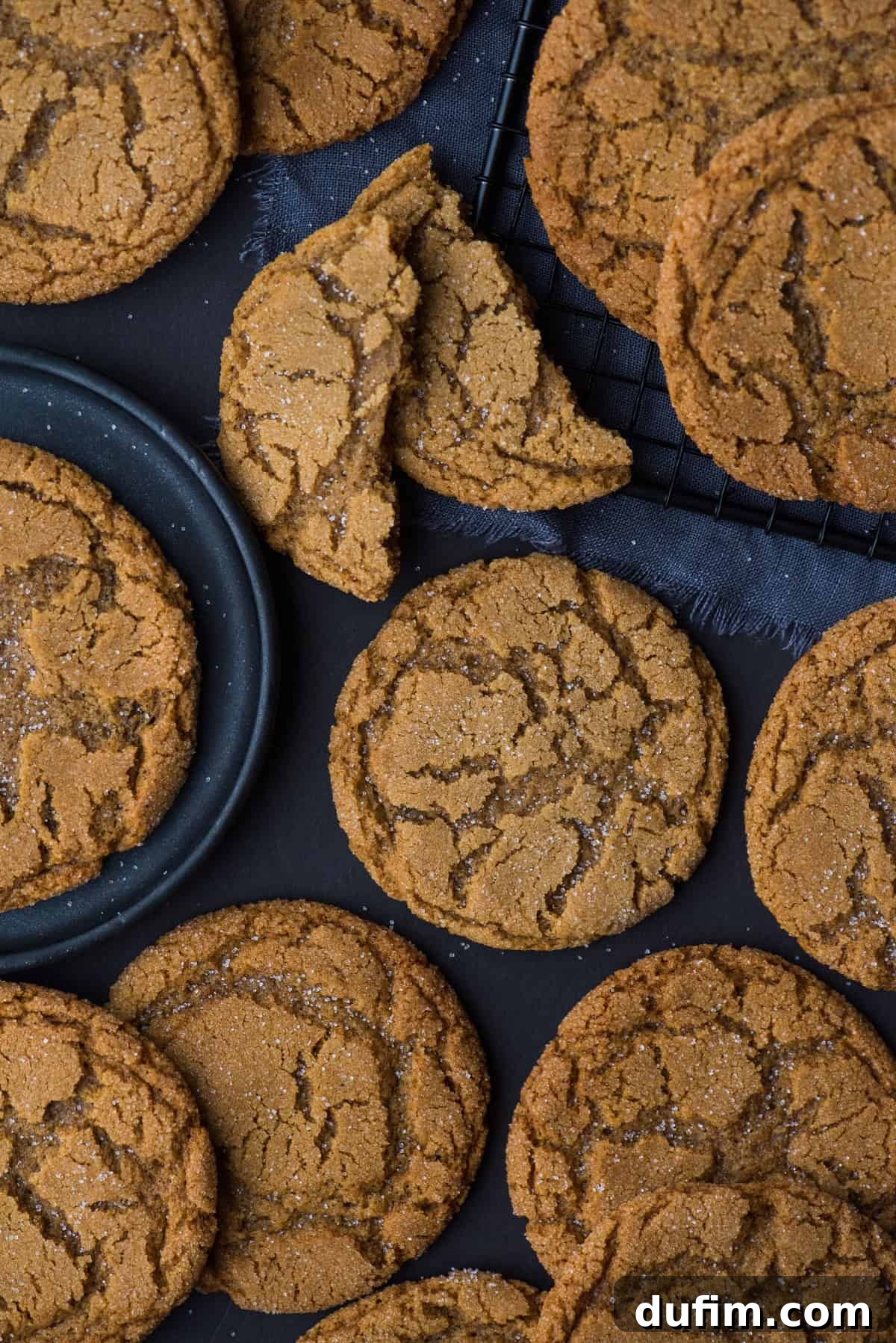
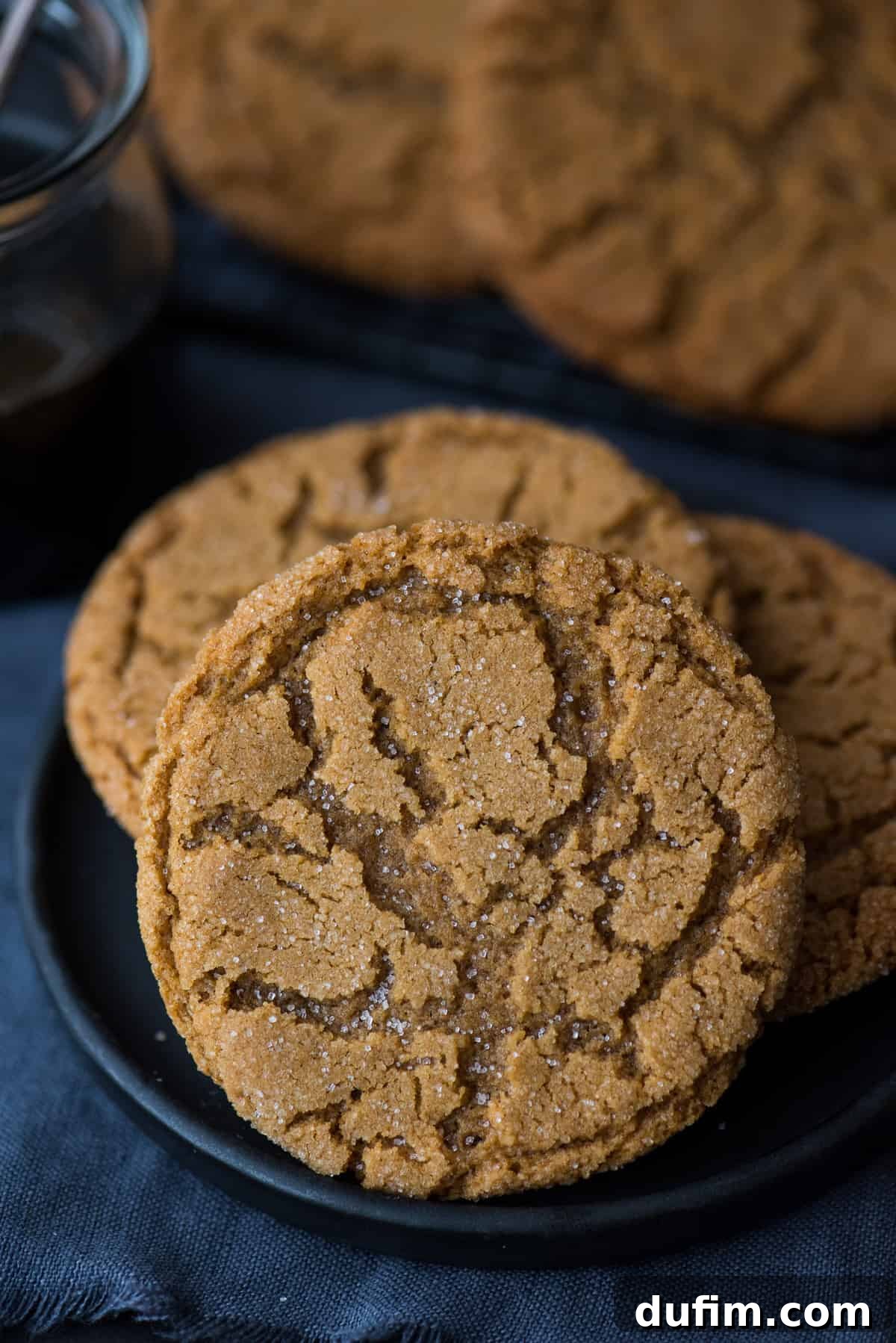
Beyond their incredible taste, these cookies offer a visual treat as well. As they cool, a beautiful network of “crackle” lines forms across their surface, reminiscent of classic molasses crinkle cookies. This natural pattern is not only charming but also a hallmark of a well-made, perfectly spiced molasses cookie. It’s a testament to the magic that happens when the right balance of ingredients and baking science come together to create a truly iconic treat.
Essential Ingredients for Ginger Molasses Cookies
Creating the perfect ginger molasses cookie starts with understanding the role each ingredient plays. This thoughtful selection of staples comes together to create that irresistible sweet, spicy, and perfectly textured cookie we all crave. Here’s a closer look at what makes these cookies truly special:
- All-Purpose Flour: The foundation of our cookie’s structure. Flour provides the necessary bulk and elasticity to hold everything together, ensuring your cookies don’t spread too thin. Properly measured flour is key to avoiding dry or overly dense results.
- Baking Soda: More than just a leavening agent, baking soda reacts with the molasses (which is slightly acidic) to create carbon dioxide gas. This reaction gives the cookies their characteristic lift and contributes to the wonderful crackle on top, as well as promoting browning for a deeper flavor.
- Ground Spices (Cinnamon, Cloves, and Ginger): This aromatic trio is the heart and soul of ginger molasses cookies, delivering that classic gingerbread-like warmth and complexity. Fresh, high-quality spices make all the difference, providing a potent and inviting aroma that fills your home as they bake.
- Salt: Often underestimated, salt is crucial for enhancing all the other flavors in the cookie. It balances the sweetness of the sugar and molasses, making the spices pop and ensuring a well-rounded taste.
- Unsalted Butter: Butter provides richness, flavor, and a tender texture. Using unsalted butter allows you to control the total salt content in your recipe, ensuring a consistent and delicious outcome every time. Make sure it’s at room temperature for optimal creaming.
- Granulated Sugar: Beyond sweetness, sugar contributes to the cookies’ golden-brown crust and promotes spreading. When creamed with butter, it helps incorporate air, leading to a lighter texture. An extra roll in sugar before baking also creates that beautiful sparkly, crinkled exterior.
- Egg: The egg acts as a binder, holding all the ingredients together and providing moisture and structure. It also contributes to the richness and helps achieve that desirable chewy texture.
- Molasses: The star ingredient! Unsulfured molasses provides the distinctive deep, sweet, and slightly smoky flavor that defines these cookies. It also adds moisture, helps create the chewy texture, and contributes to the dark, appealing color. Avoid blackstrap molasses as it can be too bitter for this recipe.
The Art of Accurate Flour Measurement for Perfect Cookies
Achieving the ideal cookie texture largely hinges on accurately measuring your flour. Too much flour can lead to dry, dense, and crumbly cookies, while too little can result in flat, overly spread-out cookies. The “spoon and sweep” method is widely recommended by professional bakers for its precision:
- Fluff the Flour: Before scooping, gently fluff the flour in its bag or container with a fork or spoon. This aerates it and loosens any compaction that might have occurred during storage, ensuring a lighter, more accurate measure.
- Spoon into Measuring Cup: Use a separate spoon to gently scoop the fluffed flour into your dry measuring cup. Avoid packing it down. Let it mound naturally over the top.
- Level with a Knife: Use the flat side of a butter knife or a straight edge to level off the excess flour from the top of the measuring cup. Do this without shaking or tapping the cup.
Remember, sticking the measuring cup directly into a bag of flour is a common mistake that can pack in up to 25% more flour than needed. For ultimate accuracy, especially in baking, consider investing in a kitchen scale and measuring flour by weight (grams). It removes all guesswork and ensures consistently perfect results.
Total Time Required to Bake Deliciousness
These ginger molasses cookies are surprisingly quick to put together, making them perfect for a spontaneous baking session or when you need a crowd-pleasing treat in a pinch. Here’s a breakdown of the time commitment:
- Preparing the Cookie Dough: Approximately 10 minutes. This includes gathering ingredients, creaming butter and sugar, and mixing in the dry ingredients.
- Refrigerating the Dough: A crucial 20 minutes. This brief chill time helps the flavors meld, prevents excessive spreading, and makes the dough easier to handle.
- Baking Time: 13-15 minutes, depending on your desired texture and cookie size.
- Cooling Period: Allow about 15 minutes for the cookies to set and cool on a wire rack. This is essential for them to firm up and develop their final texture.
From start to finish, you can have a batch of warm, fragrant ginger molasses cookies ready to enjoy in under an hour!
Achieving Your Preferred Texture: Baking Time Suggestions
The baking time is where you truly customize these ginger molasses cookies. For the cookies featured in the photos, which struck a beautiful balance between soft and chewy, the dough balls were roughly 2 tablespoons in size and baked for 13-15 minutes.
- For Soft-Baked Cookies (11-12 minutes): The edges will be set and lightly golden, but the centers will still look slightly underbaked and puffy. They will continue to cook slightly as they cool on the baking sheet, resulting in a delightfully soft, melt-in-your-mouth texture.
- For Chewy Cookies (13-14 minutes): The edges will be golden and firm, and the centers will appear set but still slightly soft. These cookies offer a satisfying chewiness throughout.
- For Crispy Ginger Snaps (15+ minutes): The cookies will be deeply golden-brown all over, and the edges will feel crisp to the touch. Baking them longer removes more moisture, yielding a snappier, more brittle cookie reminiscent of traditional ginger snaps.
Important Note: If you opt to make smaller dough balls, it is essential to reduce the baking time accordingly. Overbaking smaller cookies will make them excessively dry and hard. Always keep a close eye on your cookies, especially during the first batch, as oven temperatures can vary.
Delicious Gluten-Free Ginger Molasses Cookies
For those with gluten sensitivities or dietary preferences, you’ll be delighted to know that this ginger molasses cookie recipe adapts beautifully to a gluten-free diet. I’ve personally made these cookies numerous times with King Arthur’s Gluten-Free Measure for Measure Flour, achieving consistently excellent results. This particular blend is designed to be a cup-for-cup substitute for regular all-purpose flour, making the conversion incredibly straightforward.
When baking with gluten-free flours, a few tips can ensure success:
- Use a Reputable Blend: Not all GF flours are created equal. Using a high-quality “measure-for-measure” or “1:1” gluten-free all-purpose flour blend (like King Arthur’s) that contains xanthan gum is crucial.
- Slightly Longer Rest: Gluten-free doughs can sometimes benefit from a slightly longer chill time (an extra 10-15 minutes) to allow the flours to fully hydrate.
- Check Dough Consistency: If your dough seems a bit too crumbly, you can add a tiny splash of milk or water (half a teaspoon at a time) to bring it together, though this is rarely needed with a good 1:1 blend.
- Don’t Overbake: Gluten-free cookies can sometimes dry out faster. Keep a close eye on them during baking and err on the side of slightly underbaked for a softer texture.
With these minor considerations, everyone can enjoy the warm, spicy goodness of these homemade ginger molasses cookies.
Pro Tips for the Best Ginger Molasses Cookies
Elevate your ginger molasses cookie game with these expert tips designed to guarantee a perfect batch every time:
- Master Flour Measurement: As discussed earlier, use the spoon and sweep method for all-purpose flour. This prevents adding too much flour, which is a common culprit for dry, crumbly cookies.
- Room Temperature Butter is Non-Negotiable: Ensure your unsalted butter is genuinely at room temperature – soft enough to indent with a finger, but not melted. This allows it to cream properly with sugar, creating a light, airy base for your dough and ensuring a tender cookie.
- Uniformity with a Cookie Scoop: A cookie scoop is your best friend for consistently sized cookies. Uniformity ensures even baking, so all your cookies are perfectly done at the same time. It also makes for a more professional-looking presentation.
- Bake on a Silicone Baking Mat: Lining your baking sheets with a silicone mat (or parchment paper) prevents sticking and promotes even heat distribution. It also helps achieve that desirable crinkled surface without over-browning the bottoms.
- Don’t Overmix the Dough: Once you add the dry ingredients to the wet, mix only until just combined. Overmixing develops gluten, which can lead to tough cookies.
- Chill Your Dough: The 20-minute refrigeration isn’t just a suggestion; it’s vital. Chilling allows the flavors to deepen, helps the butter solidify (preventing excessive spreading), and makes the dough easier to roll and handle.
- Use Fresh Spices: Spices lose their potency over time. For the most vibrant flavor, ensure your ground cinnamon, cloves, and ginger are fresh and fragrant.
- Roll Generously in Sugar: Don’t skimp on rolling the dough balls in granulated sugar before baking. This coating contributes to the signature crinkled texture and adds a delightful sparkle and sweetness to the exterior.
Storing Your Ginger Molasses Cookies for Freshness
To ensure your ginger molasses cookies remain as delicious as the day they were baked, proper storage is key. Once your cookies have completely cooled on a wire rack (this prevents condensation and sogginess), transfer them to an airtight container. Keep the container at room temperature, away from direct sunlight and heat, for up to a week. If you need to stack the cookies, place a sheet of parchment paper between layers to prevent them from sticking together.
For longer-term storage, these cookies freeze beautifully! Place cooled cookies in a single layer on a baking sheet and freeze until solid (about 30 minutes to an hour). Then, transfer the frozen cookies to a freezer-safe container or a heavy-duty freezer bag, again layering with parchment paper if stacking. They will maintain their quality for up to three months. To enjoy, simply thaw them at room temperature for a few hours.
How to Freeze Ginger Molasses Cookie Dough for Future Baking
Freezing cookie dough is a fantastic way to enjoy freshly baked cookies any time a craving strikes or unexpected guests arrive. This recipe is perfect for make-ahead convenience:
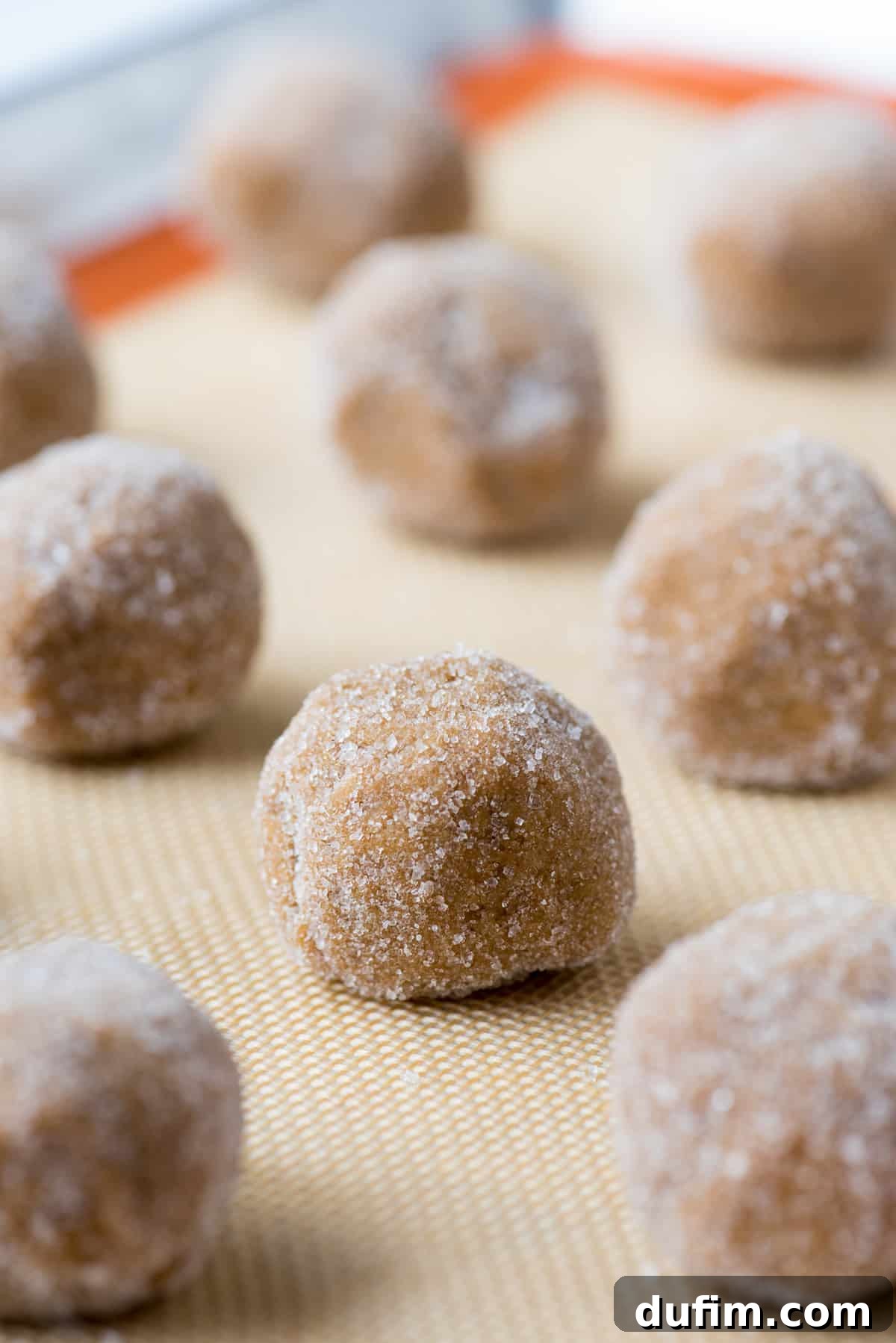
- Form Dough Balls: Prepare the cookie dough as instructed, and use your cookie scoop to form uniform dough balls.
- Flash Freeze: Place the formed dough balls close together on a baking sheet lined with a silicone mat or parchment paper. There’s no need to space them widely since you won’t be baking them immediately. Transfer the baking sheet to the freezer and freeze until the dough balls are solid, which usually takes about 1 hour.
- Transfer to Storage: Once frozen solid, remove the baking sheet from the freezer and transfer the cookie dough balls to a ziplock freezer bag or an airtight freezer-safe container. Label the bag with the date and baking instructions (oven temperature and approximate bake time).
- Freeze for Months: The frozen cookie dough will stay fresh and delicious for up to 3 months.
- To Bake from Frozen: When you’re ready to bake, remove the desired number of dough balls from the freezer. Pre-heat your oven to 350ºF (175ºC). Roll the frozen dough balls in granulated sugar, then place them on a lined baking sheet. Bake for 13-17 minutes (frozen cookies may require an additional 1-2 minutes of baking time compared to fresh dough). Enjoy warm!
Explore More Delicious Cookie Recipes
If you enjoyed these ginger molasses cookies, you might love exploring other fantastic cookie recipes perfect for any occasion:
- Classic Christmas Sugar Cookies
- Sweet Maraschino Cherry Chocolate Chip Cookies
- Easy Cut-Out Sugar Cookies
- Irresistible Peanut Butter Blossom Cookies
Ginger Molasses Cookie FAQs
The beautiful crinkled surface is a hallmark of ginger molasses cookies. If yours aren’t cracking, several factors could be at play. First, ensure your baking soda is fresh and active; it’s crucial for the leavening and interaction with molasses that causes the dough to expand and crack. Secondly, accurately measuring your flour is important; too much flour can result in a stiffer dough that won’t spread and crack as readily. Also, make sure your oven temperature is correct; an oven that’s too cool might prevent the rapid expansion needed for cracking. Finally, a generous roll in granulated sugar before baking helps create tension on the dough’s surface, encouraging those signature cracks.
Flat cookies are a common baking frustration. For ginger molasses cookies, this can often be attributed to a few key issues. Using too little flour is a primary cause, as it means there isn’t enough structure to hold the cookie’s shape during baking, leading to excessive spreading. Another common culprit is butter that’s too warm or even melted; room temperature butter, not warm or oily butter, is essential for creaming properly and retaining air. Old or inactive baking soda will also fail to provide the necessary lift, resulting in flat cookies. Overmixing the dough can also lead to a softer, more relaxed dough that spreads more readily. Lastly, an oven temperature that is too low will cause the cookies to spread before they have a chance to set, leading to a flatter appearance. Ensure your oven is preheated to the correct temperature and consider using an oven thermometer for accuracy.
While molasses is a key flavor component, too much of a good thing can have adverse effects. Excessive molasses can result in a dough that is overly sticky and difficult to work with. During baking, the increased moisture and sugar content can cause the cookies to spread excessively, leading to a flatter, thinner cookie. The flavor itself can become overpowering, masking the delicate balance of spices and potentially making the cookies taste overly sweet, or even impart a slightly bitter note if using darker varieties of molasses. The texture might also suffer, becoming too soft, gooey, or dense instead of achieving the desired chewy or crisp perfection. Adhering to the recommended amount ensures optimal flavor and texture.
For these ginger molasses cookies, unsulfured light or dark molasses is ideal. Unsulfured molasses has a milder, sweeter flavor. Avoid using blackstrap molasses, which is much darker, thicker, and has a more robust, slightly bitter taste that can overpower the other flavors in the cookie.
While brown sugar can be used in some cookie recipes for added moisture and chewiness, it’s best to stick to granulated sugar for these ginger molasses cookies, at least for the main batter. The granulated sugar helps create that crisp exterior and promotes the distinct crackle. You will, however, roll the dough balls in granulated sugar before baking for that perfect finish.
Chilling the dough for at least 20 minutes is crucial for several reasons. It allows the gluten to relax, which can result in a more tender cookie. More importantly, it gives the fat (butter) time to firm up. This prevents the cookies from spreading too quickly in the oven, maintaining their shape and thickness. Chilling also allows the flavors, especially the spices, to meld and deepen, leading to a more complex and satisfying taste experience.
Rating: 4.93 from 14 ratings
Ginger Molasses Cookie Recipe
Beth
10 minutes
13 minutes
30 minutes (chill + cool)
53 minutes
16 -20 cookies
Rate Recipe
Print Recipe
Equipment
-
Silicone Baking Mat
-
Cookie Dough Scoop
-
Baking Sheet
Ingredients
- 2 cups (240g) all purpose flour
- 1 ½ tsp baking soda
- 1 tsp cinnamon
- ½ tsp ground cloves
- 1 tsp ground ginger
- ½ tsp salt
- ½ cup (113g) unsalted butter, 1 stick, room temperature
- 1 cup (198g) granulated sugar
- 1 large egg
- ¼ cup (85g) unsulfured molasses
Instructions
-
In a large mixing bowl, whisk together the all-purpose flour, baking soda, ground cinnamon, ground cloves, ground ginger, and salt until well combined. Set aside.
-
In a separate large mixing bowl, using an electric mixer, beat the room temperature unsalted butter and granulated sugar for about 1 minute until light and fluffy. Add in the large egg and unsulfured molasses, then beat again for another 60 seconds until fully incorporated and smooth.
-
Gradually add the dry ingredient mixture to the wet ingredients. Mix on low speed or by hand with a spatula until just combined. Be careful not to overmix the dough.
-
Use a cookie scoop (approximately 2 tablespoons in size) to form uniform dough balls. Place the dough balls onto a baking sheet lined with a silicone mat or parchment paper, keeping them close together for chilling. Place the baking sheet with the dough balls in the refrigerator for 20 minutes to chill.
-
After 20 minutes, preheat your oven to 350ºF (175ºC). Pour about ¼ cup of granulated sugar into a small bowl for rolling the cookies. Take each chilled dough ball and roll it generously in the sugar, ensuring it’s fully coated.
-
Arrange about 8 sugar-coated cookies on a silicone-lined baking sheet, spacing them about 2 inches apart to allow for spreading. Bake in batches as needed. Bake for 13-15 minutes, or adjust time according to your preferred texture (shorter for softer, longer for crispier).
Notes
Nutrition
Carbohydrates: 29g |
Protein: 2g |
Fat: 6g |
Saturated Fat: 4g |
Polyunsaturated Fat: 1g |
Monounsaturated Fat: 2g |
Trans Fat: 1g |
Cholesterol: 27mg |
Sodium: 183mg |
Potassium: 103mg |
Fiber: 1g |
Sugar: 16g |
Vitamin A: 194IU |
Vitamin C: 1mg |
Calcium: 19mg |
Iron: 1mg
Nutrition Disclosure
All nutritional values are approximate and provided to the reader as a courtesy. Changing ingredients and/or quantities will alter the estimated nutritional calculations.
Like this recipe? Rate and comment below!