
The Ultimate Homemade German Chocolate Cake: A Step-by-Step Guide
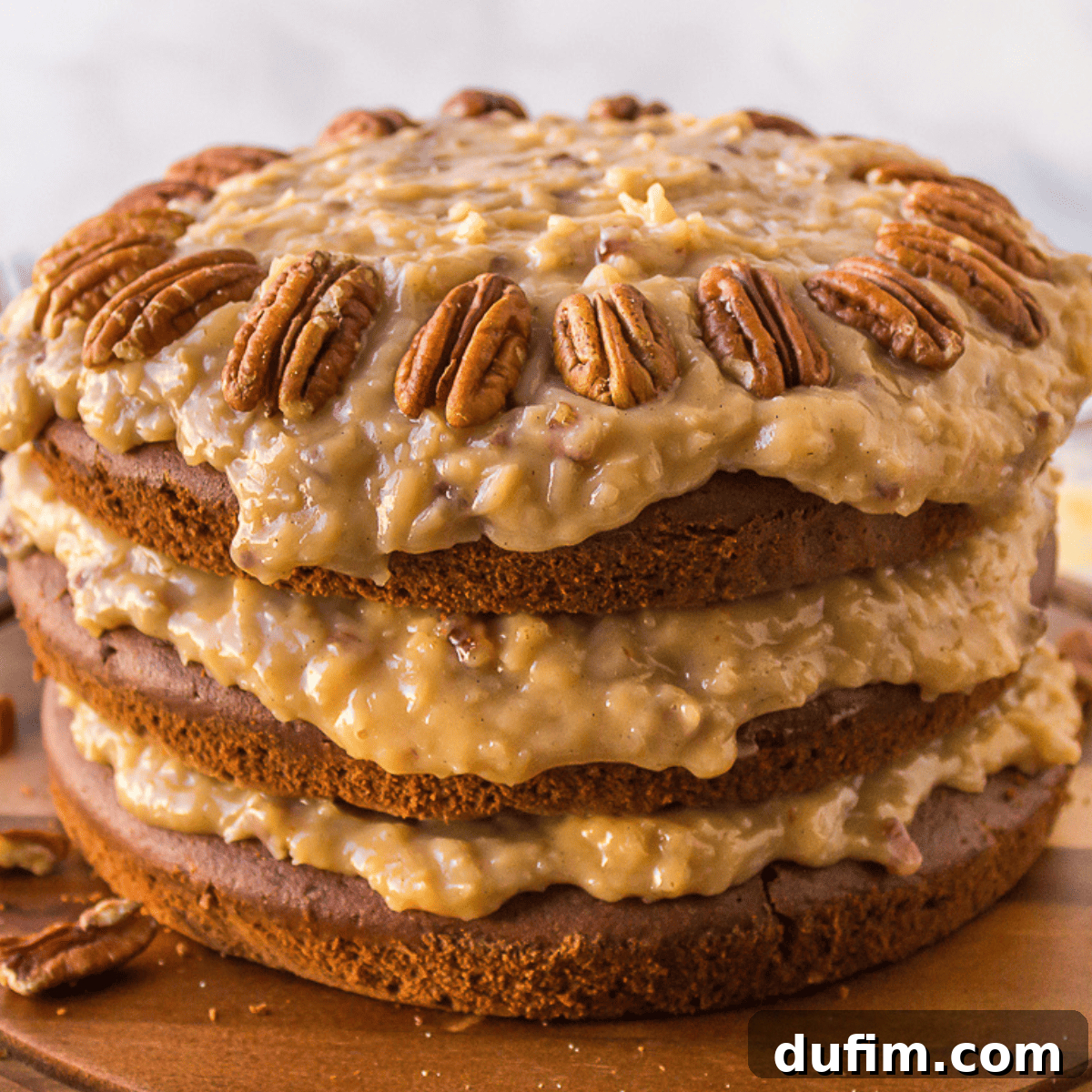
Prepare to be renowned for this German Chocolate Cake – it’s the dessert that will earn you endless praise and requests for birthdays and special occasions. This recipe guarantees an ultra-moist chocolate cake, beautifully layered with an irresistible coconut pecan filling that balances sweetness with a delightful crunch. Follow our comprehensive, step-by-step guide to create a show-stopping cake that tastes like it came straight from a gourmet bakery.
“This recipe did not disappoint! The batter is incredibly light, resulting in a wonderfully moist cake. I made this for a friend, and he was absolutely in awe of how delicious it was! His exact words were that it tasted like it came from a high-end bakery or a fancy restaurant!”
– Russ
Unveiling the Best German Chocolate Cake Recipe: Our Signature Approach
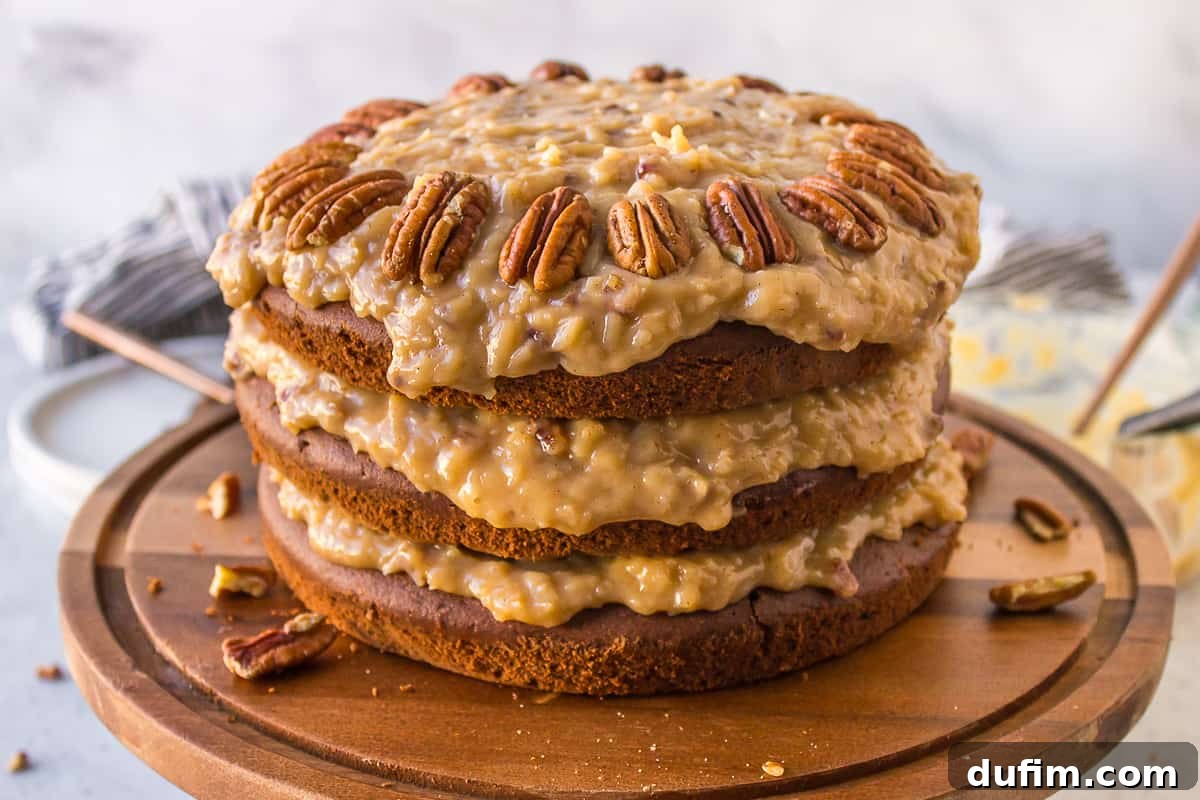
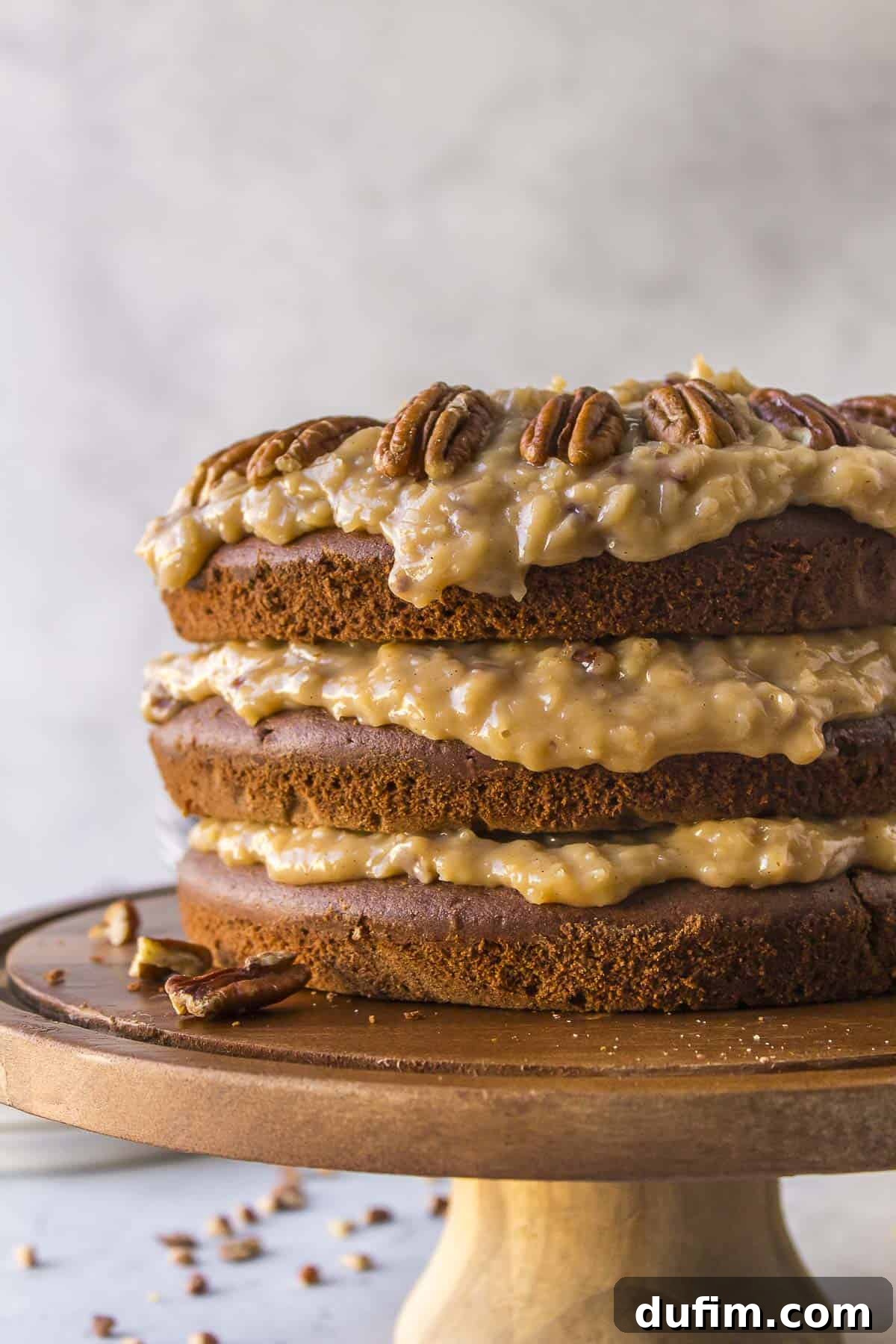
Our rendition of German Chocolate Cake is a culinary masterpiece, featuring distinct layers of tender, moist chocolate cake generously alternated with a luscious pecan coconut frosting. We embrace the “naked” cake style, allowing the stunning layers of cake and filling to be admired, focusing all attention on the incredible flavors and textures within.
While the perfectly moist chocolate cake layers provide a sturdy and deeply flavorful foundation, it’s truly the coconut pecan filling that steals the spotlight. This iconic filling is a symphony of textures and tastes: ooey-gooey and sweet, with satisfying crunches from toasted pecans and shredded coconut. Its rich, nutty, and caramelized notes are what define this classic dessert and set it apart from other chocolate cakes. Unlike some recipes that might suggest an additional chocolate buttercream frosting for the exterior, our version understands that the harmonious balance of the rich chocolate cake and the decadent filling needs no further embellishment. This combination is complete, perfect, and utterly irresistible. Trust our foolproof recipe and detailed instructions, and you’ll achieve perfection every single time.
What Exactly is German Chocolate Cake? A Delicious Misnomer
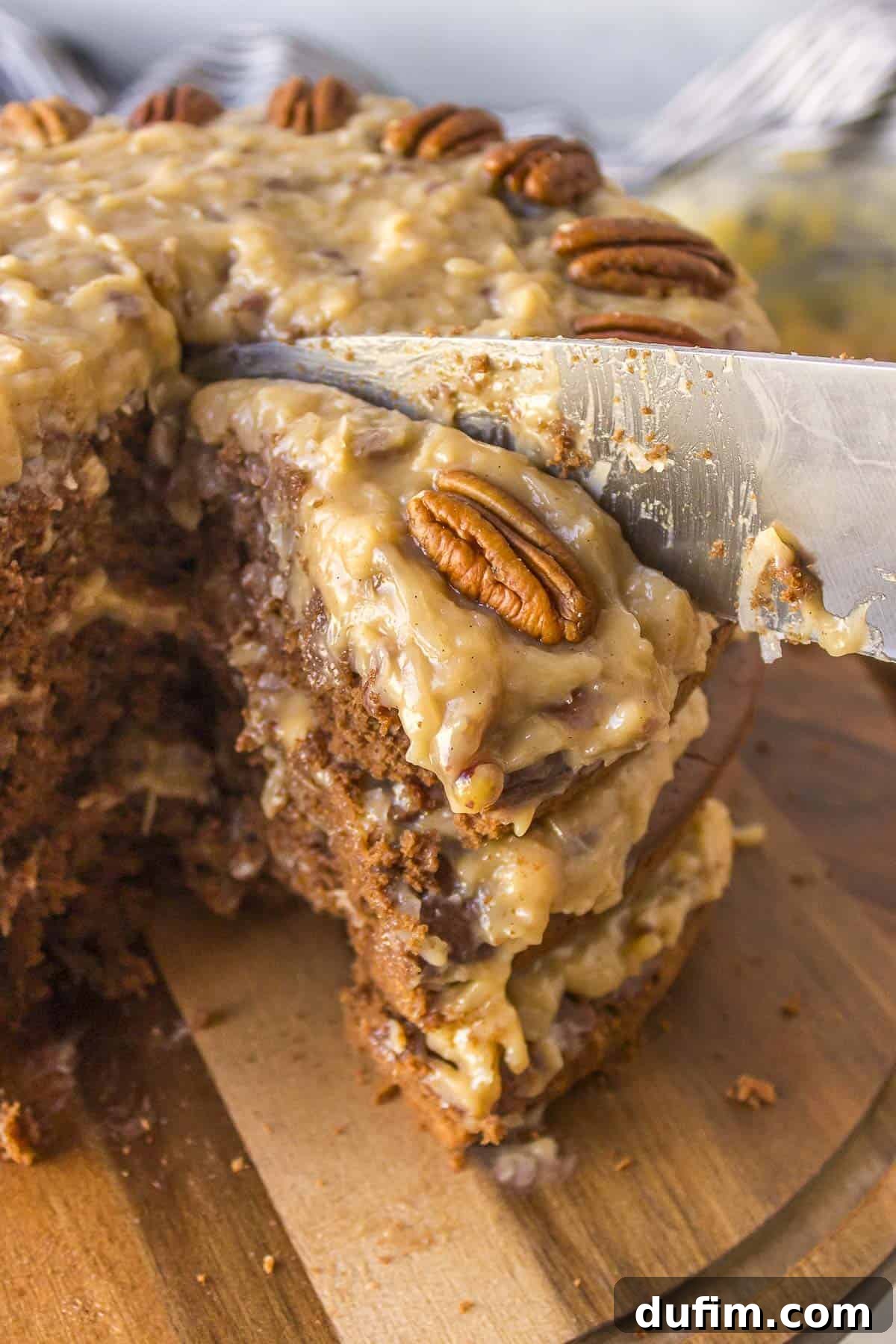
German chocolate cake is renowned for its rich chocolate cake base crowned with a distinctive coconut pecan frosting or filling. Despite its name, many are surprised to learn that this beloved dessert doesn’t originate from Germany at all. It’s a proudly American creation! The cake’s name actually honors Samuel German, an American baker who, in 1853, developed a dark sweet baking chocolate bar for Baker’s Chocolate Company. The original recipe, created by a homemaker named Mrs. George Clay, called for “German’s Sweet Chocolate” – thus, the name stuck, leading to a delicious misunderstanding about its geographical roots.
Essential Ingredients for Your Homemade German Chocolate Cake
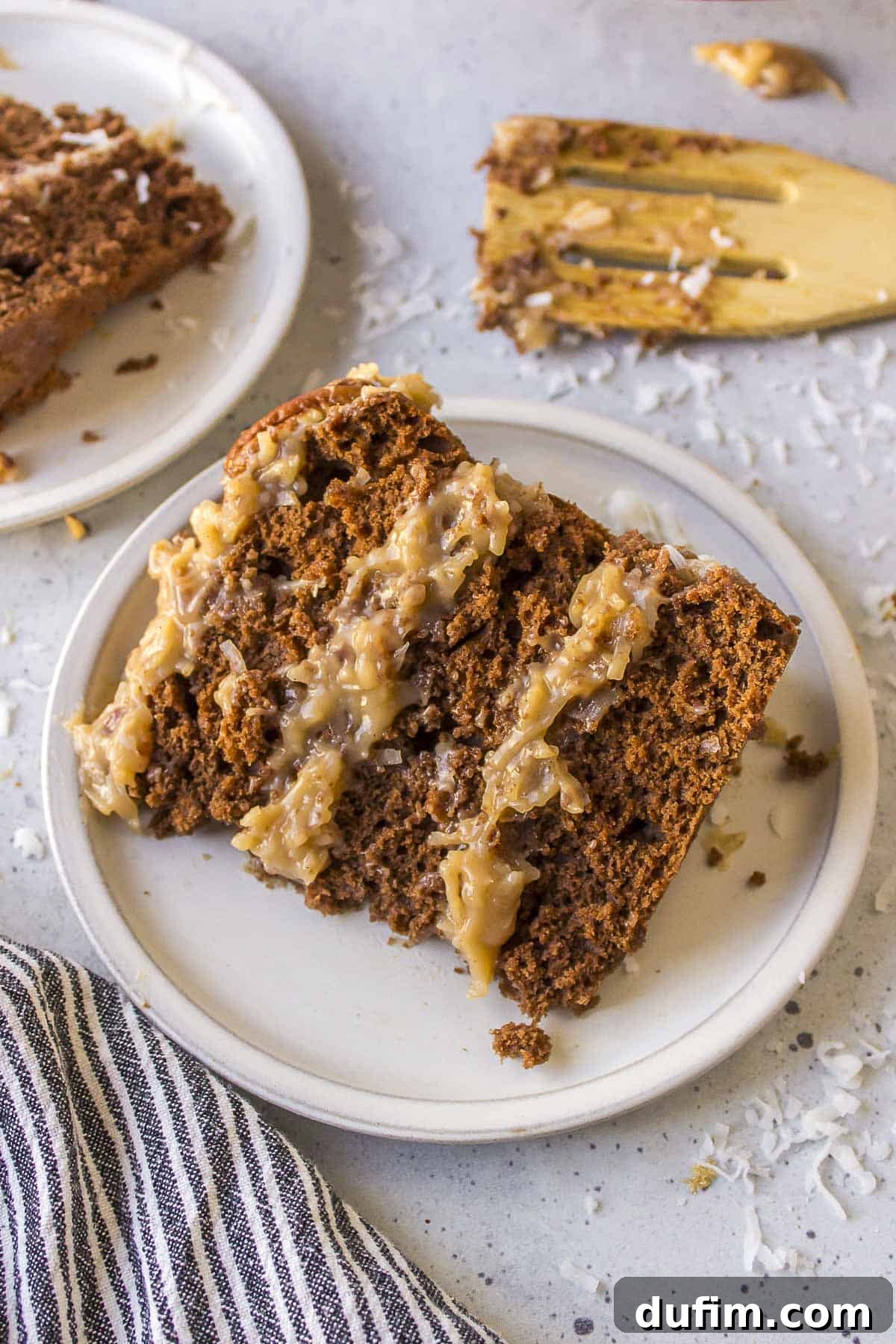
This cake is guaranteed to become a cherished family favorite, a recipe you’ll return to again and again. You’ll find that the ingredients required are largely common baking staples, divided into those for the rich chocolate cake layers and those for the incredible coconut pecan frosting. For precise measurements and detailed preparation steps, please refer to the complete recipe card below.
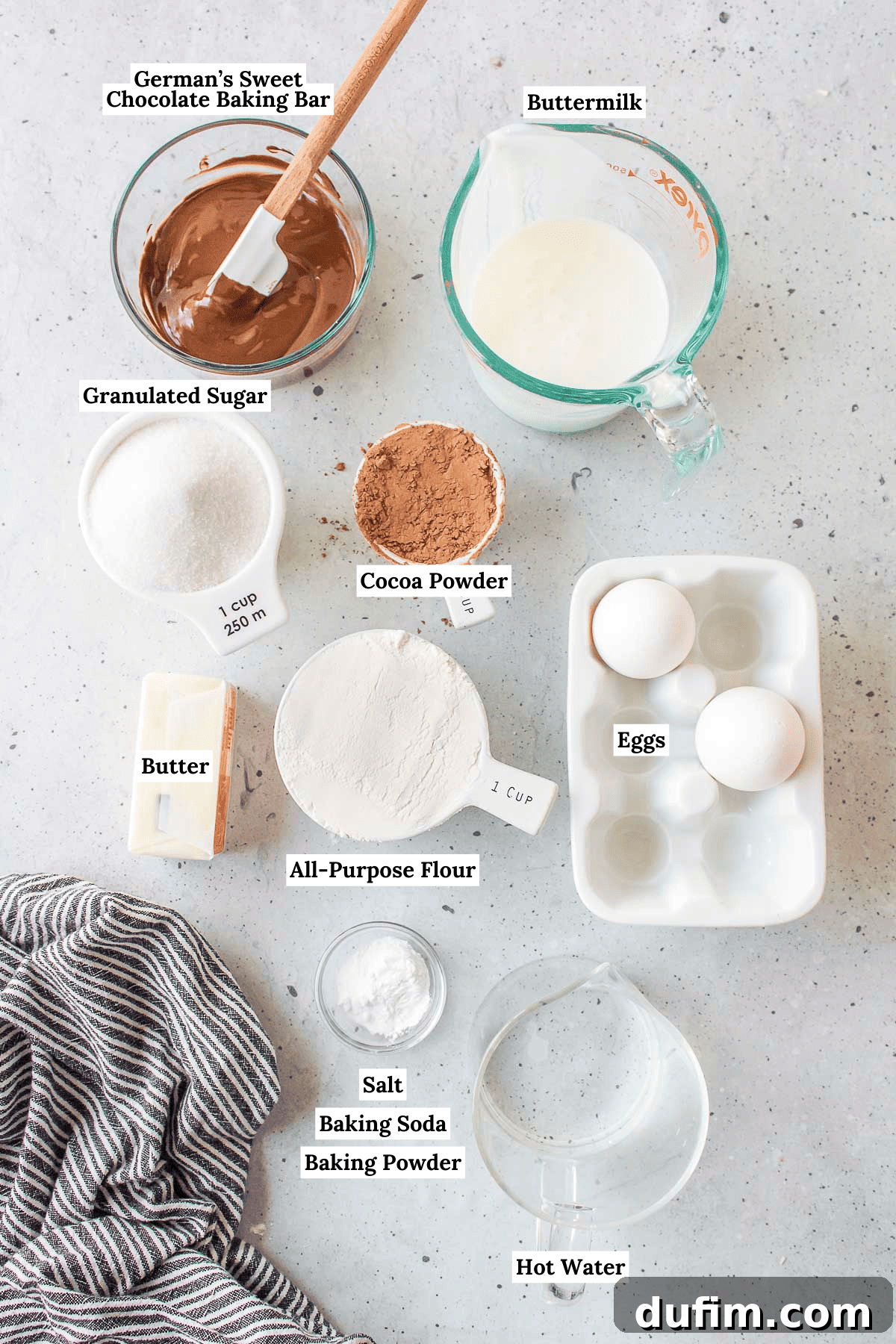
For the Decadent Chocolate Cake
- All-purpose flour: The structural base of our cake, providing tender crumbs.
- Unsweetened natural cocoa powder: Delivers a deep, rich chocolate flavor without added sweetness, balancing the sweet chocolate bar.
- Baking soda & Baking powder: Essential leavening agents that work together to create a light and airy texture.
- Salt: Enhances all the other flavors, particularly the chocolate.
- Unsalted butter: At room temperature, for a smooth, creamy batter and rich flavor (1/2 cup or 1 stick).
- Granulated sugar: Provides sweetness and contributes to the cake’s moistness.
- German’s Sweet Chocolate baking bar: The namesake ingredient, crucial for the authentic flavor profile. Ensure it’s melted and cooled before incorporating.
- Large eggs: Act as binders, add richness, and contribute to the cake’s structure.
- Buttermilk: Its acidity reacts with baking soda, tenderizing the cake and adding incredible moisture and a subtle tang.
- Hot tap water: Activates the cocoa powder, blooming its flavor and ensuring a deep chocolate taste, while also contributing to the cake’s moist consistency.
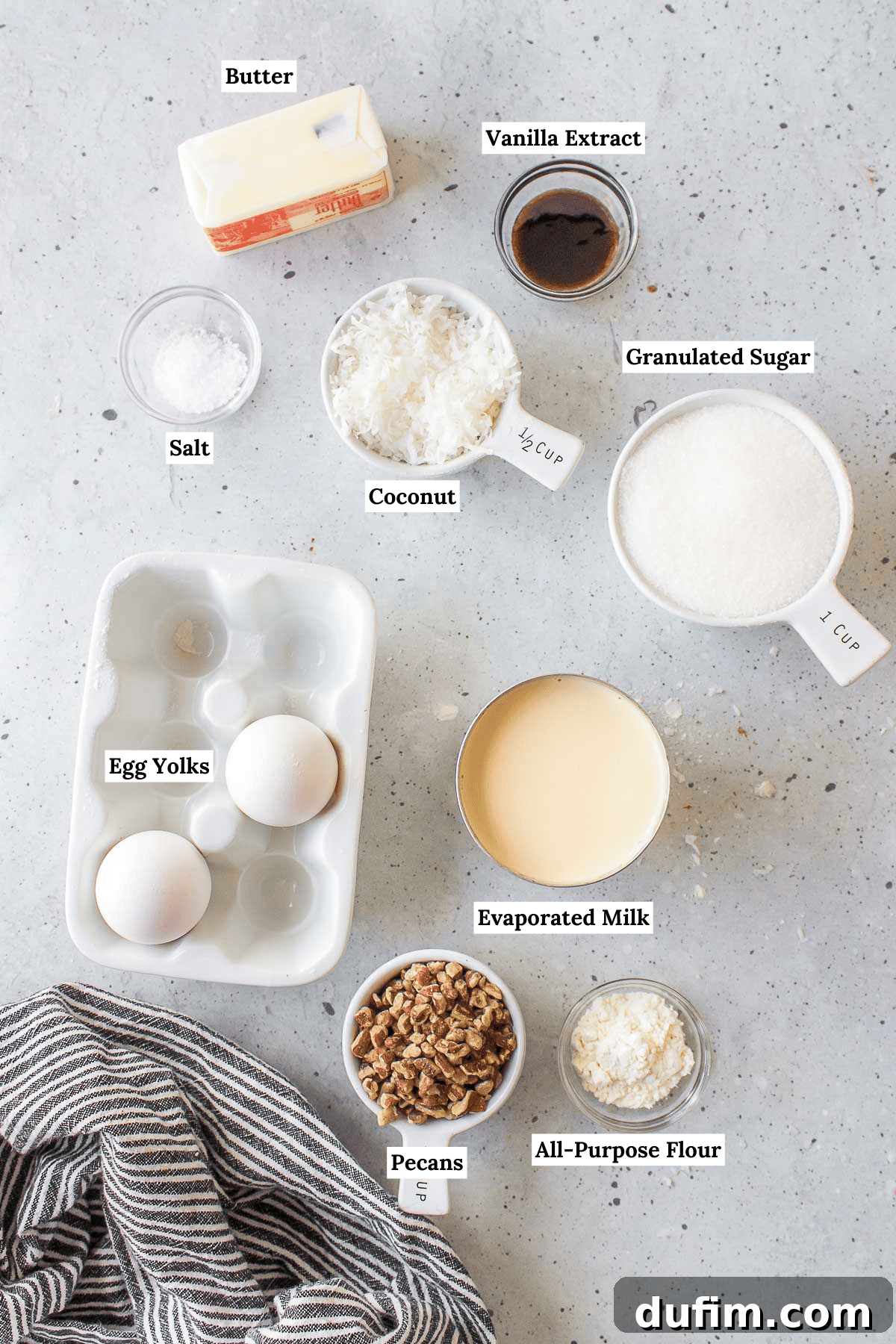
For the Luscious Coconut Pecan Frosting
- Egg yolks: Crucial for the rich, custard-like base and smooth texture of the filling.
- All-purpose flour: Acts as a thickening agent for the creamy custard.
- Granulated sugar: Provides the characteristic sweetness of the frosting.
- Salt: Balances the sweetness and enhances the nutty and coconut flavors.
- Evaporated milk: Contributes to the creamy, condensed texture and rich flavor of the filling.
- Unsalted butter: Adds richness and helps create the silky-smooth consistency (1 stick or 1/2 cup).
- Shredded sweetened coconut: The star flavor and texture, providing natural sweetness and chewiness.
- Chopped pecans: Adds a delightful crunch and nutty depth that perfectly complements the coconut.
- Vanilla extract: A touch of pure vanilla enhances all the flavors, adding warmth and complexity.
Exciting Variations for Your German Chocolate Cake Recipe
While this classic German Chocolate Cake recipe is perfect as is, offering a truly traditional and deeply satisfying experience, there are always creative ways to customize it to your liking or for different occasions. Here are some fantastic ideas to experiment with:
- Individual German Chocolate Cake Jars: For a charming and portable dessert, layer crumbled chocolate cake, generous dollops of the coconut pecan frosting, and light, airy whipped cream into mason jars. These are perfect for picnics, parties, or thoughtful gifts.
- Flavor Enhancements & Nut Swaps: Unleash your inner pastry chef by experimenting with the frosting’s flavor. A subtle hint of espresso powder can deepen the chocolate notes beautifully. Alternatively, swap out or combine pecans with other nuts like toasted almonds or hazelnuts for a different nutty dimension.
- Gluten-Free German Chocolate Cake: Don’t let dietary preferences stop you from enjoying this masterpiece! This cake has been successfully made with both regular and gluten-free flour, yielding consistently awesome results. We highly recommend using King Arthur’s Gluten Free Measure for Measure Flour as a one-to-one substitute for standard all-purpose flour.
- Sheet Cake Simplification: If you prefer to skip the intricate layering process but still crave all the classic flavors, transform this recipe into a simple sheet cake. Bake it in a larger pan (e.g., a 9×13 inch baking dish) and spread one generous layer of the coconut pecan frosting over the top. Keep in mind that baking times will vary significantly for a sheet cake compared to individual cake layers.
- Homemade Whipped Cream Topping: For an extra touch of indulgence, add a swirl of light and fluffy homemade whipped cream to the very top of the cake, or serve it alongside individual slices. Its delicate texture and fresh dairy notes provide a lovely contrast to the rich cake and filling.
- Rich Chocolate Ganache Drizzle: If you’re a true chocolate enthusiast and want to enhance the chocolate element even further, consider drizzling a smooth, glossy chocolate ganache over the finished cake. This adds an elegant touch and another layer of intense chocolate flavor.
- Adjusting Sweetness with Unsweetened Coconut: This recipe calls for sweetened shredded coconut, which contributes to the filling’s decadent sweetness. If you prefer a slightly less sweet profile, you can easily opt for unsweetened shredded coconut. This will allow the nutty pecan and deep chocolate flavors to shine through even more.
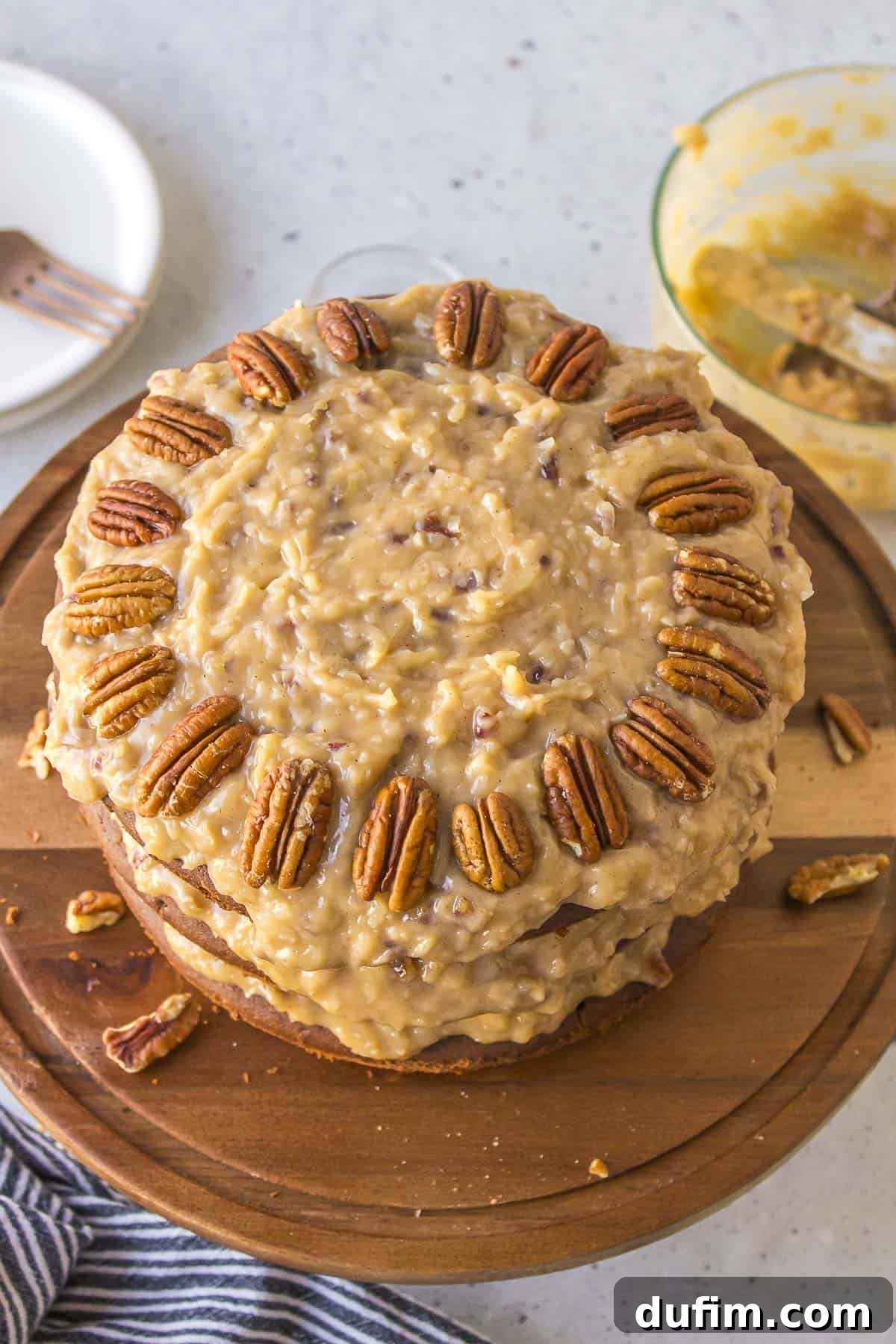
How to Master This German Chocolate Cake Recipe
Crafting a stunning, multi-layered chocolate cake with its signature coconut pecan filling might seem like a task only for professional bakers, but that’s far from the truth! Our recipe is broken down into simple, easy-to-follow steps designed to ensure your success, even if you’re a beginner. Below, you’ll find the complete, detailed instructions. Get ready to bake something truly extraordinary!
Part 1: Preparing the Ultra-Moist Chocolate Cake Layers
- Prepare Your Oven and Pans: Begin by preheating your oven to 350º F (175º C). Take three 8-inch springform pans. Generously grease both the sides and bottoms with butter, then line the bottom of each pan with a circle of parchment paper. This crucial step ensures effortless cake removal. Set the prepared pans aside.
- Melt the German’s Sweet Chocolate: Roughly chop the German’s Sweet Chocolate baking bar into smaller, uniform pieces. Place them in a microwave-safe bowl. Microwave on 50% power for 2 minutes. Stir the chocolate well, then continue microwaving in 30-second intervals at 50% power, stirring after each, until the chocolate is completely melted and smooth. Allow it to cool slightly before proceeding.
- Combine Dry Ingredients: In a large mixing bowl, whisk together the all-purpose flour, unsweetened natural cocoa powder, baking soda, baking powder, and salt. Ensure these ingredients are thoroughly combined to prevent pockets of leavening agents in your final cake. Set this dry mixture aside.
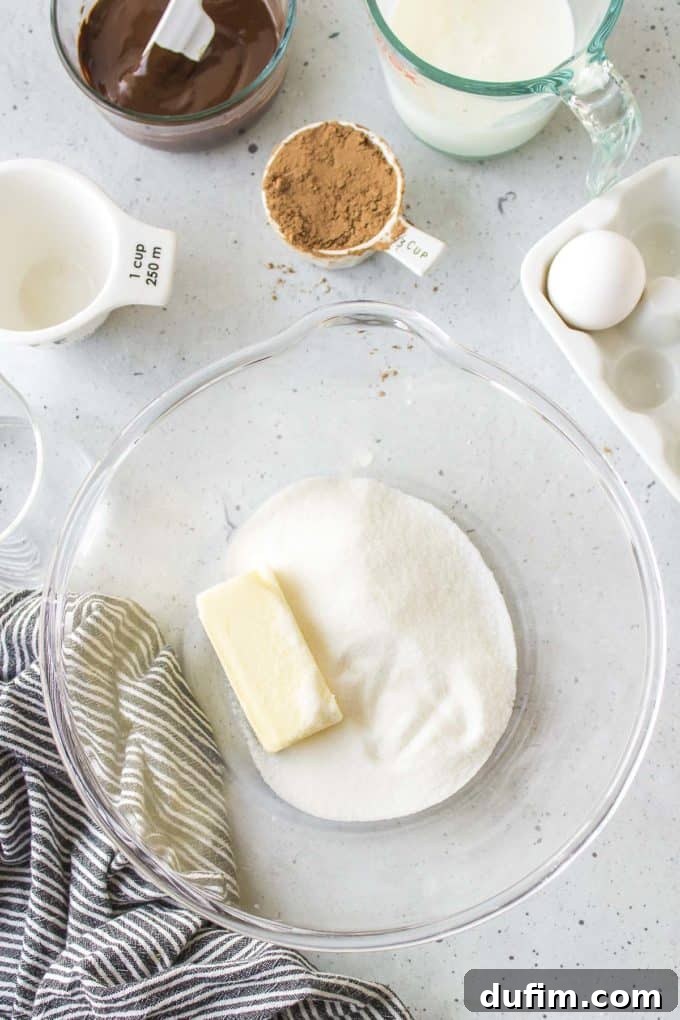
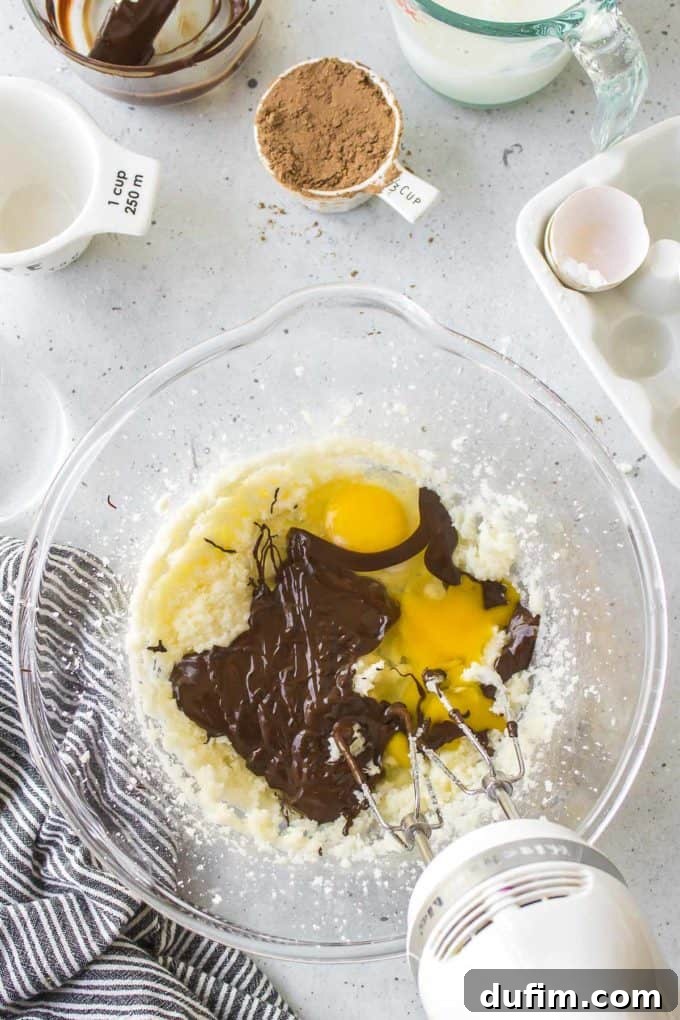
- Cream Wet Ingredients: In a separate, generously sized mixing bowl, use an electric mixer to beat the room temperature unsalted butter and granulated sugar for about 2 minutes. Beat until the mixture is light, pale, and fluffy, indicating it’s properly aerated. Next, add in the eggs one at a time, beating for about 15 seconds after each addition. Finally, incorporate the cooled melted German’s Sweet Chocolate, beating for another 30 seconds until fully combined.
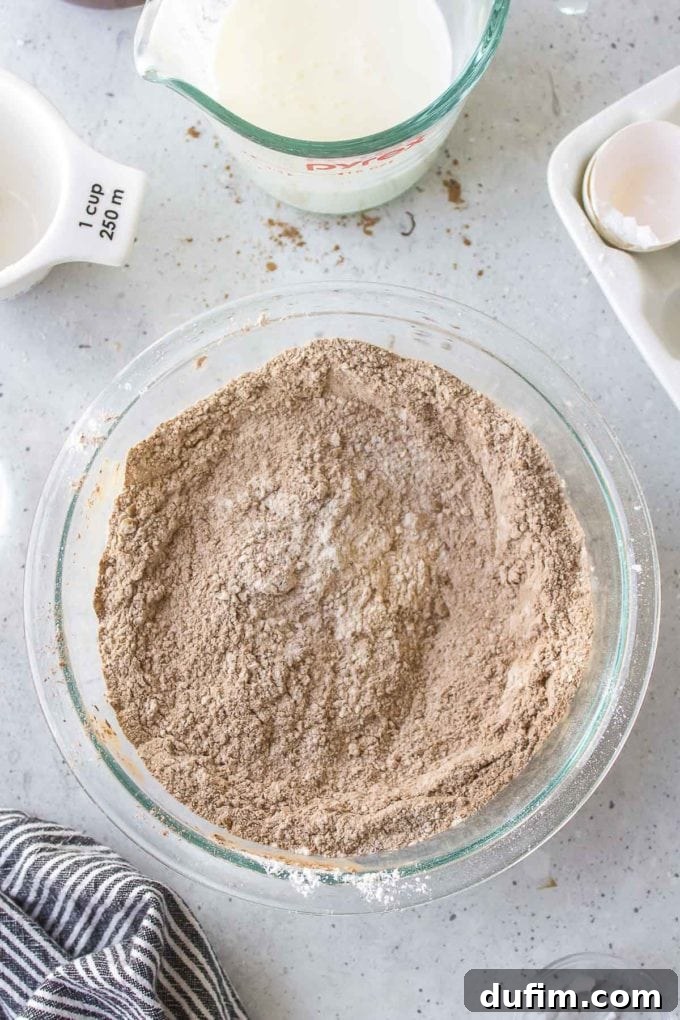
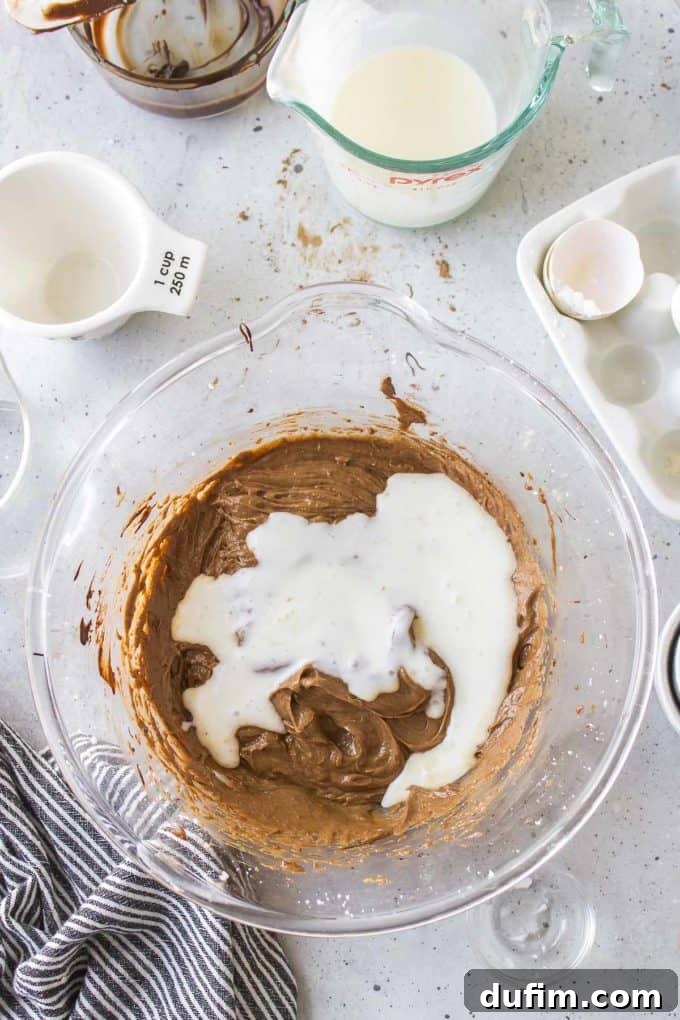
- Alternately Add Wet and Dry Mixtures: Gradually add half of the buttermilk to the wet ingredients, beating on low speed for approximately 20 seconds until just combined. Then, add half of the dry ingredients mixture, beating until no dry streaks remain. Next, pour in the remaining buttermilk along with the hot water, mixing until the liquids are just incorporated. Finally, add the remaining dry ingredients and beat on low speed only until the batter is smooth and fully combined. Be careful not to overmix, as this can lead to a dry cake.
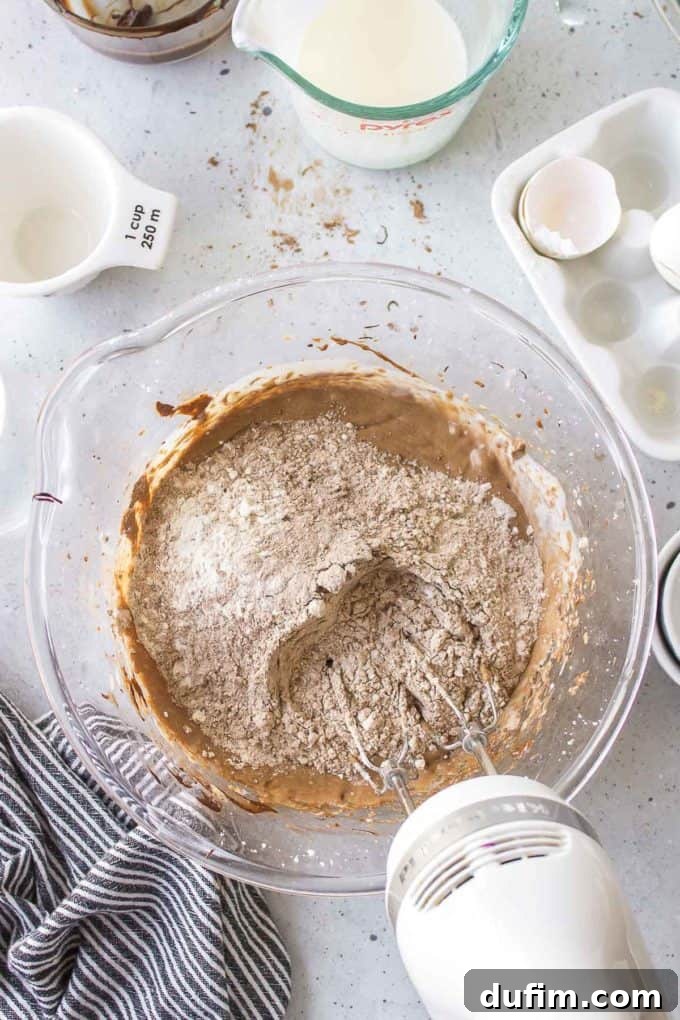
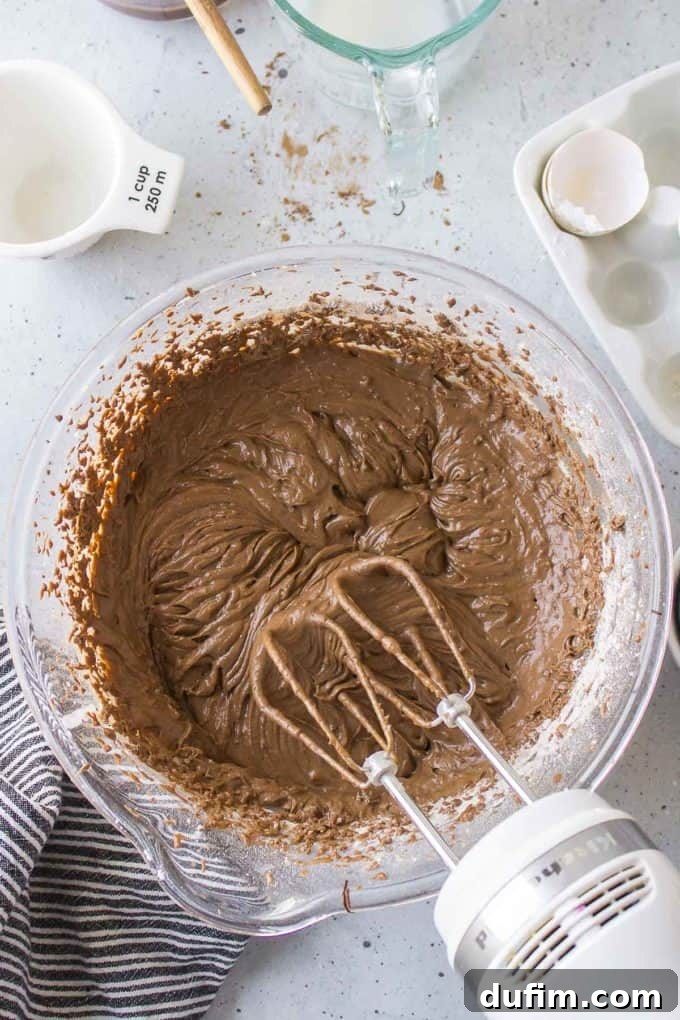
- Divide and Prepare for Baking: Evenly divide the prepared batter among the three greased and parchment-lined 8-inch pans. Each pan should hold approximately 1 ½ cups of batter. If you use bake-even cake strips (which help promote flat cake tops), secure them around the outside of the pans at this point.
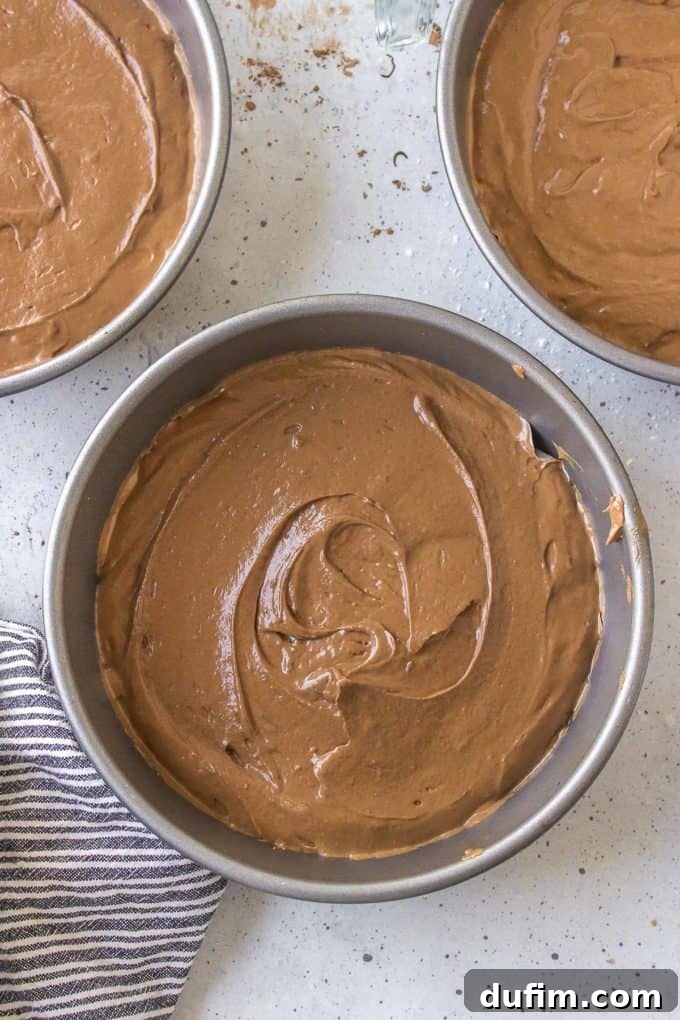
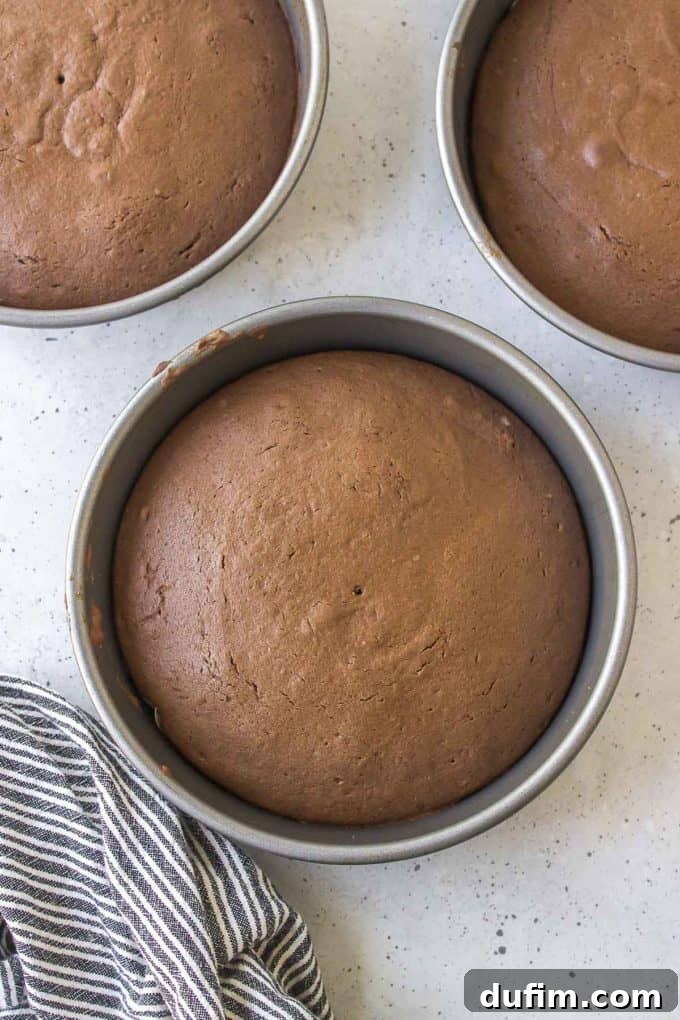
- Bake to Perfection: Carefully place the pans in the center of your preheated oven. Bake for 24-30 minutes, or until a wooden toothpick inserted into the center of a cake layer comes out clean. Remember that baking times can vary slightly depending on your specific oven and the exact size of your cake pans, so always check for doneness.
- Cool Completely: Once baked, remove the cakes from the oven and allow them to cool in their pans on a wire rack for 20-30 minutes. This allows them to firm up before handling. After this initial cooling, gently invert the cakes onto the cooling rack, remove the pans and parchment paper, and let them cool completely to room temperature before attempting to frost them. Cooling thoroughly is essential for clean layering and preventing your frosting from melting.
Part 2: Crafting the Irresistible Coconut Pecan Frosting
- Prepare Egg Yolks: In a medium bowl, beat the egg yolks with a whisk until they are pale and frothy. This aeration is important for the frosting’s final texture. Set these aside.
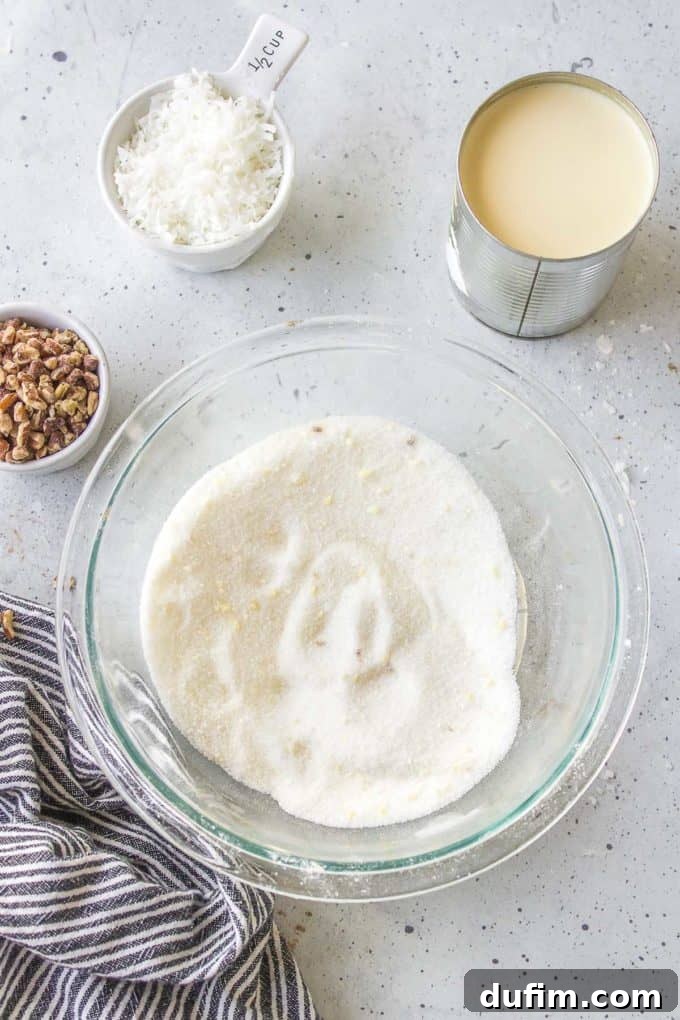
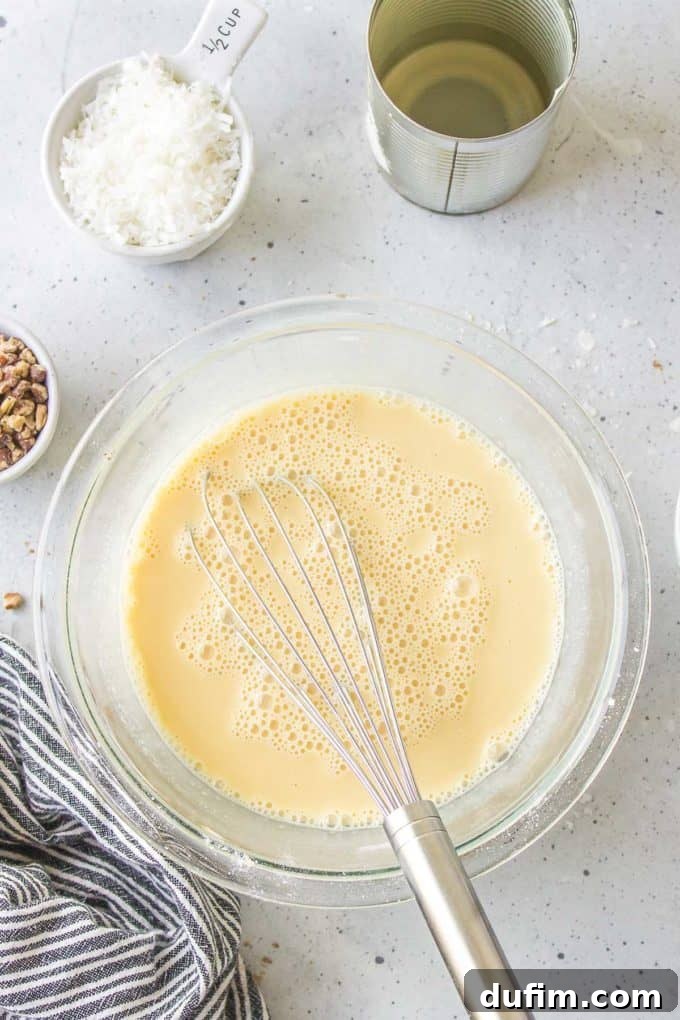
- Combine Dry & Liquid for Base: In a separate bowl, thoroughly combine the all-purpose flour, granulated sugar, and salt. Once well mixed, gradually whisk in the evaporated milk until the mixture is smooth and lump-free.
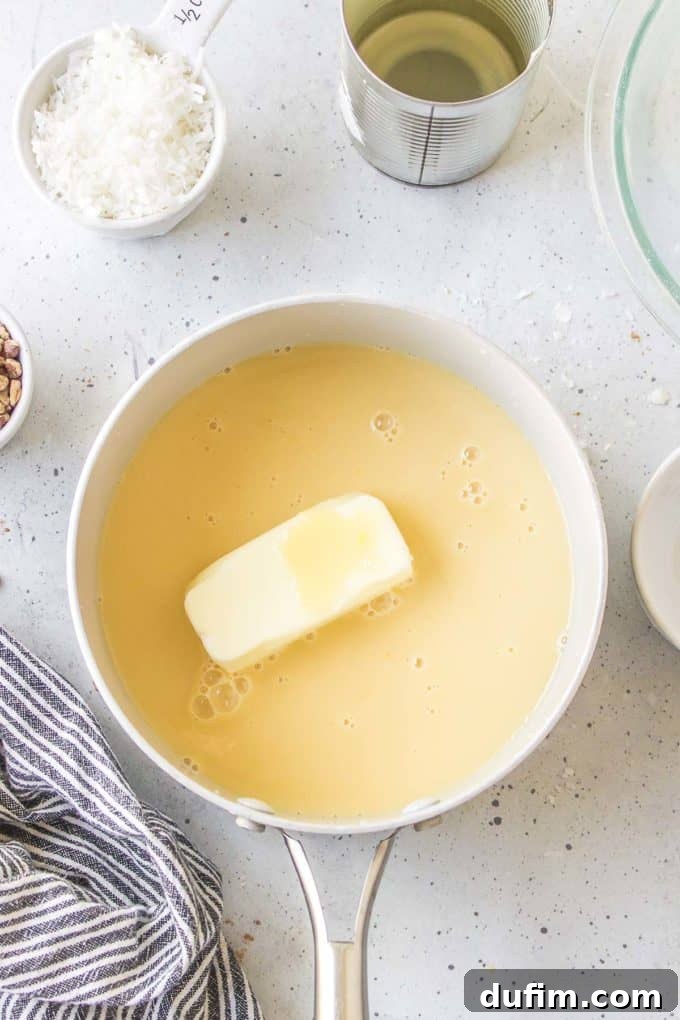
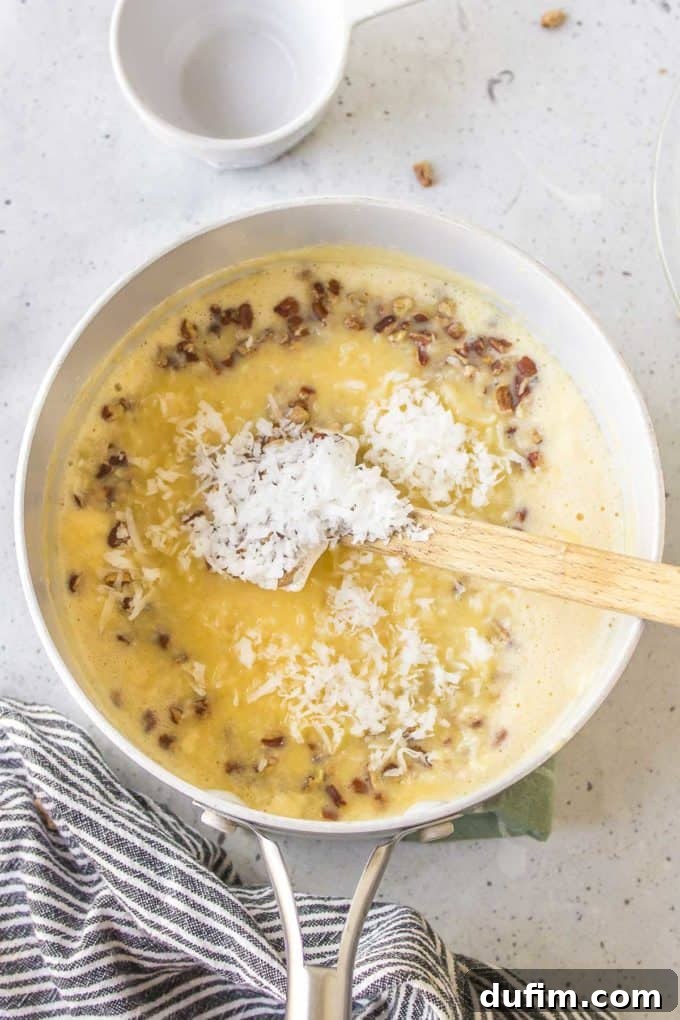
- Cook Butter and Flour Mixture: In a medium saucepan, add the unsalted butter along with the flour and evaporated milk mixture. Place the saucepan over medium-high heat. Stir continuously with a whisk or rubber spatula until the butter has completely melted and the mixture begins to thicken, which should take about 5 minutes. Constant stirring prevents scorching.
- Temper the Egg Yolks: This is a crucial step to prevent the egg yolks from scrambling. Using a ladle, carefully scoop a small amount (about 1/2 cup) of the hot butter mixture from the saucepan and slowly drizzle it into the beaten egg yolks while whisking vigorously. This gradually raises the temperature of the egg yolks, tempering them and preparing them for the hot mixture.
- Incorporate Tempered Eggs: Once the egg yolks are tempered and warm (at a good temperature), slowly pour the entire egg yolk mixture back into the saucepan with the remaining butter mixture, whisking continuously.
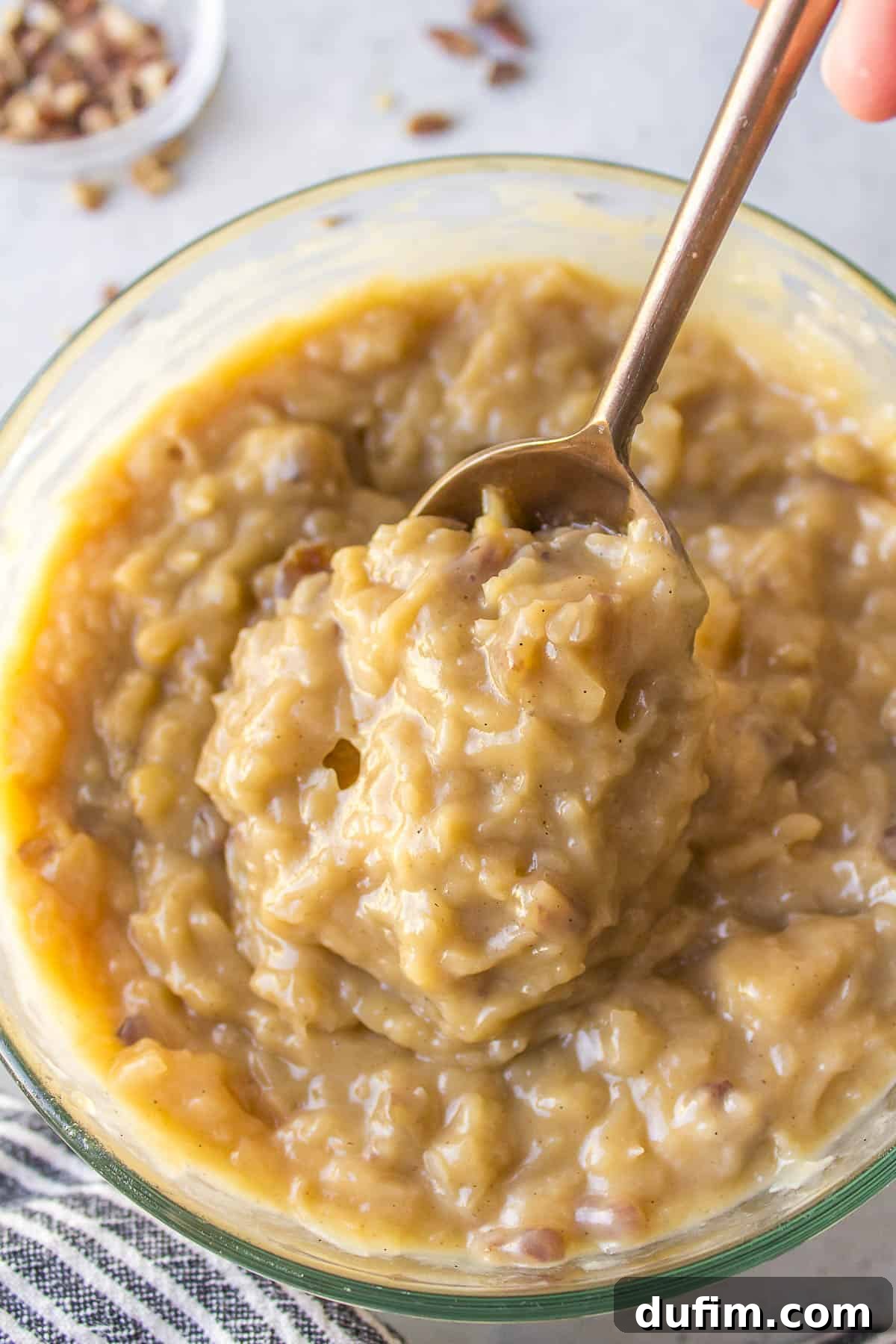
- Add Nuts and Coconut, Thicken: Stir in the chopped pecans and shredded sweetened coconut into the saucepan. Continue to cook the frosting, stirring often, for approximately 6-8 minutes, until it reaches a thick, custard-like consistency that coats the back of a spoon. Once thickened, remove the saucepan from the heat and stir in the vanilla extract.
- Cool the Frosting: Transfer the finished coconut pecan frosting to a bowl and allow it to cool completely to room temperature. As it cools, it will continue to thicken and become spreadable. Do not rush this step, as warm frosting will melt your cake layers.
Part 3: Assembling Your Masterpiece
- Level the Cake Layers: If your cooled cake layers have domes, use a serrated knife or a cake leveler to carefully trim the tops, creating flat, even layers. This ensures a stable and beautiful cake.
- Portion the Frosting: To ensure even distribution, divide your cooled coconut pecan frosting into three equal portions. This makes layering much easier and prevents running out of frosting for the top layer.
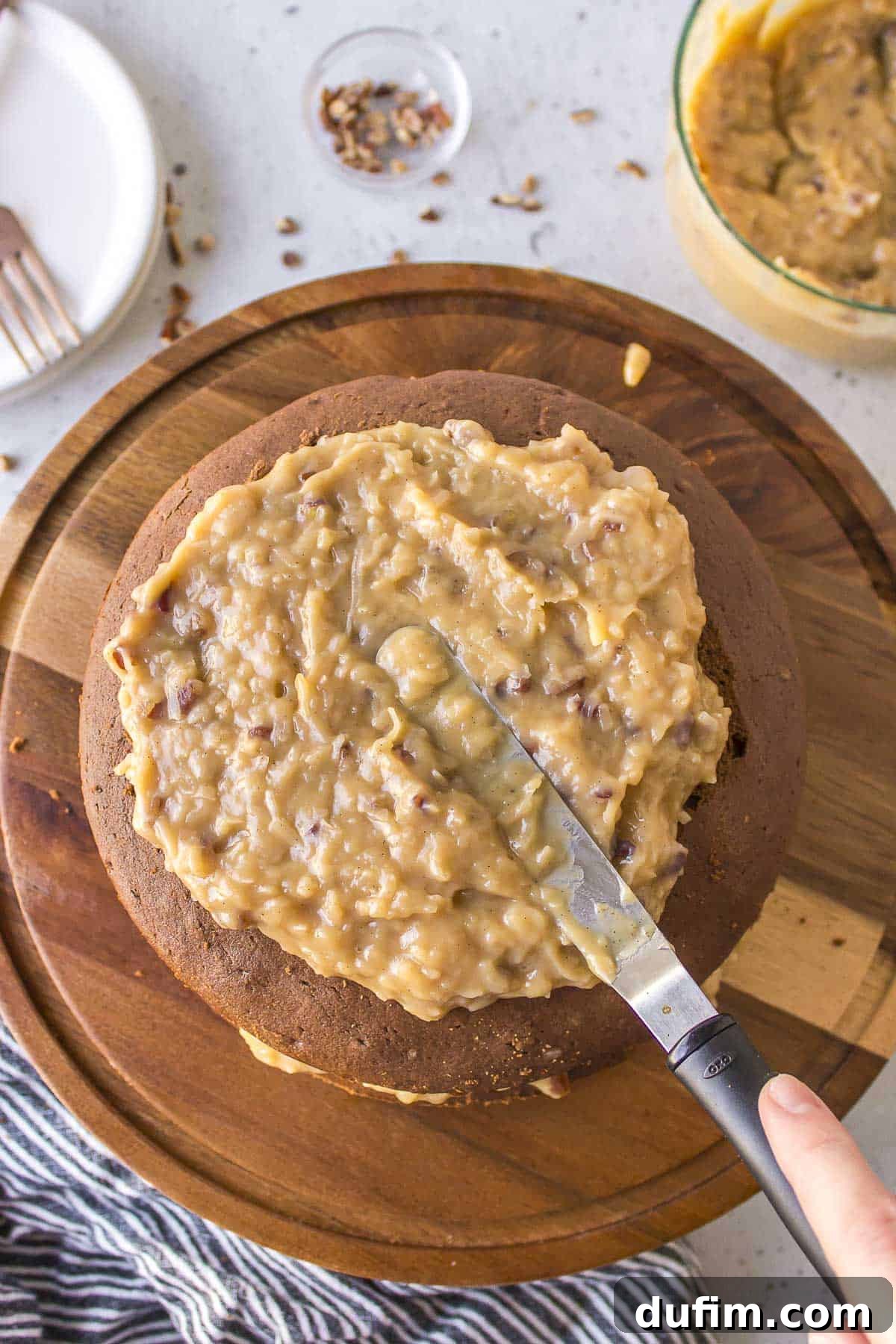
- Build the Layers: Spread a very small amount of frosting (about 1-2 tablespoons) on the center of your chosen cake plate or stand. This acts as a “glue” to prevent the cake from sliding. Carefully place one cake layer directly over this frosting “glue.” Now, take one-third of your divided coconut pecan frosting and spread it evenly over the first cake layer, extending almost to the edges. Gently place the second cake layer on top, aligning it perfectly, and spread another one-third portion of frosting over it. Finally, add the third and final cake layer, topping it with the remaining frosting. For an extra decorative touch, you can sprinkle additional whole pecans on top. Slice and serve immediately to enjoy!
The Magic Behind German Chocolate Cake Filling
The true heart of this German chocolate cake is undoubtedly its magnificent coconut pecan filling. This exceptional filling is meticulously crafted from a precise blend of tempered egg yolks, flour, sugar, salt, evaporated milk, butter, shredded sweetened coconut, chopped pecans, and a generous splash of vanilla extract. This magical combination, cooked to a perfect consistency, results in an unbelievably ooey-gooey, lusciously sweet, and wonderfully nutty filling, boasting just the right amount of satisfying crunch. It’s the unique element that elevates this cake from a simple chocolate dessert to a legendary culinary experience.
Expert Tips for a Perfect German Chocolate Cake Frosting
To ensure your coconut pecan frosting is absolutely perfect every time, keep these key points in mind:
- Temper Your Egg Yolks Carefully: This is the most critical step. Slowly drizzling a small amount of the hot butter mixture into the beaten egg yolks while whisking constantly will gently raise their temperature, preventing them from scrambling when added to the main saucepan.
- Constant Stirring is Key: While cooking the frosting mixture, especially after adding the butter and then the eggs, continuous stirring on medium-high heat is essential. This prevents the mixture from sticking to the bottom of the saucepan and ensures a smooth, lump-free consistency.
- Cook Until Thickened: The frosting needs to cook until it reaches a thick, custard-like consistency. It should visibly thicken and coat the back of a spoon. Undercooking will result in a runny frosting, while overcooking can make it too stiff or grainy.
- Cool Completely: Patience is a virtue here. The frosting must be cooled completely to room temperature before assembling the cake. If it’s warm, it will melt your beautifully baked cake layers and create a messy outcome.
- Quality Ingredients Matter: Using fresh, large egg yolks, good quality butter, and fresh pecans will significantly impact the flavor and texture of your frosting.
Storing Your Traditional German Chocolate Cake for Lasting Freshness
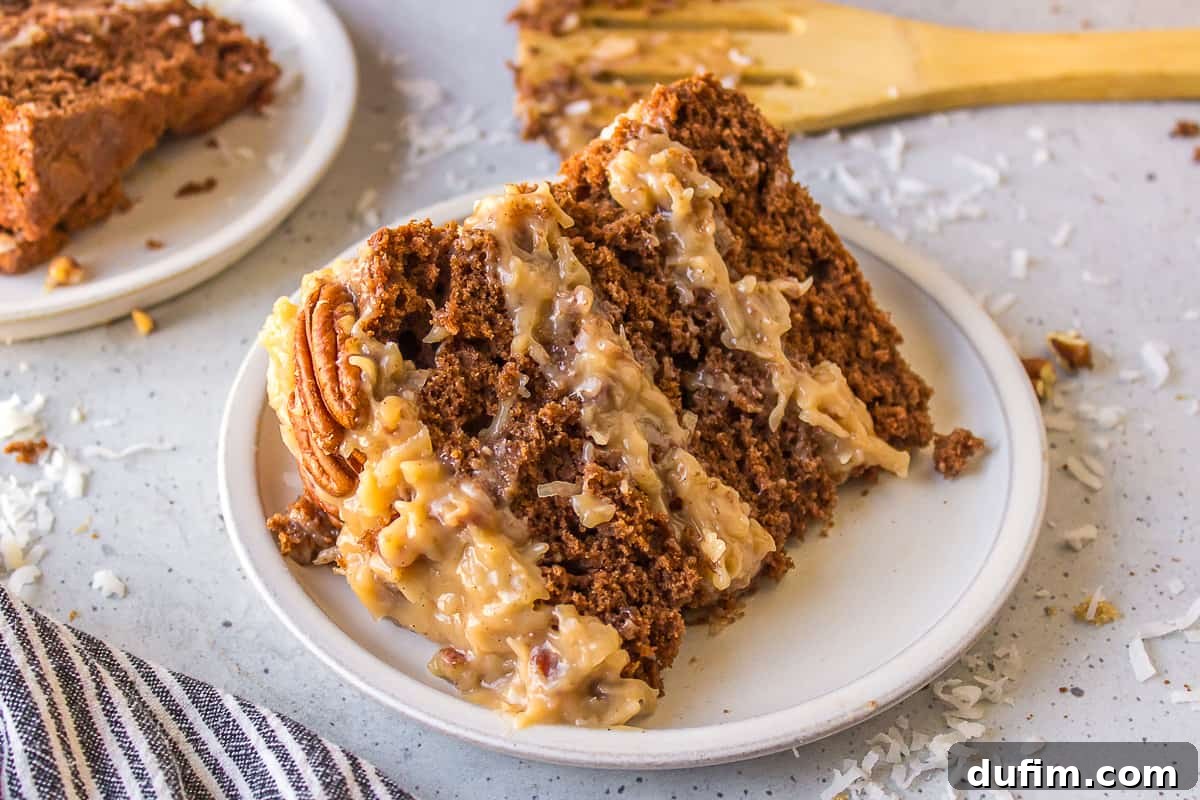
This magnificent cake is so delicious, you might not have many leftovers! However, if you do, proper storage is key to maintaining its exquisite freshness and moistness. Leftover slices or the entire cake should be wrapped well in plastic wrap or placed in an airtight container to prevent drying out and absorbing other refrigerator odors. Store it in the refrigerator for 3-5 days. Bringing individual slices to room temperature for about 15-20 minutes before serving can enhance their flavor and texture.
Can You Freeze German Chocolate Cake? Yes, for Future Enjoyment!
Absolutely! German Chocolate Cake is surprisingly freezer-friendly, allowing you to prepare components ahead of time or save leftovers for a future indulgence. You can freeze the cake layers themselves for up to 3 months. To do this, ensure the baked cake layers are completely cooled. Wrap each layer tightly in several layers of plastic wrap, then place them in a large freezer bag or wrap them again in aluminum foil to prevent freezer burn. Label with the date. When ready to use, thaw them overnight in the refrigerator before frosting.
You can also freeze the entire frosted cake! Once the cake is fully assembled and frosted, place it uncovered in the freezer for about an hour until the frosting is firm. Then, wrap the entire cake tightly in plastic wrap, followed by a layer of aluminum foil, and place it in a freezer-safe container or bag. It can be frozen for up to 3 months. When you’re ready to enjoy, thaw the cake overnight in the refrigerator, then let it come to room temperature for about an hour before serving for the best taste and texture.
German Chocolate Cake Recipe: Frequently Asked Questions
The iconic German chocolate cake has a fascinating American history. It was first popularized in 1957 by a homemaker named Mrs. George Clay, who developed the recipe using a special type of baking chocolate. This particular chocolate, known as “German’s Sweet Chocolate,” was created by an American baker named Samuel German back in 1853 for the Baker’s Chocolate Company. Mrs. Clay’s recipe for “German’s Chocolate Cake” gained widespread fame after it was published as the “Recipe of the Day” in The Dallas Morning News newspaper, solidifying its place in American culinary tradition.
Despite its name, there is actually nothing geographically German about German chocolate cake! It is an entirely American dessert. The “German” in its name refers to Samuel German, an American baker who created the dark sweet baking chocolate bar used in the original recipe. The cake was simply named after the specific chocolate ingredient, leading to a common misconception about its country of origin.
Yes, absolutely! One of the defining characteristics and most beloved elements of a traditional German chocolate cake is its decadent coconut pecan filling. This creamy, sweet, and crunchy filling, laden with shredded coconut and toasted pecans, is what truly sets it apart from other chocolate cakes and gives it its unique flavor profile.
The primary and most significant difference between Devil’s Food Cake and German Chocolate Cake lies in their frostings and, to some extent, their cake bases. While both are rich chocolate cakes, German Chocolate Cake is uniquely defined by its signature coconut pecan frosting – a thick, custard-like filling studded with shredded coconut and chopped pecans. Devil’s Food Cake, on the other hand, typically features a variety of intensely chocolatey frostings, such as a smooth chocolate ganache, a fluffy chocolate buttercream, or a rich, fudge-like frosting, and does not contain the coconut-pecan element.
Several factors can lead to a runny German chocolate cake frosting. One common reason is overcooking; if the mixture is cooked for too long or at too high a temperature, the proteins in the egg yolks can break down, leading to a thinner consistency. Conversely, undercooking the frosting might also mean it hasn’t had enough time to thicken properly. Additionally, ensuring that you properly temper the egg yolks into the hot mixture is crucial. If the eggs are added too quickly without tempering, they can curdle or fail to integrate correctly, impacting the frosting’s final texture. Always allow the frosting to cool completely, as it will continue to thicken as it sets.
Yes, this cake is excellent for making ahead! You can bake the cake layers a day or two in advance, wrap them tightly, and store them at room temperature or in the refrigerator. The coconut pecan frosting can also be made a day in advance and stored in an airtight container in the refrigerator. Just ensure both components are at room temperature before assembly. This approach helps reduce stress on baking day and allows the flavors to meld beautifully.
Explore More Delicious Cake Recipes
If you’ve loved baking this German Chocolate Cake, we invite you to try some of our other fantastic cake recipes. Each one is crafted to bring joy to your kitchen and delight to your palate!
- Light and Fluffy Angel Food Cake
- Rich Chocolate Espresso Cake
- Exquisite Fresh Cherry Cake with Chocolate Ganache
- Elegant Vanilla and Fresh Berry Naked Cake
Tap stars to rate!
Traditional German Chocolate Cake
Beth
45 minutes
30 minutes
3 hours
16
Rate
Equipment
-
KitchenAid 9-Speed Mixer
-
Glass Mixing Bowl
-
Kitchen Scale
-
My favorite spatula!
-
8 inch springform pan
Ingredients
Chocolate Cake
- 2 ½ cups (300g) all-purpose flour
- ⅓ cup (28g) unsweetened natural cocoa powder
- ½ tsp baking soda
- 1 tsp baking powder
- 1 tsp salt
- ½ cup (113g) unsalted butter, 1 stick, room temperature
- 1 ½ cups (297g) granulated sugar
- 3 oz German’s Sweet Chocolate baking bar, melted & cooled
- 2 large eggs
- 1 cup (236ml) buttermilk
- ½ cup (118ml) hot tap water
Coconut Pecan Frosting
- 2 large egg yolks
- 1 Tbsp all-purpose flour
- 1 cup (198g) granulated sugar
- ½ tsp salt
- 12 oz evaporated milk
- ½ cup (113g) unsalted butter, 1 stick
- 1 ½ cup (128g) shredded sweetened coconut
- ⅓ cup (38g) chopped pecans
- 1 tsp vanilla extract
Instructions
Chocolate Cake
-
Preheat the oven to 350º F (175ºC). Grease three 8-inch springform pans with butter (butter the sides and bottom) and line each pan with a parchment paper circle for easy cake removal. Set aside.
-
Rough chop the chocolate baking bar into smaller pieces, place in a microwave safe bowl and microwave for 2 minutes on 50% power. Stir and repeat until melted. Set aside to cool.
-
In a mixing bowl combine the all-purpose flour, unsweetened natural cocoa powder, baking soda, baking powder and salt. Set aside.
-
In a separate mixing bowl beat the butter and granulated sugar with an electric mixer for 2 minutes, until pale and fluffy. Add in the eggs and cooled chocolate, beat again for 30 seconds.
-
Add in half of the buttermilk, beat for about 20 seconds. Add in half of the dry ingredients, beat until just combined. Add the remaining buttermilk plus the hot water, beat just until the liquid is mixed in then add the remaining dry ingredients and beat on low speed until combined. Do not overmix.
-
Evenly divide the batter between the 3 prepared pans, with about 1 ½ cups of batter in each pan. If using bake-even cake strips, secure them around the outside of the pans.
-
Place in the center of the oven and bake for 24-30 minutes or until a toothpick inserted in the center comes out clean. Baking times will vary depending on your oven and size of pan you’re using.
-
Allow the cakes to cool for 20-30 minutes in the pans before removing them and allowing them to cool completely on a cooling rack.
Coconut Pecan Frosting
-
In a medium bowl, beat the egg yolks until frothy. Set aside.
-
In a separate bowl combine flour, salt, and granulated sugar. Once mixed add in evaporated milk and combine.
-
In a saucepan on medium high heat, add the butter and flour mixture. Stir continuously until butter is melted, about 5 minutes.
-
Using a ladle, take some of the butter mixture and ladle it into the egg yolks. This will temper the eggs and bring them to temperature. Whisk to combine.
-
Once the eggs are at a good temp, add them into the saucepan with the butter mixture, whisking continuously.
-
Add chopped pecans and coconut into the saucepan and cook until thickened, stirring often, about 6-8 minutes. Remove from heat and add the vanilla extract.
-
Allow frosting to completely cool and thicken before frosting the cake.
Assemble
-
If needed, level the cooled cakes using a cake leveler or serrated knife to create flat layers.
-
Divide the frosting into 3 equal portions to ensure even layers.
-
Spread a small amount of frosting on the bottom of your cake plate or stand to act as “glue” and prevent the cake from moving. Place one cake layer over the frosting “glue”. Spread ⅓ of the frosting onto the first cake layer. Repeat by adding a second layer of cake and another ⅓ portion of frosting. Add the final layer of cake and top with the remaining frosting. Decorate the top of the cake with pecans if desired. Slice and serve!
Video (Placeholder)
A video tutorial for this German Chocolate Cake recipe will be available here soon!
Nutrition
Calories:
783kcal
|
Carbohydrates:
79g
|
Protein:
24g
|
Fat:
44g
|
Saturated Fat:
27g
|
Polyunsaturated Fat:
2g
|
Monounsaturated Fat:
12g
|
Trans Fat:
0.5g
|
Cholesterol:
155mg
|
Sodium:
593mg
|
Potassium:
990mg
|
Fiber:
4g
|
Sugar:
60g
|
Vitamin A:
1079IU
|
Vitamin C:
5mg
|
Calcium:
750mg
|
Iron:
3mg
Nutrition Disclosure
All nutritional values are approximate and provided to the reader as a courtesy. Changing ingredients and/or quantities will alter the estimated nutritional calculations.
Like this recipe? Rate and comment below!